Zodiac · Topic guide
Year of the Snake: Chinese Zodiac Years, Elements and Traits
Snake years are 1929 to 2025, and the next starts February 15, 2037. Exact dates, the five element Snakes, traditional traits and matches, and snake legends.
By Daozhang Ma Published
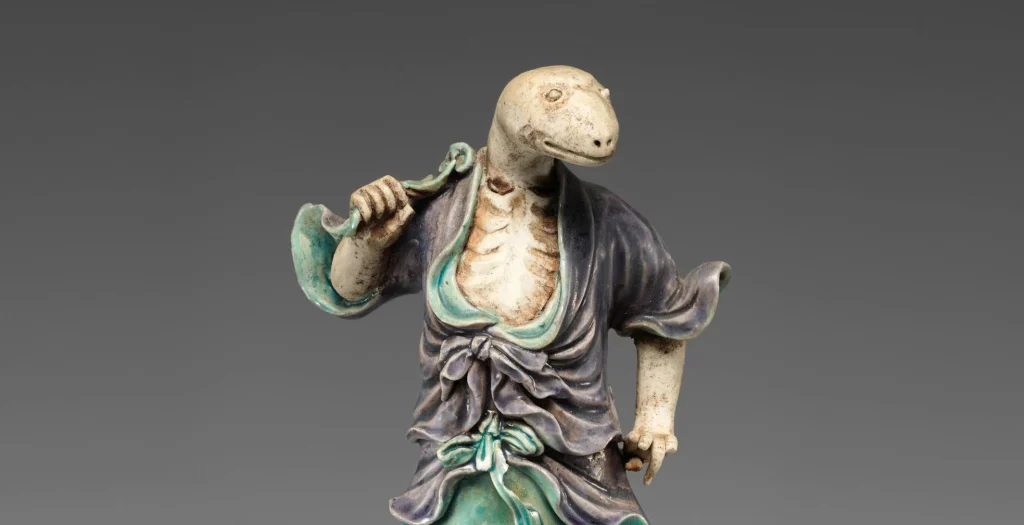
In short
The Year of the Snake is the sixth year in the twelve-year cycle of the Chinese zodiac. Snake years are 1929, 1941, 1953, 1965, 1977, 1989, 2001, 2013 and 2025, and the next one begins on February 15, 2037.
A Snake year opens on Chinese New Year, not on January 1, so a birthday in January or early February may still fall in the Dragon year before it. Each Snake year also takes one of five elements. The most recent, 2025, was a Wood Snake year, and 2013 was a Water Snake.
Behind the animal sits Si (巳), the sixth earthly branch. Si is a yin Fire sign that covers the hours from 9 to 11 a.m. and the fourth lunar month, when summer begins.
Traditional readings call the Snake calm, shrewd and careful. I pass that on as a character type from the old books, and I wouldn’t use it to judge a real person. The later sections leave the charts for the stories: Fuxi and Nüwa, the White Snake, and the reason people call the Snake a little dragon.

Daozhang MaMaoshan Taoist, Jintan, Jiangsu
The guide · 10 chapters
Year of the Snake Dates, 1929 to 2037
1 min read · 1 table
A Snake year runs from Chinese New Year’s Day to the eve of the next New Year. That first day moves between late January and mid-February, so the table gives both ends of every Snake year in the last hundred years or so.
| Snake year | Starts | Ends | Element | Stem and branch |
|---|---|---|---|---|
| 1929 | February 10, 1929 | January 29, 1930 | Earth | 己巳 jisi |
| 1941 | January 27, 1941 | February 14, 1942 | Metal | 辛巳 xinsi |
| 1953 | February 14, 1953 | February 2, 1954 | Water | 癸巳 guisi |
| 1965 | February 2, 1965 | January 20, 1966 | Wood | 乙巳 yisi |
| 1977 | February 18, 1977 | February 6, 1978 | Fire | 丁巳 dingsi |
| 1989 | February 6, 1989 | January 26, 1990 | Earth | 己巳 jisi |
| 2001 | January 24, 2001 | February 11, 2002 | Metal | 辛巳 xinsi |
| 2013 | February 10, 2013 | January 30, 2014 | Water | 癸巳 guisi |
| 2025 | January 29, 2025 | February 16, 2026 | Wood | 乙巳 yisi |
| 2037 | February 15, 2037 | February 3, 2038 | Fire | 丁巳 dingsi |
The last column is the year’s name in the 60-year cycle, a heavenly stem followed by the branch Si. The stem is what gives each year its element, and the Chinese zodiac guide explains how stems, branches and animals fit together.
Born in January or Early February?
Check both dates before you call yourself a Snake. Someone born on January 20, 2001 is a Dragon, because the Snake year didn’t start until January 24. Someone born on January 25, 1990 is still a Snake, since the 1989 year ran on to January 26.
If your birth year isn’t in the table, or you’d rather not do the sum by hand, the Chinese New Year zodiac calculator works out the sign from a full birth date.
Where the Snake Sits Among the Twelve Zodiac Animals
1 min read · 2 photos
The Snake holds the sixth place of twelve. It comes right after the Dragon and right before the Horse, and that order never changes from one cycle to the next.
The folk legend of the Great Race gives a reason. The Jade Emperor ranked the animals by the order in which they crossed a river. In the usual telling, the Snake coiled around the Horse’s leg, slid off at the bank and startled the Horse, and so took sixth place while the Horse settled for seventh.
Printers and paper-cutters keep the same order when they show all twelve together. A book of Zhuxianzhen woodblock New Year prints, for one, frames a page of text with the animals as small red stamps.
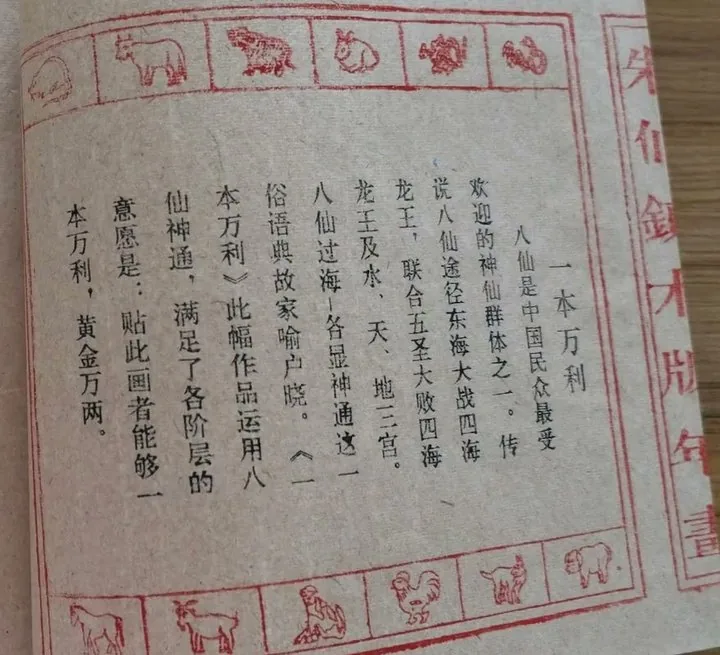
Read the top row from the rat and you pass the ox, tiger, rabbit and dragon before the row ends on the snake in the corner. The bottom row picks up with the horse and finishes on the pig. Reading a border like that is the quickest way I know to learn the order by eye.
Paper-cuts tell it as a circle instead of a line. A round zodiac flower gives every animal its own petal around a center ring, so no sign looks first or last.
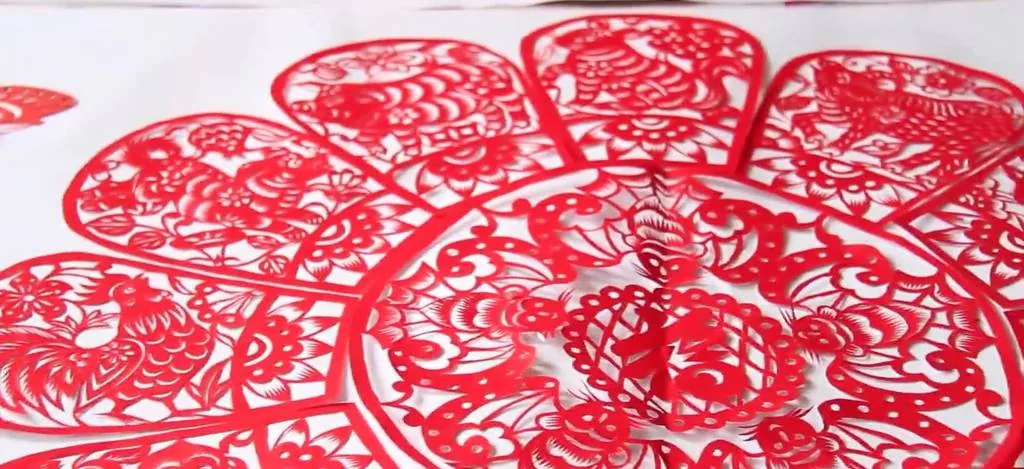
A circle is closer to how the system really works, because the cycle has no top and each animal comes round every twelve years. The Chinese zodiac years chart lists all twelve animals year by year, in case you want the Snake’s neighbors as well.
Si, the Snake’s Earthly Branch: Hour, Month and Fire
1 min read
The animal is the friendly face of an older sign. Si (巳) is the sixth of the twelve earthly branches, the set of twelve markers that the calendar uses to count years, months, days and hours.
As an hour, Si runs from 9 to 11 a.m., when the morning is warm and the day’s work is well under way. As a month, Si is counted by solar terms: it runs from Lixia (立夏), Start of Summer, in early May to Mangzhong (芒种) in early June. That stretch roughly matches the fourth month of the lunar calendar.
Si belongs to Fire, and it counts as yin Fire. Its compass direction is the southeast. Hour, month and element all agree here: Si marks the point where warmth starts turning into heat.
I pick dates from the almanac for people who come up to Maoshan, and Si is printed on some part of nearly every page. Each day carries a branch of its own, and so does each two-hour block. A person’s Snake year is only one of four places where Si can turn up in a birth chart.
The Five Snakes: Wood, Fire, Earth, Metal and Water
1 min read · 1 table
Si stays fixed, and the heavenly stem in front of it changes. Five stems can pair with Si, one for each element, so the same kind of Snake returns only once every 60 years.
| Kind of Snake | Stem | Years | Stem and branch |
|---|---|---|---|
| Wood Snake | 乙 Yi | 1965, 2025 | 乙巳 yisi |
| Fire Snake | 丁 Ding | 1977, 2037 | 丁巳 dingsi |
| Earth Snake | 己 Ji | 1929, 1989 | 己巳 jisi |
| Metal Snake | 辛 Xin | 1941, 2001 | 辛巳 xinsi |
| Water Snake | 癸 Gui | 1953, 2013 | 癸巳 guisi |
All five stems are yin stems. The 60-year cycle only pairs yin with yin and yang with yang, and Si is a yin branch, so a yang Snake year doesn’t exist.
The Snake’s own element stays Fire whichever stem leads. That makes 2037 the year when the two halves match, a Fire stem over a Fire branch, 60 years after the Fire Snake of 1977.
Popular readings tint each kind a little. They tend to describe Wood Snakes as the most easygoing, Fire Snakes as the boldest talkers, Earth Snakes as the steadiest, Metal Snakes as the most determined and Water Snakes as the sharpest observers.
I haven’t found those shades in the older almanacs, so take them lightly.
Snake Personality in Traditional Readings
1 min read
Under the five shades lies one shared portrait. Traditional readings describe people born in a Snake year as calm, shrewd and deep-thinking, the kind who plan before they move and don’t show their hand early.
The readings that work from the branch add a second layer. Si is Fire, and they call a Si person fine-grained, clever and able to hold attention on one thing for a long time.
The faults are the same traits turned sour. A Snake is said to be suspicious, slow to trust and likely to remember a slight for years. You’ll notice that careful and suspicious are one habit seen from two sides.
None of this is science, and I’ve never seen a study that tested it. A chart reader also weighs the month, day and hour of birth, so the year animal is only the first line of the reading. Compatibility, lucky signs and the years ahead belong in the same box: traditional lore, shared for entertainment.
Snake Compatibility: Monkey, Rooster, Ox and the Pig Clash
2 min read · 1 table
Matches come from the branch, not from the element, so all five kinds of Snake share one set of friends and rivals. Five relationships cover most of what a Snake chart shows.
| Relationship | Partner sign | What the tradition says |
|---|---|---|
| Six harmony (六合) | Monkey | Si and Shen pair up, and the pair is said to turn to Water |
| Triple harmony (三合) | Rooster, Ox | Si, You and Chou form the Metal trio, said to work as a team |
| Clash (冲) | Pig | Hai sits opposite Si on the branch circle, Water facing Fire |
| Harm (害) | Tiger | Yin and Si are said to wear on each other quietly |
| Punishment (刑) | Tiger, Monkey | Yin, Si and Shen form the trio called the ungrateful punishment |
The Monkey appears on a good row and a bad one. Si and Shen are a six-harmony pair, the closest one-to-one match a sign can have, so the Monkey comes first among the Snake’s matches. The Sanming Tonghui (三命通会), the Ming-dynasty astrology compendium, also puts Si and Shen inside the ungrateful punishment, and Chinese writers today often sum the pair up as a harmony with a punishment inside it, close at times and prickly at others.
Both rules sit in the same book, so one doesn’t cancel the other. I give people both when they ask: the harmony is why the Monkey heads the list, and the punishment is the footnote that comes with it.
The Pig is the plain opposite. Si and Hai face each other across the circle, Fire against Water, so when people ask for the Snake’s enemy sign, the charts answer with the Pig. The Tiger follows, listed under both harm and punishment.
The Rooster and the Ox come next. Their branches form the triple harmony with Si, and they sit only on a friendly row. Signs with no named tie to Si count as neutral, and the Snake and Dog pairing is a good example. For all twelve signs side by side, see the Chinese zodiac compatibility guide.
When couples bring me a “bad” pair, I tell them a chart sorts branches, not people. Two birth years can’t describe how two people treat each other.
The Snake From 2027 to Its Next Year in 2037
1 min read
The same branch rules color the years ahead. In 2027 the Goat is in charge, and Wei, the Goat’s branch, has no clash, harm or punishment with Si. The tradition reads that as a quiet year for Snakes, and the 2027 Chinese zodiac forecast covers each sign in turn.
After that the named years arrive. The Monkey year of 2028 brings the mixed Si and Shen pair, and the Rooster year of 2029 brings a triple-harmony partner. The Pig year of 2031 is the one traditional almanacs flag for Snakes, since Hai clashes with Si.
Then 2037 brings the Snake back. For anyone born in a Snake year it’s a benming nian (本命年), the year of your own animal, which folk custom treats as a year to take a little extra care.
The custom is to wear something red through that year, usually a red string at the wrist or red underwear, often a gift from an older relative. It’s a habit and a kindness. Nobody can promise that it changes anyone’s luck, and I wouldn’t trust a person who did.
Why the Snake Is Called the Little Dragon: Fuxi, Nüwa and the White Snake
1 min read
Ask someone in China for their sign, and a Snake may answer “little dragon,” xiao long (小龙). The nickname is folk usage, a polite way of naming an animal that people respect and fear in about equal parts.
The two animals do look related. A Chinese dragon has a long scaled body with no wings, and one old theory holds that the dragon began as a snake with other animals’ parts added. That’s a theory about the distant past, and nobody can prove it.
The oldest snake figures are the founders of the human world. In Chinese mythology Fuxi and Nüwa have human heads and snake bodies, and Han-dynasty tomb carvings show the pair with their tails twined together. Legend credits Nüwa with shaping the first people from clay and Fuxi with drawing the eight trigrams.
The best-loved snake is a later one. The Legend of the White Snake tells of Bai Suzhen, a white snake spirit who takes a woman’s form and marries a young man named Xu Xian by West Lake in Hangzhou. A monk, Fahai, sets out to part the couple.
Two scenes are the ones people remember. At the Dragon Boat Festival Bai Suzhen drinks realgar wine and slips back into snake form.
Later, to win her husband back, the story has her flood Jinshan Temple in Zhenjiang, here in Jiangsu, and it ends with Bai Suzhen shut under Leifeng Pagoda. The snake is the heroine throughout, and audiences side with her against the monk.
The Snake in Folk Art and Tradition
1 min read · 1 photo
Outside the legends, the snake mostly appears in company. In folk art it’s one of a set, whether that set is the twelve animals, a pair of guardians or the five pests of early summer.
Sets of twelve zodiac figures are the plainest case. Potters shaped one figure for each animal, and the snake from such a set is easy to pick out by its raised head and coiled body.
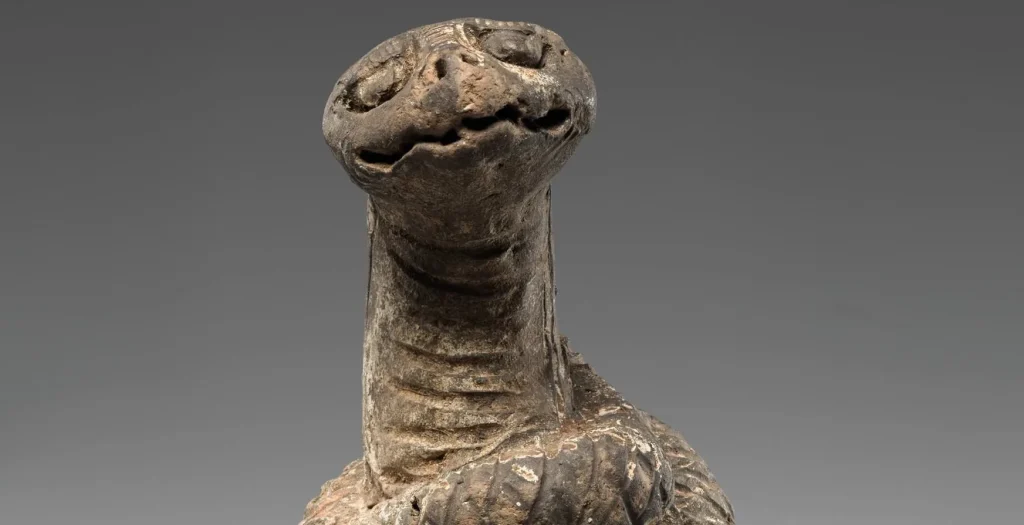
In a Snake year many stalls also sell single snakes for windows and doors. Those are usually drawn coiled, often around a flower or a coin, and round enough to pass for a decoration before you notice the head.
In Taoism the snake keeps grander company. Xuanwu (玄武), the guardian of the north among the Four Symbols, is a tortoise with a snake wound around it. I’ve painted that pair in Taoist pictures, and the snake’s coil is the line I redo most, since it has to grip the shell without hiding it.
The snake also sits among the five poisons, wudu (五毒), the pests that Dragon Boat Festival charms are meant to keep away. The usual set is the snake, centipede, scorpion, gecko and toad, and the list shifts a little from region to region.
New Year greetings in a Snake year use the animal for luck. One old phrase is jin she kuang wu (金蛇狂舞), “golden snakes dancing wildly,” a picture of firecrackers and festival lights. In 2025 many cards carried si si ru yi (巳巳如意), a pun on shi shi ru yi (事事如意), “may everything go as you wish.”
Year of the Snake FAQ
1 min read
What does the Year of the Snake mean in the Chinese zodiac? It’s the sixth year of the twelve-year animal cycle, ruled by the earthly branch Si. Tradition links the Snake with calm thinking and careful planning, because Si is a yin Fire sign, and with the dragon, which is why people call it the little dragon.
Which years are the Year of the Snake? The Snake years are 1929, 1941, 1953, 1965, 1977, 1989, 2001, 2013 and 2025, and the next is 2037. Each one starts on Chinese New Year, so anyone born in January or early February needs to check the exact dates in the table.
If 2025 was the Year of the Snake, what is 2026? It’s the Year of the Horse, since the Horse follows the Snake in the fixed order of twelve. The 2025 Wood Snake year ended on February 16, 2026, and the Horse year began the next day.
Who is the Snake compatible with? In the traditional charts the Monkey is the Snake’s best match, because Si and Shen form a six harmony, though the same pair also sits inside the ungrateful punishment. The Rooster and the Ox come next, since their branches and the Snake’s form a triple harmony. It’s folk lore for fun, not marriage advice.
What is the Snake’s enemy sign? The charts name the Pig, because Hai, the Pig’s branch, sits directly opposite Si and the two clash. The Tiger comes second, since it appears under both harm and punishment.
When is the next Year of the Snake? The next one runs from February 15, 2037 to February 3, 2038. Its stem is Ding (丁), a Fire stem, so 2037 is a Fire Snake year, 60 years after 1977.
The Snake has a quiet place in the cycle, sixth of twelve, with Fire in its branch and a dragon in its nickname. The dates and elements above are calendar facts, and the traits and matches are stories the tradition tells about them. For the festivals and customs around the zodiac, start from the Zodiac and Tradition home page.
Key terms in this guide
Full glossary →Related topics at this level
- Year of the TigerTiger years run 1926 to 2046, with the next starting February 19, 2034. Exact dates, the five Tigers, traits and matches, and China's cloth tigers.4 guides
- Year of the RabbitRabbit years include 1999, 2011 and 2023, and the next begins February 8, 2035. Dates, five elements, traits, matches and the Jade Rabbit in the moon.
- Year of the DragonDragon years are 1988, 2000, 2012 and 2024, and the next starts January 28, 2036. Dates, five elements, traits, matches and the Longtaitou festival.
- Year of the HorseHorse years run from 1930 to 2026, and the current one lasts until February 5, 2027. Exact dates, the five Horses, traits, matches and the horse's lucky puns.
- Year of the GoatGoat years include 1991, 2003 and 2015; the next starts February 6, 2027. Dates, the five Goats, sheep or ram, traits, matches and san yang kai tai.
- Year of the MonkeyMonkey years include 1992, 2004 and 2016, and the next opens January 26, 2028: dates, the five Monkeys, traits, matches and the Hou pun.
More topics
- Chinese ZodiacThe 12 Chinese zodiac animals in order, how to find your sign and element from your birth date, and what the zodiac hours, months and clashes mean.1 guide
- Year of the TigerTiger years run 1926 to 2046, with the next starting February 19, 2034. Exact dates, the five Tigers, traits and matches, and China's cloth tigers.4 guides
- Year of the RabbitRabbit years include 1999, 2011 and 2023, and the next begins February 8, 2035. Dates, five elements, traits, matches and the Jade Rabbit in the moon.
- Year of the DragonDragon years are 1988, 2000, 2012 and 2024, and the next starts January 28, 2036. Dates, five elements, traits, matches and the Longtaitou festival.
- Year of the HorseHorse years run from 1930 to 2026, and the current one lasts until February 5, 2027. Exact dates, the five Horses, traits, matches and the horse's lucky puns.
- Year of the GoatGoat years include 1991, 2003 and 2015; the next starts February 6, 2027. Dates, the five Goats, sheep or ram, traits, matches and san yang kai tai.
- Year of the MonkeyMonkey years include 1992, 2004 and 2016, and the next opens January 26, 2028: dates, the five Monkeys, traits, matches and the Hou pun.