Feng Shui · Complete guide
Feng Shui: Meaning, Basic Rules and Tips for Your Home
Feng shui means wind and water. Here's where it came from, how a luopan and an old Chinese house are read, and which feng shui tips fit a modern home.
By Daozhang Ma Updated
In short
Feng shui (风水) means “wind and water,” and it’s the Chinese practice of siting and arranging graves, houses and rooms by landform, compass direction and the movement of qi, the vital breath said to run through a place.
The name comes from a line in the Book of Burial, a text traditionally credited to Guo Pu (276–324): qi scatters on the wind and stops at water. So the whole subject began with a question about hillsides and graves, and today’s advice about beds and front doors grew out of it.
For a home, the basics come down to a few habits. Keep the way to the front door clear, place the bed and desk where they can see the door without standing in line with it, and repair what’s broken. After 22 years as a Taoist on Maoshan, I still choose dates from the almanac far more often than I touch a compass, so I’ll keep the tradition’s claims and my own opinion apart.
The old houses in these photos do most of the teaching, from a Shanxi gate to a Huizhou hall, and the room-by-room tips come once you’ve seen what those rules were built for.
Daozhang MaMaoshan Taoist, Jintan, Jiangsu
Explore by topic
Feng Shui Items
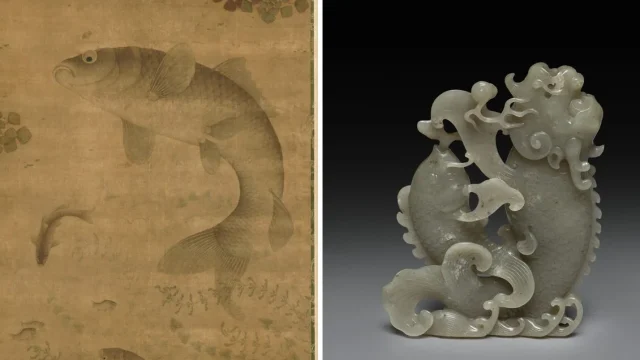
Feng shui items are objects placed to guard a home or invite luck. Here's what the pixiu, money toad, bagua mirror, gourd and coins mean, and where each goes.
The guide · 11 chapters
Why feng shui is named after wind and water
1 min read
Feng shui is named after the two things that were said to move qi across a landscape. The Book of Burial puts it in one line, 气乘风则散,界水则止: qi rides the wind and scatters, and it stops where water bounds it. The ancients gathered it and kept it from scattering, the text goes on, and that’s why the art is called feng shui.
Read that as a site report and it makes plain sense. You want a spot sheltered from the wind by high ground, with water in front to hold what gathers there. Tradition applied that first to burial sites, called yin dwellings (阴宅 yin zhai), and then to the yang dwellings (阳宅 yang zhai) of the living.
The tools are older than the name. Diviner’s boards called shi (式), with a turning disk marked for the heavens, have been dug out of tombs dated between 278 and 209 BC. Guo Pu is usually called the father of feng shui, though I’d treat his authorship of the book as a tradition rather than a settled fact.
The modern story is rougher. After 1949 the People’s Republic labeled feng shui a feudal superstition, and in the Cultural Revolution (1966–1976) it was among the “Four Olds” that Red Guards attacked, with books burned and practitioners beaten. What most Americans now read as feng shui came back to them through a later, simplified Western version, and that gap explains a lot of what follows.
The ideas feng shui works with: qi, yin and yang, five elements, eight trigrams
1 min read · 1 table
Feng shui rests on four older Chinese ideas, and it invented none of them. Each one answers a different question about a place: what’s moving there, how it’s balanced, what kind of thing it is, and which way it faces.
| Idea | Chinese | What it means in feng shui |
|---|---|---|
| Qi | 气 qi | What moves through a site, and what a good site gathers. English books say “energy,” which is too thin. The word also means breath and air. |
| Yin and yang | 阴阳 yin yang | Paired opposites such as shade and sun, still and busy, back and front. A room can lean too far to either side. |
| Five elements | 五行 wu xing | Wood, fire, earth, metal and water, each tied to a direction, a color and a season. |
| Eight trigrams | 八卦 bagua | Eight figures of three solid or broken lines, each tied to a compass direction. |
Yin and yang start from the shady and sunny sides of a hill. In a house they turn up as simple questions: is this room dark and still, and does it need to be?
The five elements give feng shui its color logic. Wood goes with the east and green, fire with the south and red, earth with the center and yellow, metal with the west and white, and water with the north and black or blue. They’re the same five that give each year its element in the Chinese zodiac, which is why zodiac and feng shui advice so often overlap.
The eight bagua trigrams are older than feng shui’s use of them, and they also run through the I Ching. Fire sits in the south and water in the north, and once a compass enters the picture every wall of a house has a trigram behind it.
Two branches of feng shui: landform and compass
1 min read
Classical feng shui has two main branches, and most schools mix them. The Form branch (形势 xing shi) is the older one and reads the land itself, meaning hills, wind and water. The Compass branch (理气 li qi) reads direction and time with a luopan, and it includes later methods such as Flying Star and Eight Mansions.
Form work has a picture every student learns: the armchair. High ground stands behind the site like a chair’s back, lower ridges curve around both sides like its arms, and open ground lies in front. The four sides carry the names of four guardian animals.
- Back: the Black Tortoise (玄武 xuanwu), the solid support behind you.
- Left: the Green Dragon (青龙 qing long), usually the higher arm.
- Right: the White Tiger (白虎 bai hu), usually the lower arm.
- Front: the Red Bird (朱雀 zhu que), the open view.
Left and right here are counted from the house looking out, not from a visitor walking in. Few of us own a hillside, so city practice swaps in taller buildings for the tortoise and a road for the water. I find that swap a bit forced, but it does keep the question alive: what’s behind you, and what’s coming at you?
A third school muddies this for American readers. Black Sect feng shui, also called BTB and associated with the teacher Lin Yun, is a modern Western school rather than a classical one. It lays the bagua map, a nine-square grid of life areas such as wealth and relationships, over a floor plan from the front door, while classical work sets the grid by the compass. If two books disagree about your “wealth corner,” that’s usually why.
The luopan compass: how direction gets read in feng shui
1 min read · 1 photo
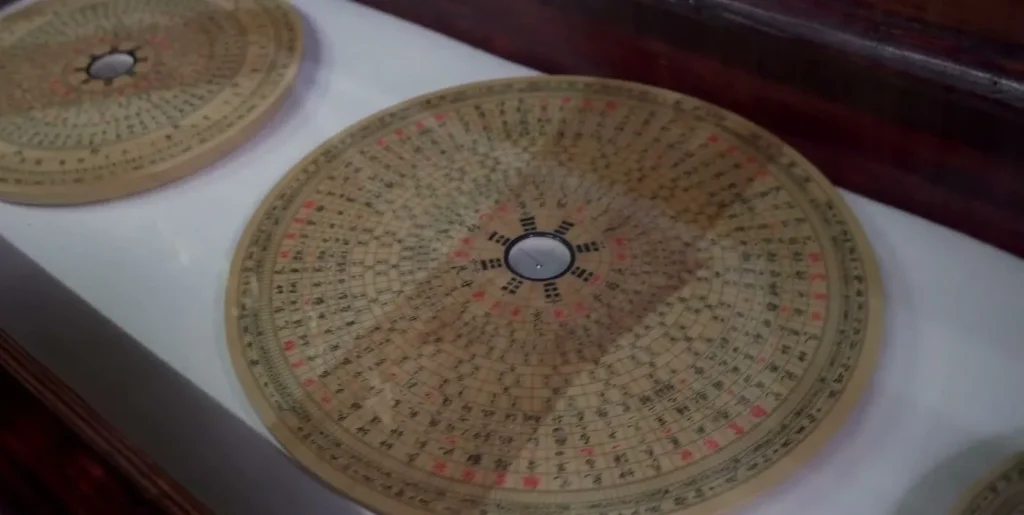
The luopan (罗盘) is the feng shui compass, and it doesn’t tell you where to put a sofa. It’s a reference instrument that gives the exact facing of a building, then lines that facing up against rings of formulas. The Chinese compass was traditionally called the south-pointing needle (指南针 zhinan zhen), and that’s still the ordinary Chinese word for a compass.
A luopan has a square base, a round plate that turns on it, a needle in a small window at the center, and red threads stretched across the whole thing as sighting lines. Around the needle come the eight trigrams, and after them ring upon ring of characters.
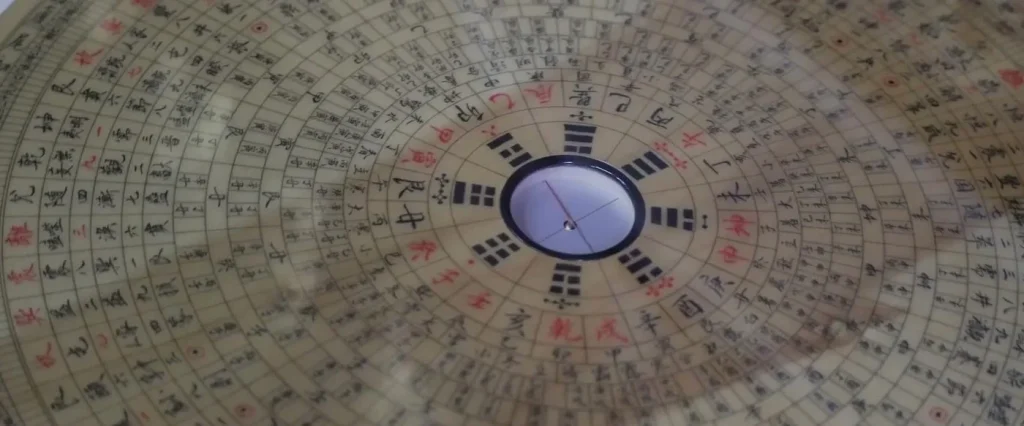
A big one can hold up to 40 rings. The ring that matters most splits the circle into 24 directions of 15 degrees each, the twenty-four mountains (二十四山), so a house isn’t just “south-facing” but faces one exact fifteen-degree slice.
Three main types have been in use since the Ming and Qing dynasties, named San He, San Yuan and Zong He. Each carries the rings its own methods need, which is why two luopans can look quite different. I can read the outer marks on one the way I read an almanac page, but I wouldn’t call myself a compass man, and I leave a full reading to people who’ve given their working lives to it.
Reading a house and its courtyards
1 min read · 1 photo
What makes a house good in feng shui is the same thing that makes a site good: support behind it, an open approach in front, and a door that takes in what the land brings. The classic Chinese house answers this with its orientation, sitting north and facing south (坐北朝南). In northern China that puts the main rooms in the winter sun and turns their backs on the cold wind.
The sitting side and the facing side are the first two facts anyone records. “Facing” here means the direction the building looks out toward, and it isn’t always the side with today’s street door.
A big compound takes the same idea and repeats it. Each yard is walled in, with rooms on its sides, so it works like a small basin that holds air, light and rain before passing you on to the next one. Seen from above, the walls and the open yards are easy to tell apart.
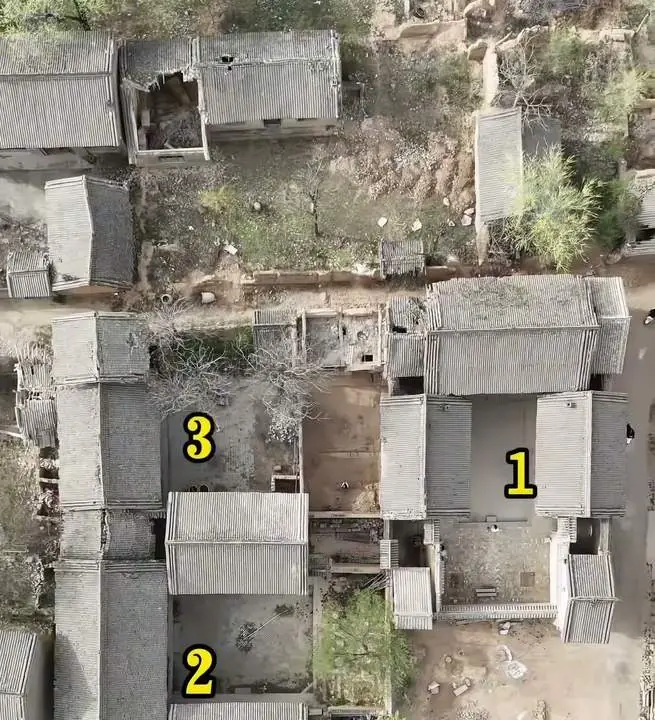
To try this on your own place, walk around it once and note three things. What stands behind the house, what’s aimed at the front door, and whether the way in feels pinched or open. That’s the old Form reading in its smallest version, and it needs no equipment at all.
Gates, entrance halls and main halls: where qi enters a Chinese house
2 min read · 4 photos
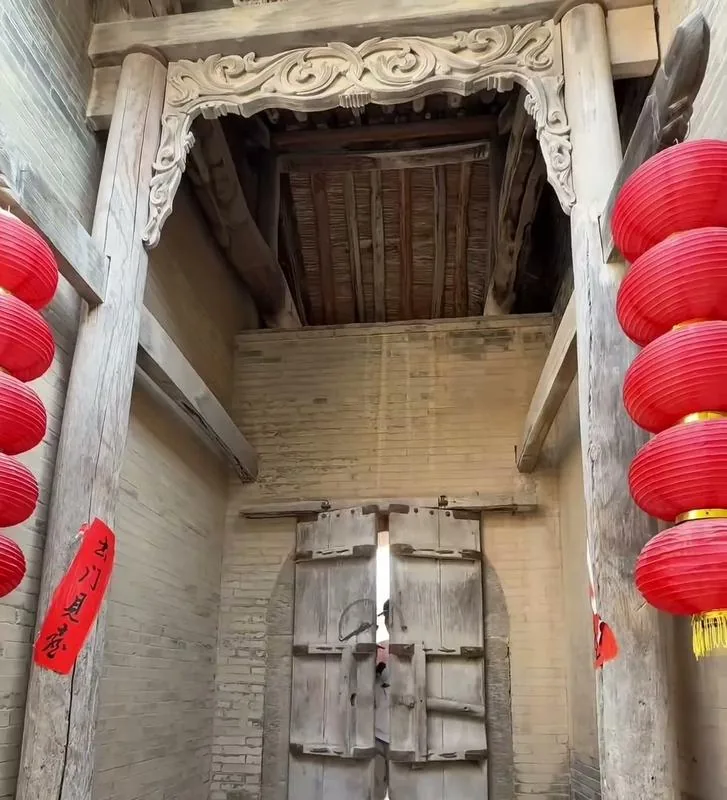
The gate gets more attention than any other part of a traditional house, because feng shui calls it the mouth of qi (气口 qi kou). What arrives at the house comes in here, and so does the family. That’s why a Shanxi gate is rarely a plain hole in a wall.
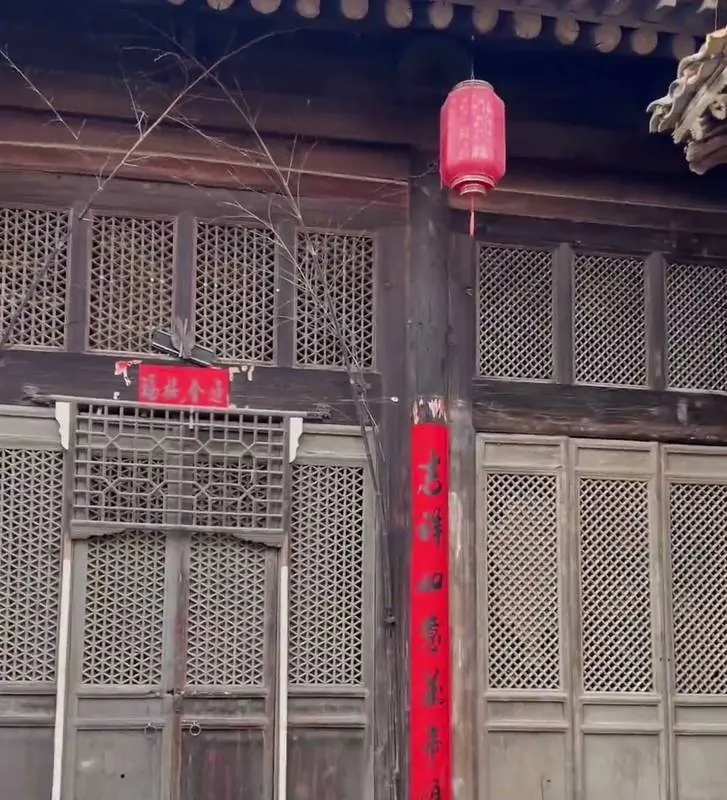
The gate passage below has a carved timber frame, and families hang their paired red lanterns here for the same reason: this is the face the house shows the street. The door itself sits back from the lane, so nobody steps straight from the road into the yard.
South of the Yangtze the same logic turns inward. Huizhou houses are built around a narrow skylight well, the tianjing (天井), literally “sky well.” Rain runs off the roofs into it from all sides, and the old phrase for that is four waters returning to the hall (四水归堂). Water means wealth in this reading, so the roof is drawn to keep it in the house.
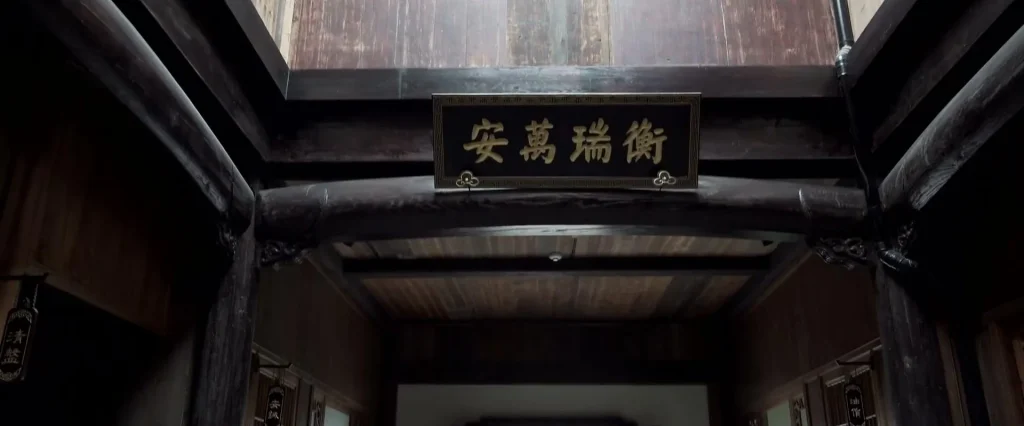
Under the opening, the entrance hall sets the tone for everything beyond it. The plaque in this one is read from right to left in the old way, and it’s the kind of good wish that greets you before anyone speaks.
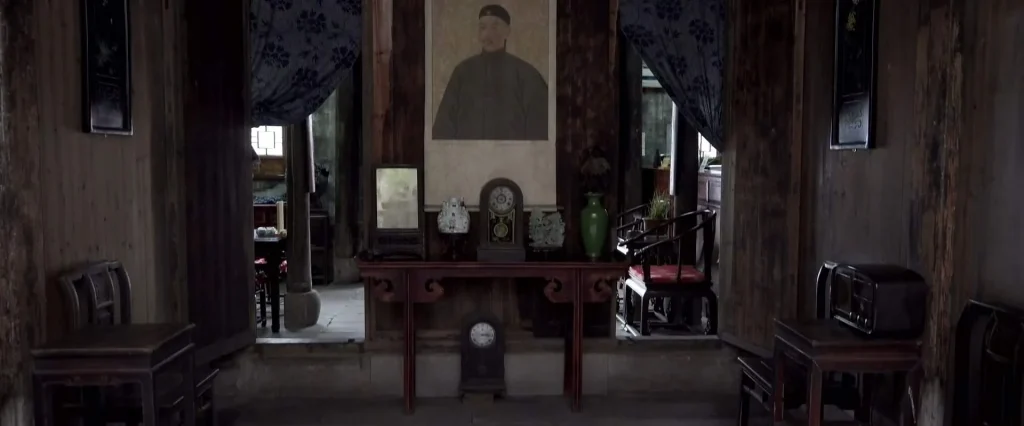
Past the entrance, the main hall (堂屋 tang wu) is where the house stops moving and settles. A long table stands against the back wall, the ancestors or elders hang above it, and chairs line up on both sides. Everything’s placed on the center line, and the back wall is solid, which is the armchair again in furniture.
Northern halls often open their whole front with tall lattice doors, so the yard’s light reaches the room. Red couplet strips go up on the posts at New Year. They’re festival paper, not feng shui equipment, though I’ve never seen a house where the family bothered to separate the two.
Screen walls: why old Chinese gates hide the view
1 min read · 1 photo
A screen wall (影壁 yingbi, also called a spirit screen) stops a straight line from reaching the house. It stands just inside or outside the gate, so you have to turn a corner to enter. The folk explanation is that harmful spirits travel in straight lines and can’t get around corners.
Feng shui says much the same about sha (煞), the harsh, cutting kind of qi that comes at a house head-on. English books call these lines “poison arrows.” A road running straight at a front door, a sharp roof corner aimed at a window and a long corridor ending at a bed are the common examples.
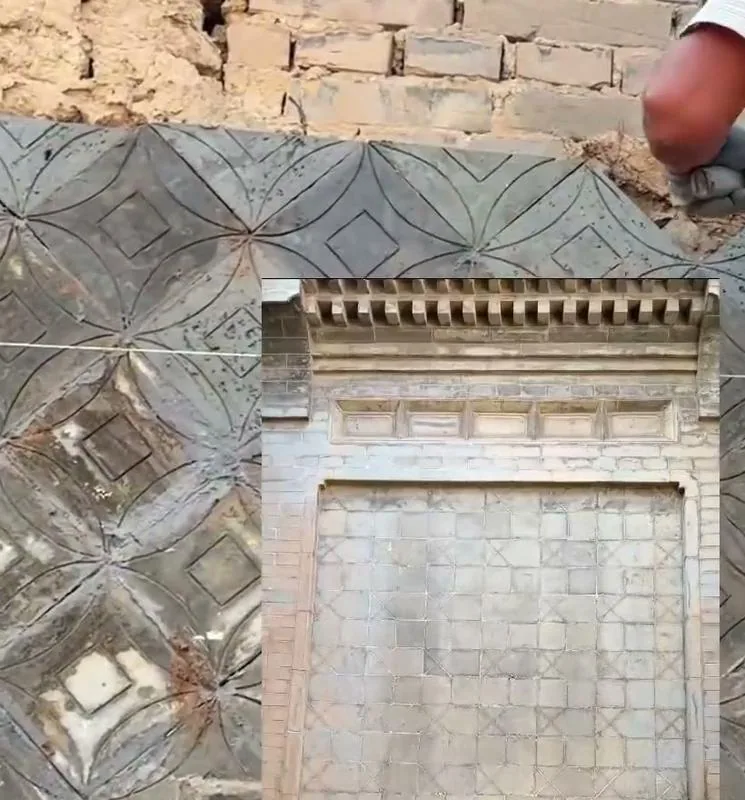
There’s a plainer reason too. A screen gives the household privacy, because a passerby at an open gate sees a decorated wall and not the family’s yard. Screens were also status pieces, built in brick, wood, stone or glazed tile, and a wealthy family put its money where every guest would stop and look.
The brick example below is carved in a coin pattern around its framed center, which says plainly what the family hoped would stay on their side of the wall. Only part of the screen is shown here, not the full face.
You don’t need brick to borrow the idea. A bookcase, a tall plant or a folding screen does the same job in an apartment where the front door opens straight onto a long view through the rooms.
Feng shui objects: bagua mirrors, pixiu and gourds
2 min read · 3 photos
Feng shui objects, often called cures, are meant to patch a problem the building can’t fix. The full list of feng shui items runs long, but three are worth knowing first, because each has a definite job and most shops blur them together.
The bagua mirror is the sharpest of the three. It’s a small mirror in an eight-sided frame of trigrams, and it’s hung outside, above the door, facing whatever’s sending sha at the house. It isn’t a room decoration, and tradition warns against aiming one at a neighbor or hanging one indoors.
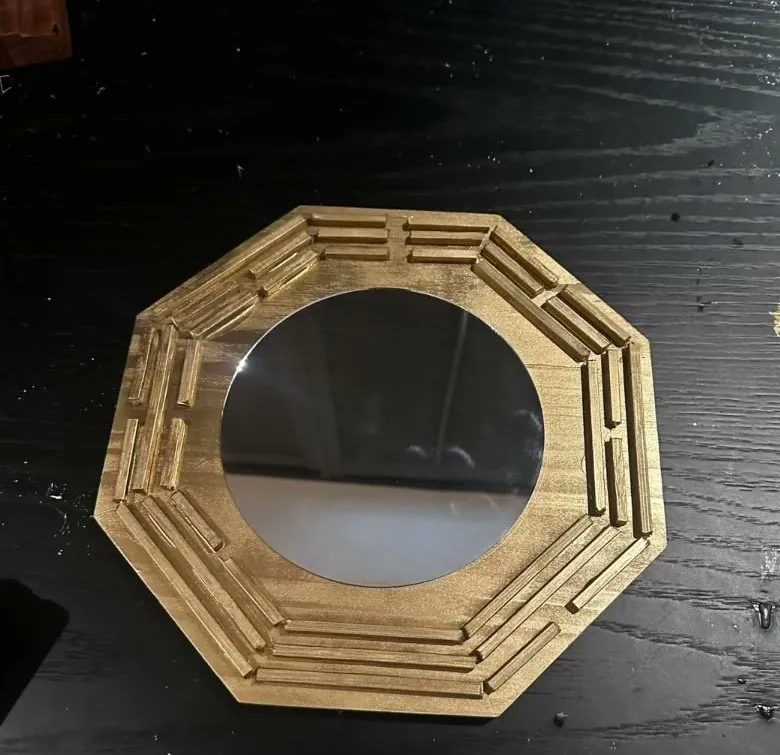
The one pictured here is a handmade replica with a gold-painted frame, not an old mirror taken down from a lintel. It’s a fair picture of the layout, with the round glass in the middle and the trigram bars around it, but no one should mistake it for an antique.
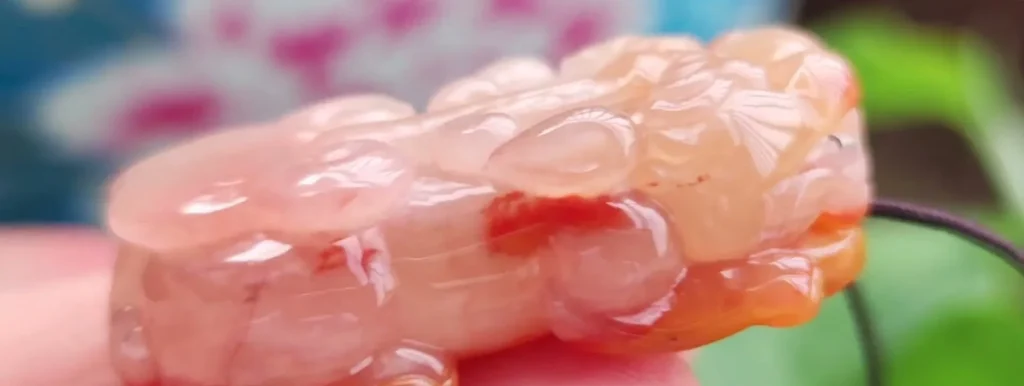
The pixiu (貔貅) is a winged, dragon-headed beast from Chinese myth, said to crave gold and silver. One well-known story says the Jade Emperor punished it so that it could swallow treasure but never pass it, which is how it became the animal for keeping money in. People usually place one facing the door, or carry a carved one on a cord.
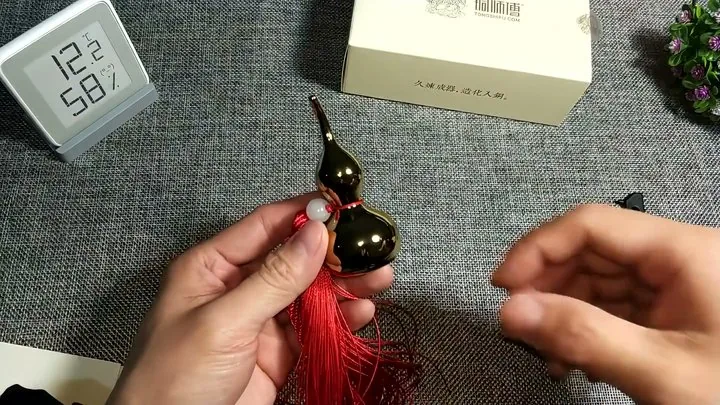
The gourd (葫芦 hulu) is the object I know best. Its name sounds like fu lu (福禄), good fortune and rank, and a gourd with a narrow neck is an old Taoist image for a vessel that holds things in. Immortals carry them in temple paintings, and I’ve drawn plenty myself. Families hang small metal ones by a bed or a door.
You’ll also meet the three-legged money toad, strings of five emperors’ coins and the Wenchang tower for students. I’ll say the same about all of them: these are traditional symbols, and none comes with a guarantee. People do carry charms up the mountain for kaiguang (开光, “opening the light”), the rite that consecrates an object. I’ve done it, and it makes a thing sacred to its owner. It doesn’t turn a stone into a bank.
Feng shui tips for a modern home: the basic rules, room by room
2 min read · 1 table
The most useful feng shui tips for a house come straight from the old rules above: protect the door, sit with support behind you, see what’s coming and keep paths open. Most of the list costs nothing. Here are the rules I’d keep, with the idea each one comes from.
| Place | The common rule | The old idea behind it |
|---|---|---|
| Front door | Keep the walkway clear, the door working and the light on | The door is the mouth of qi |
| Entry | If the door looks straight through to a back door or window, break the line with furniture or a screen | Qi that runs straight through doesn’t gather |
| Bed | Put a solid wall behind the headboard, and see the door without lying in line with it | The armchair, and the commanding position |
| Desk | Sit with a wall at your back, facing into the room | The Black Tortoise behind you |
| Sofa | Back it against a wall rather than floating it in front of the door | Support behind, open view ahead |
| Stove | Keep it working and clean, and don’t stand with your back straight to the kitchen door | The hearth feeds the house, and it’s home to the Kitchen God |
| Bathroom | Keep the door shut and the drains in order | Water means wealth, and drains carry it away |
| Mirrors | Don’t face one at the bed or straight at the front door | A mirror throws back whatever comes at it |
The “commanding position” is the modern name for what the table asks of bed, desk and stove: sit where you can see the door without being directly in line with it. Feng shui bedroom rules run longest of any room, so they get a page to themselves.
Three more habits apply everywhere:
- Clear clutter from paths first. Hallways and the space behind doors matter more than shelves, because the rule is about movement.
- Mend things. A stuck door, a dripping tap and a dead bulb at the entry are the first items on any traditional list.
- Keep living plants healthy. A sick plant works against you here, so choose feng shui plants you can look after, and first see which New Year plants aren’t safe around children and pets.
My own room on Maoshan is small, so the desk where I write faces the door with the wall behind it, and I’ve never moved it. I’d like to claim a compass told me to do that. Really it’s where I can see who’s coming up the path before they knock.
Start with the front door: clear the walk, mend the latch and leave a light on tonight.
Does feng shui really work? What I’d claim and what I wouldn’t
1 min read
No, not in the sense of changing your money, marriage or luck through furniture. There’s no empirical evidence that feng shui has those effects, and scientists class its claims as non-scientific. That’s the tradition’s weak spot, and I’d rather state it myself than leave it for you to find.
So treat every “this attracts wealth” line in this guide as what it is: a traditional saying, offered for interest, and not a promise. Don’t let it decide anything about your health, your money or a legal matter. If a consultant says your illness comes from a door, go to a doctor.
What does hold up is less grand. A house with a clear entry, a good chair and enough daylight is simply nicer to live in, and much of the Form branch reads like careful old building sense. South-facing rooms really do catch the winter sun in northern China.
Most of those who bring this question up to Maoshan aren’t asking about the science anyway. Usually they’ve just had a run of bad months and want something they can do with their hands. Moving a bed won’t turn a year around, and I tell them that. Giving a home a good cleaning and a fresh look at what’s in it has never hurt anybody.
Feng shui questions: pronunciation, lucky numbers and turtles
1 min read
How do you pronounce feng shui?
Most Americans say “fung shway,” and that’s close to the Mandarin. The second word rhymes with “way,” not “shoe.”
What is the luckiest number in feng shui?
Eight is the number most people name, because ba (八) is close in sound to fa (发), “to get rich.” The Beijing Olympics opened at 8 p.m. on August 8, 2008, for that reason. Four is the one avoided, since si (四) is a near-homophone of the word for death. Flying Star practitioners also count twenty-year periods, and most put the start of Period 9 in February 2024, so some of them now rate nine above eight.
Why do people use turtles in feng shui?
The turtle stands for the Black Tortoise, the guardian of the back of a site. That’s why a feng shui turtle usually goes behind you, on a shelf at your back or at the rear of a house, and not out in front.
What does feng shui say about a house with a bad layout?
Tradition doesn’t call any home hopeless. Almost every rule comes with a fix, such as a screen, a plant or a change in the furniture. If the fix would make the room worse to live in, I’d skip it.
Wind and water still come first on any site, so I’d start with the ground under a house and the door that faces it. The calendar and customs that sit beside feng shui are the rest of what I write about at Zodiac & Tradition.
Newest in this topic
- Decluttering with Feng Shui: Where to Start, Room by RoomStart at the front door and work inward. Room-by-room steps, what to throw out first, and which rules come from a 1998 Western book or from Chinese house manuals.
- Feng Shui Rules: 9 Basic Principles for Your HomeNine basic feng shui rules for a house, from beams and front doors to clutter, light and fish tanks, with real examples and what each one is for.
- Fish in Aquarium Feng Shui: Where to Place a Fish TankFish tank feng shui in plain terms: why an aquarium stands for wealth, the two spots every school rules out, and where the advice splits.
All guides in this topic
4 guides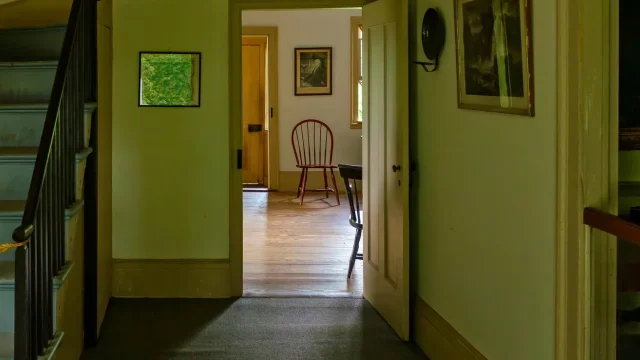
Decluttering with Feng Shui: Where to Start, Room by Room
Start at the front door and work inward. Room-by-room steps, what to throw out first, and which rules come from a 1998 Western book or from Chinese house manuals.
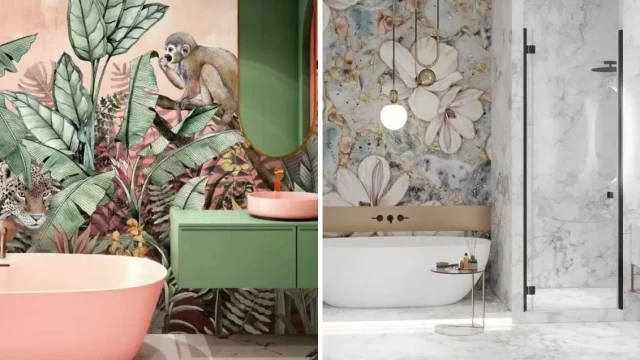
Feng Shui Bathroom Colors by Element and Direction
Which colors suit a bathroom in feng shui: earth tones and greens to steady water, how to use pink, navy and black, and how to match color to direction.
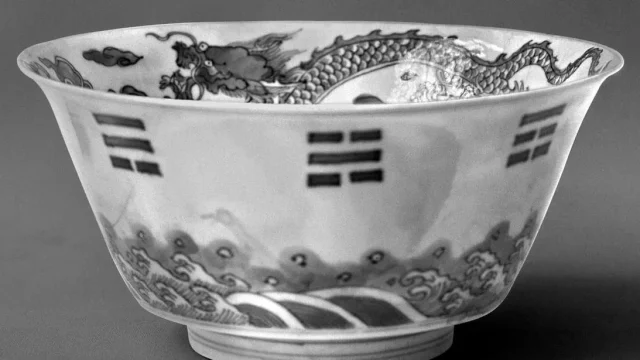
Feng Shui Rules: 9 Basic Principles for Your Home
Nine basic feng shui rules for a house, from beams and front doors to clutter, light and fish tanks, with real examples and what each one is for.
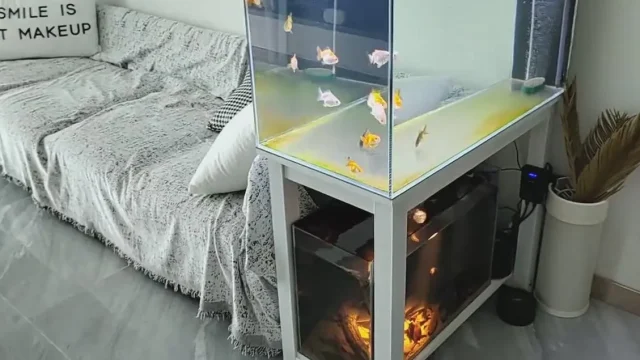
Fish in Aquarium Feng Shui: Where to Place a Fish Tank
Fish tank feng shui in plain terms: why an aquarium stands for wealth, the two spots every school rules out, and where the advice splits.
More topics
- Feng Shui ItemsFeng shui items are objects placed to guard a home or invite luck. Here's what the pixiu, money toad, bagua mirror, gourd and coins mean, and where each goes.