Chinese Spring Rolls Recipe: Traditional Shanghai New Year Rolls
By Daozhang MaMaoshan Taoist, Jintan, Jiangsu
In short
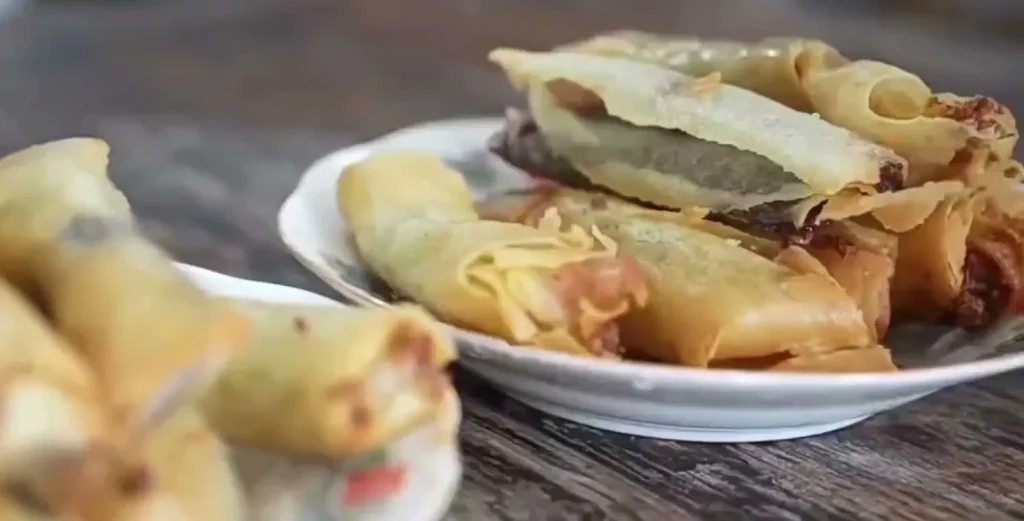
Chinese spring rolls are crisp, golden New Year rolls, and this version comes from Fengxian, the farming country on Shanghai’s southern edge, where families fry them for the holiday instead of wrapping dumplings. By my estimate one batch takes about 2 hours, including the time the filling needs to cool, and gives three fillings: savory pork with yellow chives, peppery white radish and sweet red bean paste. The fold is easy enough for a first try, and the rolls need only two to three minutes in the oil.
What decides the result is the order of work. The pork is cooked and cooled before it ever meets a wrapper, because the skin browns long before raw meat could cook through. I’ll start with the shopping, go through each filling, then wrap and fry, and finish with what goes wrong, what you can swap, and how these differ from egg rolls.
Ingredients for Chinese spring rolls with three fillings
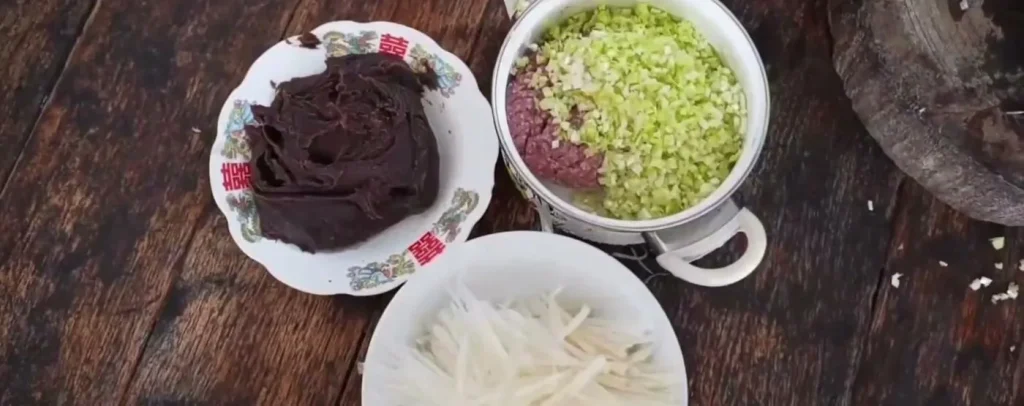
Farm cooks work this recipe by eye, so the amounts below are my own estimate for about 25 rolls, not measured figures. Treat them as a starting point and taste as you go.
For the wrapping and frying:
- About 25 thin spring roll wrappers, sold fresh or frozen at Asian grocers
- 2 tablespoons cornstarch or potato starch, for thickening and sealing
- Neutral oil for frying, plus 1 tablespoon for the wok
For the pork and yellow chive filling:
- 8 oz (225 g) minced pork
- 4 oz (115 g) yellow chives
- 1 teaspoon minced ginger
- 1 tablespoon Shaoxing rice wine
- About 3/4 teaspoon salt and a pinch of MSG, split between the bowl and the wok
- A pinch of xian la fen
For the radish filling:
- 1 large white radish (daikon), about 1 lb (450 g)
- About 1 1/4 teaspoons salt
- A pinch each of MSG and xian la fen
- 1 scallion, chopped
For the sweet filling:
- 1 cup (about 280 g) sweet red bean paste
Two of those names need a word. Yellow chives, jiuhuang (韭黄), are Chinese chives grown away from light, so they stay pale and taste milder than the green kind. Xian la fen (鲜辣粉) is a hot, savory seasoning powder whose blend varies by brand. I couldn’t find one reliable recipe for it, so if your store doesn’t carry it, I’d use ground white pepper with a small pinch of chili powder.
Rolls this size are easy to make ahead, so pick your frying day first from the day-by-day calendar in my Lunar New Year guide.
Radish filling: salt it, rinse it, squeeze it dry
Radish comes first because it needs time to sit. The country reasoning is simple: spring is when you eat radish, and it gives the batch a change of taste.
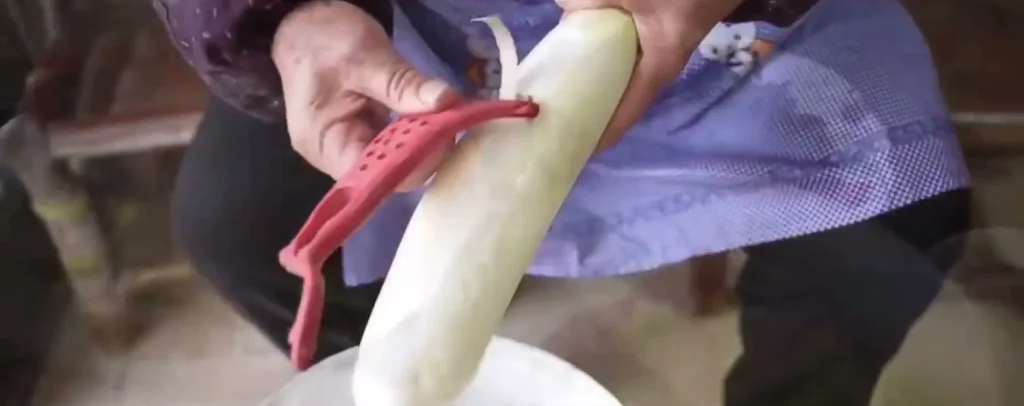
Step 1. Peel the radish. Take the skin off the whole radish with a vegetable peeler before you do any cutting.
Step 2. Shred and salt it. Cut the radish into thin shreds with a sharp knife or cleaver. Toss them in a bowl with about 1 teaspoon of salt.
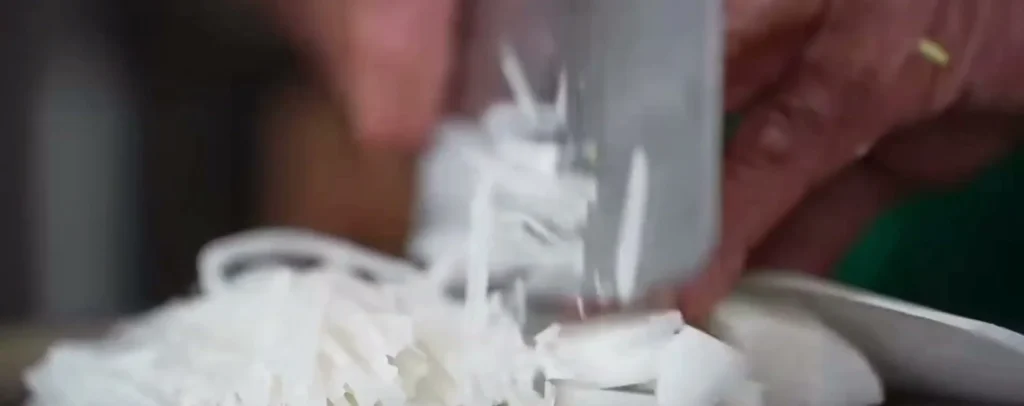
Step 3. Rinse and squeeze. Leave the shreds until they turn limp, which I’d guess takes 15 to 20 minutes. Rinse off the salt under the tap, then squeeze the radish by the handful until very little water comes out.

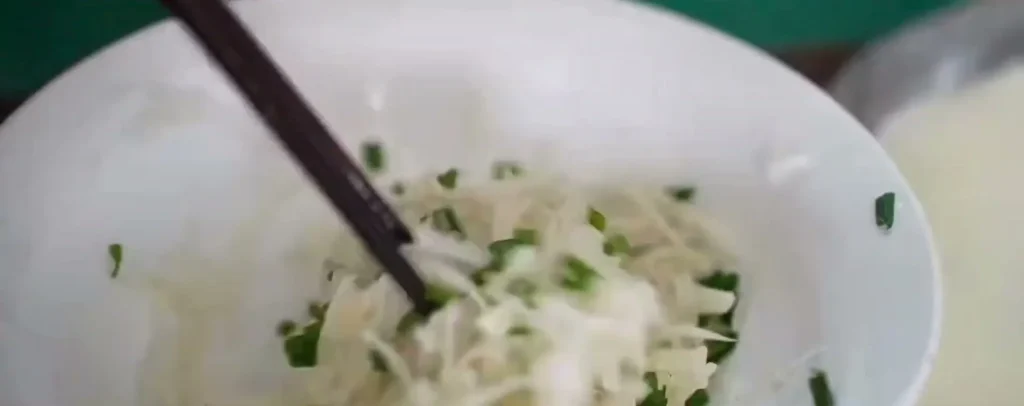
Step 4. Season it again. Mix the squeezed shreds with a small pinch of salt, the MSG, the xian la fen and the chopped scallion. Use a light hand with the salt, since the first round has already seasoned the radish.
Pork and yellow chive filling: cook it first, then cool it
With the radish resting, move on to the filling most Fengxian rolls hold. Yellow chive and minced pork is the usual choice there because yellow chives bring more fragrance to the meat.
Step 5. Wash and chop the chives. Rinse the yellow chives well under the tap and shake off the water, since wet chives will only add liquid to the filling.
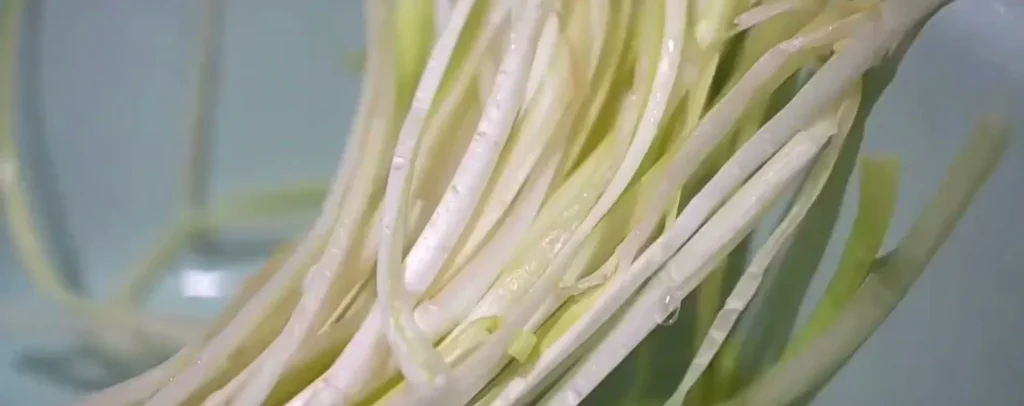
Then gather the chives into a bundle and cut across it with a cleaver or large knife, into pieces of about 1/4 inch (5 mm).
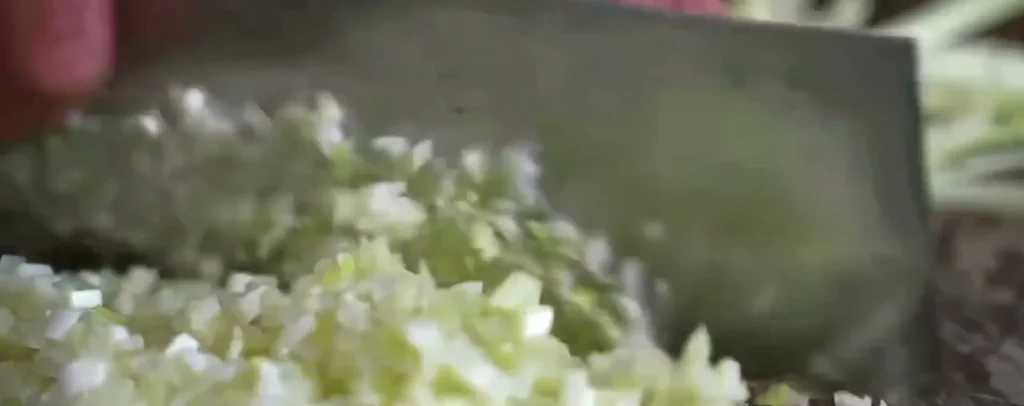
Step 6. Season the raw mix. Put the chives on top of the pork in a large bowl. Add the ginger, rice wine, about 1/2 teaspoon of salt and half the MSG.
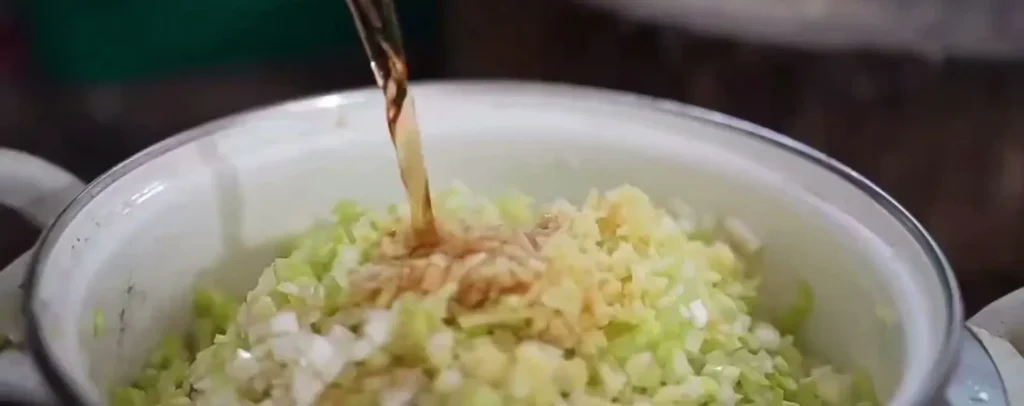
Step 7. Mix until even. Stir with chopsticks until no patches of plain pork are left.
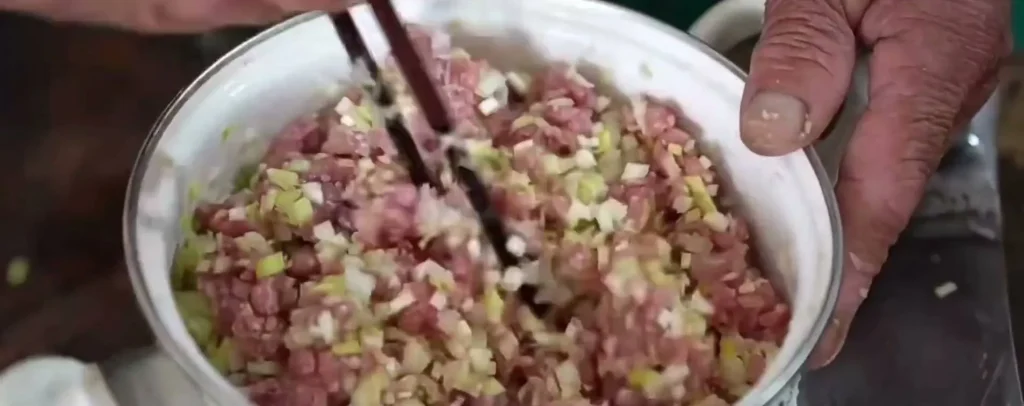
Step 8. Stir-fry the filling. Heat 1 tablespoon of oil in a wok over medium-high heat and tip in the mix. Keep it moving until the pork has lost all its pink, breaking up any clumps with the spatula.
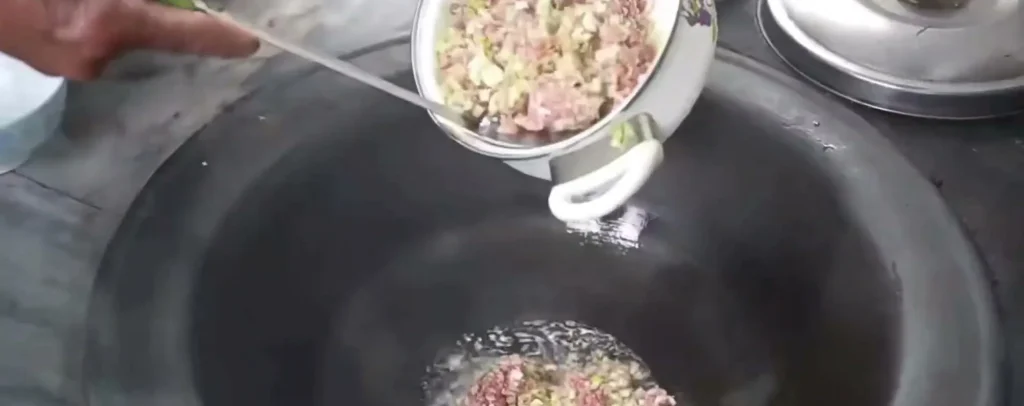
This step exists because of the wrapper. It’s so thin that it scorches quickly in hot oil, and by the time the skin is done, raw meat inside could still be uncooked.
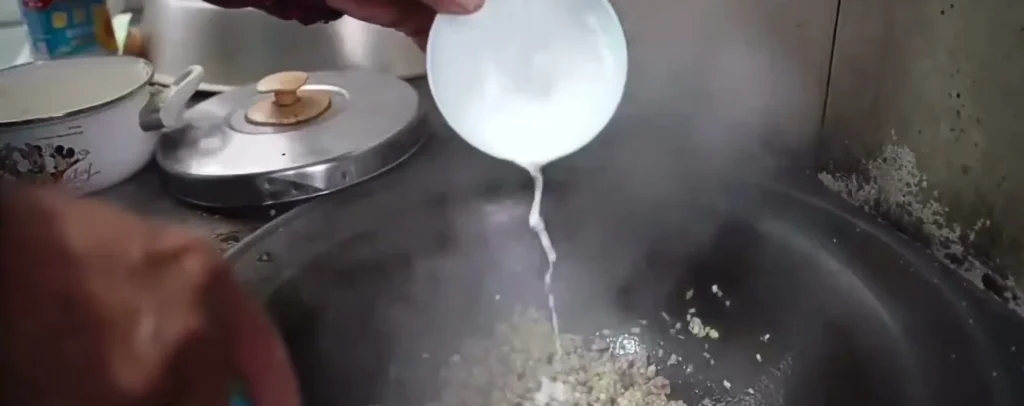
Step 9. Season and thicken. Add the rest of the salt and MSG and the xian la fen. Stir 1 tablespoon of starch into 2 tablespoons of cold water, pour it in, and stir until the juices turn glossy and cling to the meat.
Step 10. Cool it completely. Spread the filling on a plate and wait until it’s cold to the touch. Don’t wrap it warm. Many recipe writers chill theirs for an hour, since a cold filling is easier to handle.
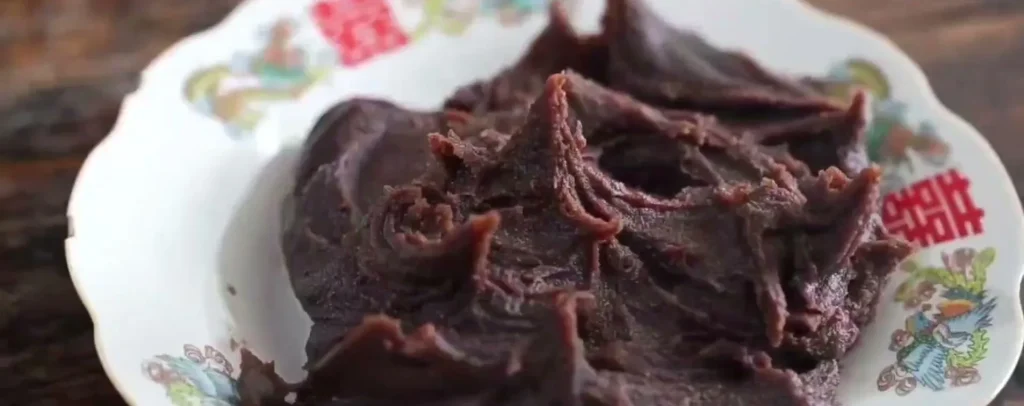
Sweet red bean spring rolls need no cooking
The third filling is the quickest. Sweet red bean paste, dou sha (豆沙), goes in straight from the plate, so the only job is to keep it thick enough to hold a shape. You can read more about how this paste turns up in New Year sweets in my guide to Lunar New Year desserts.
How to wrap Chinese spring rolls so they stay shut
Once all three fillings are cold, set up a clean tray and keep the stack of wrappers under a damp towel. The wrappers I’m working from are round, roughly 7 to 8 inches (18 to 20 cm) across by comparison with the hands holding them. Square wrappers from a US grocery fold the same way if you start with a corner facing you.
Step 11. Lay out the filling. Put a wrapper on the tray and spread about 1 1/2 tablespoons of filling in a strip near the edge closest to you. Keep it a little shorter than the wrapper is wide, then bring that near edge up and over the strip.
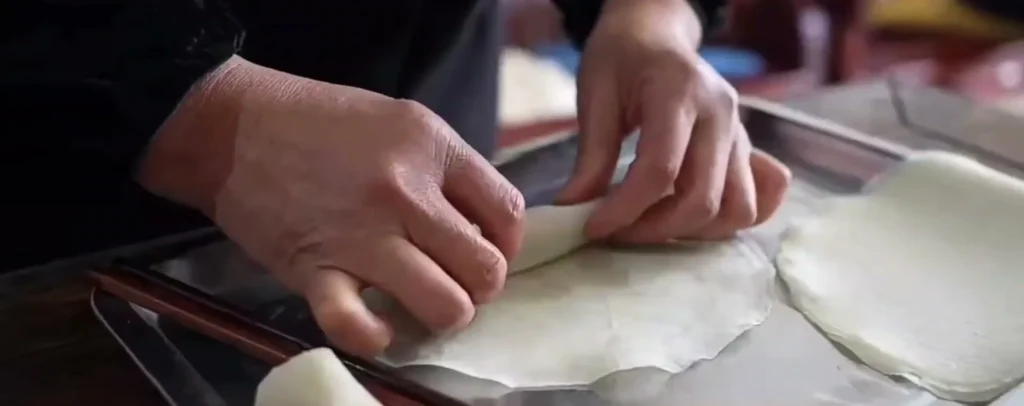
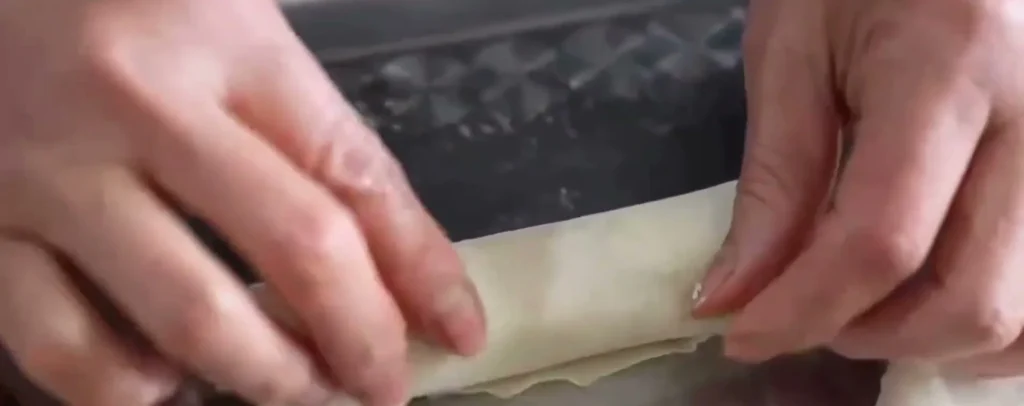
Step 12. Fold in the sides. Press the left and right sides of the wrapper in over the ends of the filling, so both ends are closed before you roll on.
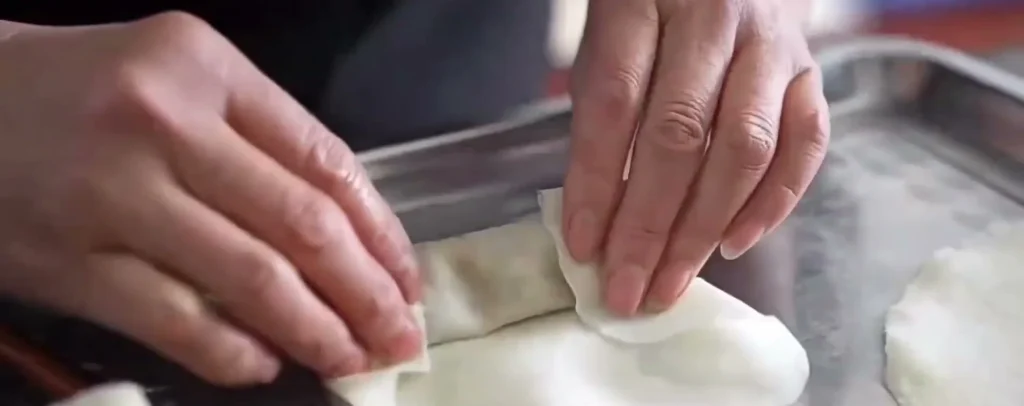
Step 13. Roll it snug. Roll away from you with both hands, keeping the strip tight without pulling at the skin. A finished roll comes out roughly 4 to 5 inches (10 to 13 cm) long and about 1 inch (2.5 cm) thick, which is my estimate from the hands around it.
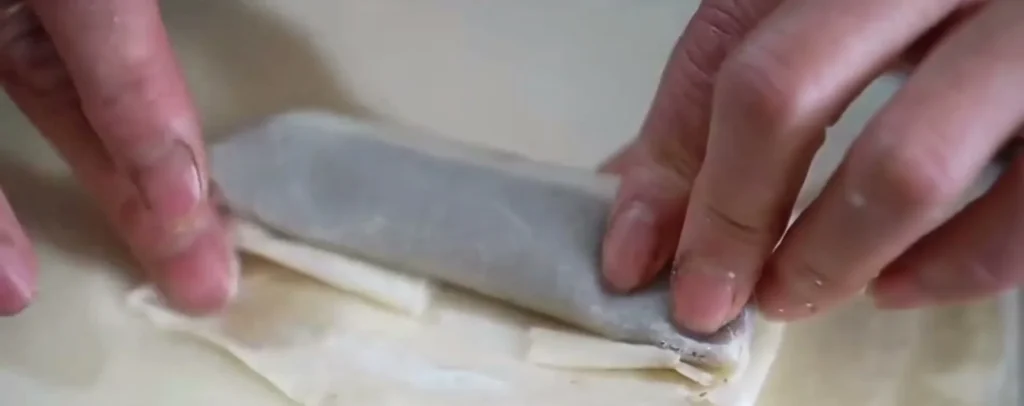
Step 14. Seal with starch, not water. Dab the last edge with starch and press it down. Plain water tends not to hold, while starch sticks, and a roll sealed this way is less likely to burst in the oil. The usual way to do this at home is a thick paste, made by stirring 1 tablespoon of cornstarch with 1 tablespoon of boiling water.
How to fry spring rolls until the shell turns golden
Frying is the short part, and color tells you everything. Pour oil about 2 inches (5 cm) deep into a wok or heavy pot, and never fill it more than halfway. Farm cooks go by eye here, so the thermometer reading is my addition: home recipes mostly land between 325°F and 350°F (165°C to 175°C).
Step 15. Lower the rolls in. Slide each roll down into the oil on a large ladle instead of dropping it from above. Fry a few at a time so they have room to turn.
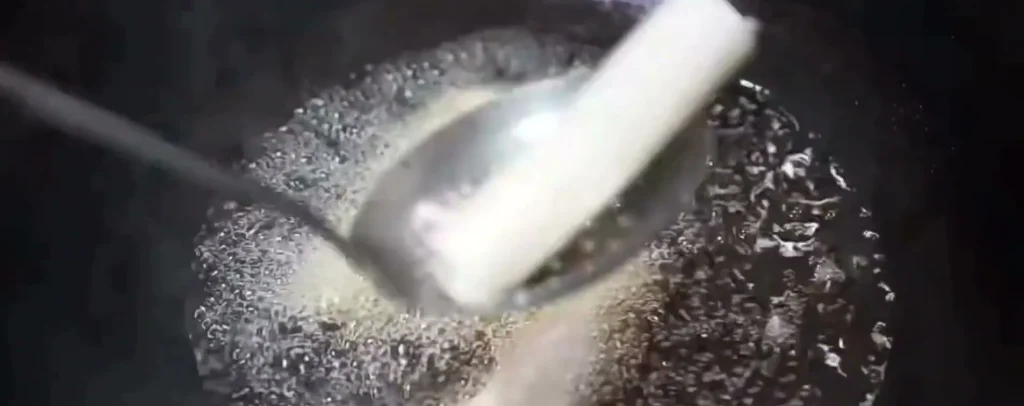
Step 16. Watch the color. Turn the rolls now and then, and let them fry for about two to three minutes. The skin will blister first, then darken from the edges.
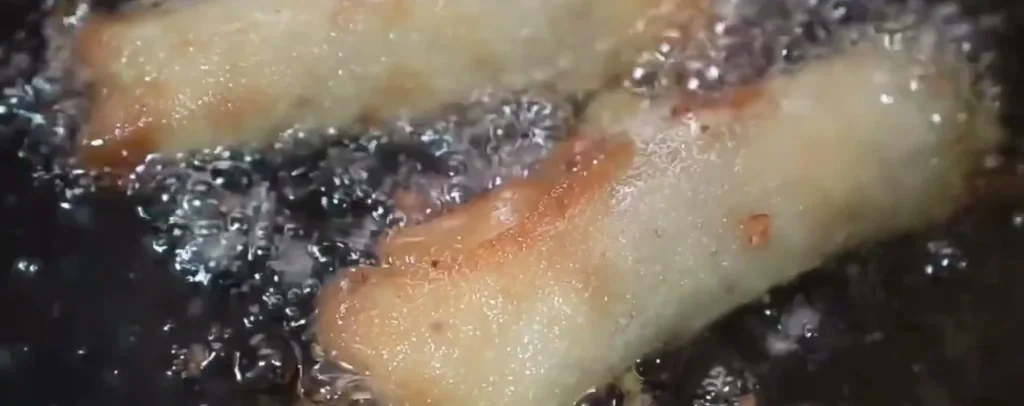
Step 17. Lift them out at golden. Take the rolls out as soon as the whole shell is golden, because the filling is already cooked and has nothing left to wait for.
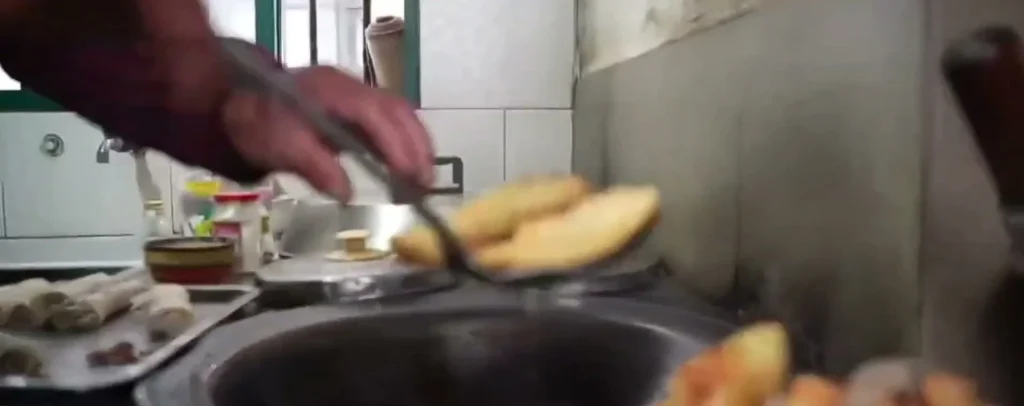
Step 18. Plate them hot. Move the rolls to a plate, let the oil drain off for a minute, and serve them while the shell still crackles. Rice vinegar is a common dip in the Shanghai area.
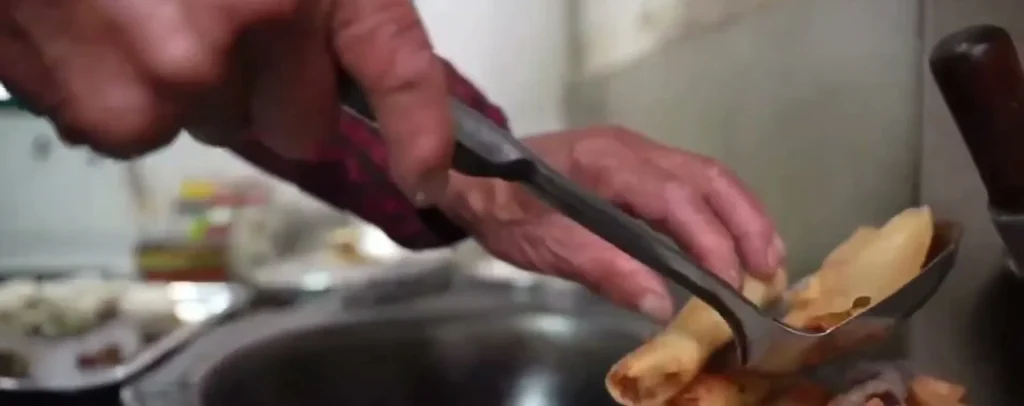
Warn people about the sweet ones, since red bean paste stays hot long after the shell feels fine. Cut one open and you’ll know which filling you’ve got.
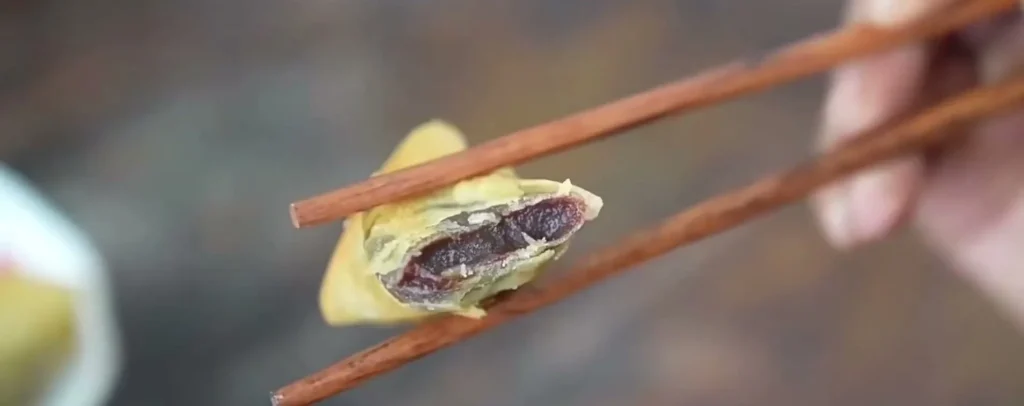
The pork roll is the savory one, with the chives still showing through the meat, and it’s the filling I’d make the most of for a crowd.

Common Chinese spring roll problems and how to fix them
Most failed batches come down to moisture or heat, and you can usually tell which from the roll itself.
| What went wrong | Likely cause | What to do |
|---|---|---|
| Roll bursts in the oil | Edge sealed with water, or too much filling | Seal with starch paste and stay near 1 1/2 tablespoons per roll |
| Shell dark, middle underdone | Filling went in raw | Cook the pork filling fully before wrapping |
| Wrapper goes soft or tears before frying | Warm filling, or wet radish | Cool the filling all the way and squeeze the radish again |
| Shell pale and greasy | Oil too cool, or too many rolls at once | Fry fewer at a time and let the oil recover between batches |
| Wrappers dry and crack as you fold | Stack left uncovered | Keep them under a damp towel and take one at a time |
Swaps and other ways to cook Chinese spring rolls
These changes all work, though each one moves the roll a little away from the Fengxian original.
- Yellow chives: green garlic chives give a stronger flavor, so use a little less.
- Pork: minced chicken works in the same steps and gives a leaner roll.
- Shaoxing wine: dry sherry stands in well.
- MSG: leave it out and add a touch more salt.
- Meat-free: the radish and red bean rolls have no meat, so you can simply skip the pork filling.
- Air fryer: brush the rolls with oil and cook at around 390°F (200°C) for 13 to 15 minutes, turning halfway.
- Oven: brush with oil and bake at about 400°F (200°C) for about 20 minutes, turning once. The shell won’t blister the way a fried one does.
New Year is the busiest stretch of my year on Maoshan, so I wrap a tray a few days ahead rather than on the day. Freeze the uncooked rolls in one layer until hard, then bag them, and fry them straight from the freezer without thawing. They take a little longer in the oil that way, and I keep the oil on the cooler side so the middle has time to warm through. If you’re counting back from the holiday, the Chinese New Year 2027 dates are on that page.
Are spring rolls Chinese? Where the New Year roll comes from
Yes, spring rolls are Chinese. The Mandarin name is chun juan (春卷), literally “spring roll,” and the Cantonese is chun gyun. The name goes back to food eaten around the start of spring, when thin pancakes were wrapped around the season’s first vegetables after a winter of preserved food. Today mainland China mostly eats them around the Spring Festival, which is why they sit on the New Year table.
The tradition people repeat most is that a row of golden rolls looks like gold bars, so they stand for wealth in the coming year. I don’t think a plate of anything can promise money, but I understand wanting the table to look like good news. It does the same job as the whole fish for Lunar New Year, which leans on a pun instead of a color.
Where you are in China changes what’s on that table. In the north the New Year food is dumplings, while around Shanghai a farm family may fry spring rolls instead. They weren’t always a household dish, either. In many farming homes of the older generation, the adults were too busy in the fields to make them, and rolls appeared mainly at banquets, when someone was hosting a meal for an occasion. Each guest might get just one or two, and they were remembered as delicious partly because there were never enough.
Chinese spring rolls vs egg rolls and pancake rolls
If you learned these from an American takeout menu, the names are easy to mix up. A Chinese spring roll has a thin, smooth wrapper that shatters when you bite it, and it stays fairly slim. An egg roll is a Chinese-American dish with a thicker wrapper, usually made with egg, which fries up bubbled and chewy.
A pancake roll is mainly a British name for a large takeaway spring roll, so the two are close to the same thing there. And a fresh Vietnamese summer roll belongs to a different family altogether: rice paper, no frying.
Written by
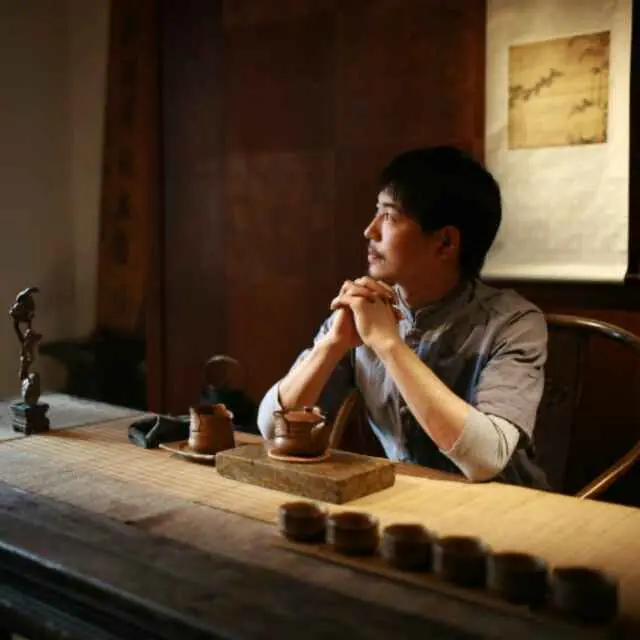
Daozhang MaMaoshan Taoist, Jintan, Jiangsu
Daozhang Ma is a Maoshan Taoist who has practiced for 22 years and is skilled at writing talismans and painting Taoist pictures. He runs Zodiac & Tradition.
About Daozhang Ma