Festivals · Complete guide
Chinese Festivals: 2027 Calendar and List of Traditional Holidays
Every traditional Chinese festival with its lunar date and 2027 date, why the dates move, how each one is kept, and which ones bring days off.
By Daozhang Ma Updated

In short
Looking for the dates of Chinese festivals usually ends in confusion, because almost every traditional one is fixed to the lunar calendar and lands on a different Western date each year.
The main traditional festivals are the Spring Festival, the Lantern Festival, Qingming, the Dragon Boat Festival, Qixi, the Hungry Ghost Festival and the Mid-Autumn Festival. In 2027 the Spring Festival falls on February 6 and the Mid-Autumn Festival on September 15.
I’ve laid out the full 2027 calendar first, then why the dates move, then each festival in the order the year brings them, and finally which ones come with days off and what the Chinese names mean.
Daozhang MaMaoshan Taoist, Jintan, Jiangsu
Explore by topic
Lunar New Year
Lunar New Year 2027 falls on February 6 and opens the Fire Goat year. Dates to 2031, the zodiac animals, couplets, temple rites and taboos.
39 guides insideThe guide · 12 chapters
Chinese festivals calendar: every traditional festival and its 2027 date
1 min read · 1 table
The table runs through calendar year 2027. The lunar date is the fixed part: Dragon Boat Festival is always the fifth day of the fifth lunar month, wherever that lands in June.
| Festival | Chinese | Lunar date | 2027 date | How it’s kept |
|---|---|---|---|---|
| Laba Festival | 腊八节 | 12th month, day 8 | Friday, January 15 | Laba congee of grains, beans and dried fruit |
| Spring Festival (Lunar New Year) | 春节 | 1st month, day 1 | Saturday, February 6 | Reunion dinner, couplets, red envelopes, 15 days of visits |
| Lantern Festival | 元宵节 | 1st month, day 15 | Saturday, February 20 | Lanterns, lantern riddles, sweet rice balls |
| Qingming Festival | 清明节 | Solar term, about April 5 | Monday, April 5 | Sweeping and tending family graves |
| Dragon Boat Festival | 端午节 | 5th month, day 5 | Wednesday, June 9 | Dragon boat races, zongzi, mugwort on the door |
| Qixi Festival | 七夕 | 7th month, day 7 | Sunday, August 8 | The Cowherd and the Weaver Girl, a lovers’ day |
| Hungry Ghost Festival | 中元节 | 7th month, day 15 | Monday, August 16 | Offerings to ancestors and wandering spirits |
| Mid-Autumn Festival | 中秋节 | 8th month, day 15 | Wednesday, September 15 | Moon viewing, mooncakes, family reunion |
| Double Ninth Festival | 重阳节 | 9th month, day 9 | Friday, October 8 | Climbing a height, chrysanthemums, honoring elders |
| Xiayuan Festival | 下元节 | 10th month, day 15 | Friday, November 12 | Taoist day of the Water Official |
| Winter Solstice | 冬至 | Solar term, about December 22 | Wednesday, December 22 | Dumplings in the north, rice balls in the south |
The next Spring Festival after that falls on January 26, 2028, and the Laba Festival that leads up to it lands on January 4, 2028. A festival that looks “early” or “late” in a given year is following the moon, and the next section explains how.
Why Chinese festival dates move every year
2 min read
Chinese festival dates move because the traditional calendar counts months by the moon, while the Western calendar counts by the sun. A lunar month starts on the day of the new moon and runs 29 or 30 days, so twelve of them come to about 354 days, eleven short of a solar year.
To stop the festivals drifting through the seasons, the calendar adds a leap month roughly every three years. The Spring Festival therefore swings back and forth between January 21 and February 20, and every other lunar-dated festival swings with it. The exact rules sit on the Chinese calendar page.
Full-moon festivals fall on the fifteenth day
Because each month starts at the new moon, the fifteenth day sits at or next to the full moon. Four festivals in the table use that day: the Lantern Festival in the first month, the Hungry Ghost Festival in the seventh, the Mid-Autumn Festival in the eighth and Xiayuan in the tenth.
The pattern explains the lanterns. A festival held on a bright night is a festival people can spend outdoors, and lanterns, moon viewing and river lights all belong to these four.
The full moon also matters for reunion. On the fifteenth the moon is round, and round things in Chinese custom stand for a family gathered whole. So the two big full-moon holidays, the Lantern Festival and the Mid-Autumn Festival, are both marked with round food: rice balls for one, mooncakes for the other.
Doubled numbers: third of the third, fifth of the fifth, seventh of the seventh, ninth of the ninth
The second pattern is the doubled date. In yin-yang thinking odd numbers are yang, so a day where the month and the day repeat the same odd number carries doubled yang. Several old festivals sit exactly there: the third of the third month (Shangsi), the fifth of the fifth (Dragon Boat), the seventh of the seventh (Qixi) and the ninth of the ninth (Double Ninth).
Doubled yang was read two ways. The fifth of the fifth fell in early summer heat, when sickness and insects spread, so its customs are protective: mugwort, realgar, five-colored threads. The ninth of the ninth is the highest single odd number repeated, and its customs turned toward long life.
Shangsi, the old spring outing by the water on the third of the third month, has mostly faded in China. You still meet it as a Zhuang and Li festival in Guangxi and Hainan, and as the date of some temple fairs.
Qingming and the Winter Solstice follow the sun, not the moon
Two festivals in the table ignore the moon entirely. Qingming and the Winter Solstice are two of the 24 solar terms, the markers that divide the sun’s year into fifteen-degree steps, so they hold almost the same Western date every year.
Qingming starts when the sun reaches 15 degrees past the spring equinox point, which puts it on April 4 or 5, occasionally April 6. The Winter Solstice is the year’s shortest day in the northern hemisphere, December 21 or 22.
For planning, that makes Qingming the easiest Chinese festival to book a trip around. Families who sweep graves on the solar date know it months ahead, while a Dragon Boat date can only be read off the lunar calendar.
Which is the biggest festival in China? The Spring Festival
1 min read
The Spring Festival, the Chinese or Lunar New Year, is the biggest festival in China by the measures that can be counted. It has the longest public holiday of the traditional festivals, four statutory days stretched into eight or nine with weekends, and it drives chunyun, the forty-day travel season when much of the country goes home.
In 2024 UNESCO added the Spring Festival to its list of the intangible cultural heritage of humanity. The celebration itself starts a week before the first day and closes on the fifteenth, so the festival covers a whole season, not one date.
Couplets on the door, the reunion dinner, the Taoist temple calendar and the taboos of the first five days all have their own walk-through on the Lunar New Year page, along with dates up to 2031.
The Lantern Festival closes the New Year on the first full moon
1 min read · 2 photos
The Lantern Festival falls on the fifteenth day of the first month, February 20 in 2027, and marks the last day of the New Year season. Its Chinese name, Yuanxiao, means “first night”: the first full-moon night of the year.
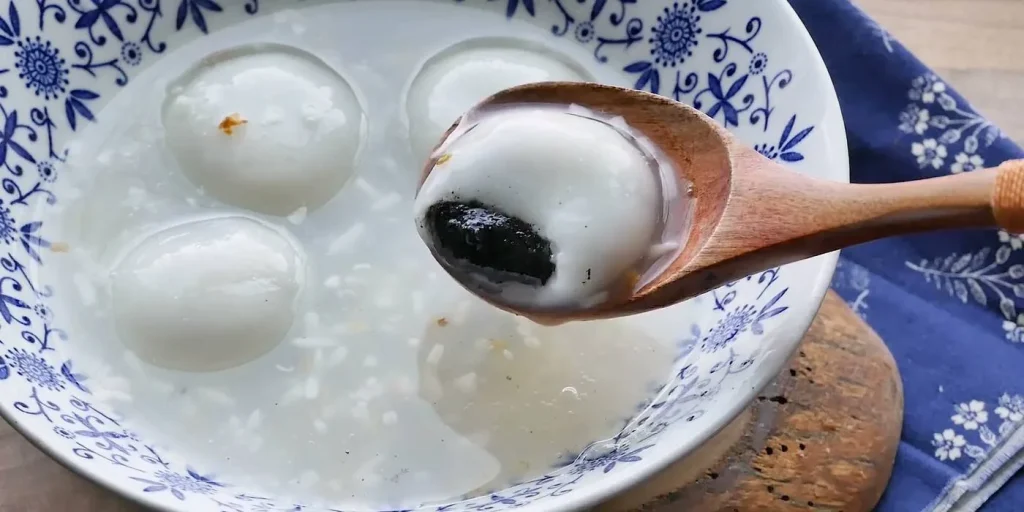
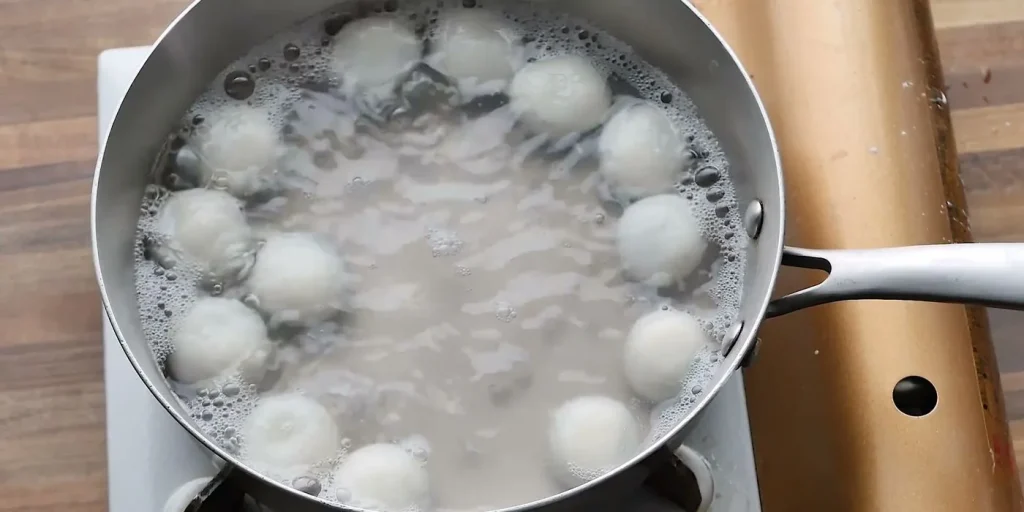
Lanterns are the point of the evening. Towns hang them along streets and in temple grounds, and many carry a riddle on a paper slip that visitors try to solve, a custom called caidengmi, guessing lantern riddles. Families eat tangyuan, glutinous rice balls filled with black sesame or red bean paste, served in their cooking water.
Taoist temples call the same day Shangyuan, the first of the Three Yuan, which I come back to below. Lantern shapes, riddle traditions and how to make tangyuan are on the Lantern Festival page.
Qingming Festival: sweeping the family graves in early April
1 min read · 2 photos
The Qingming Festival is the day families visit their ancestors’ graves, on April 5 in 2027. Qingming means “clear and bright”, the weather name of the solar term, and in Chinese families it’s the main day of the year for tending graves.
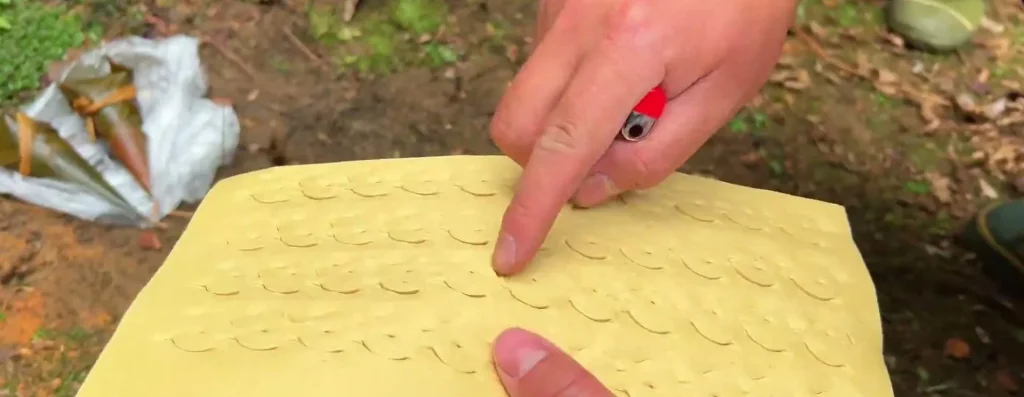
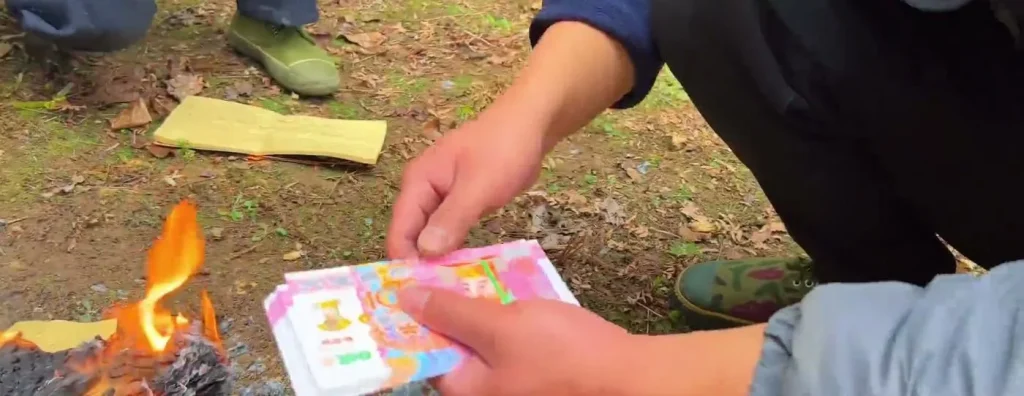
At the grave people pull weeds, add fresh soil, lay out food and wine, burn incense and joss paper, and bow. A sprig of willow over the door or in the hair is an old Qingming habit too, with willow standing against bad influence.
Qingming swallowed an older festival, Hanshi or Cold Food Day, when people ate only cold food for a day or more. The day is also for spring outings: flying kites and walking in the new green fields go with it. In the Jiangnan region people eat qingtuan, green rice dumplings colored with mugwort juice. The full customs are on the Qingming Festival page.
Dragon Boat Festival: Qu Yuan, zongzi and the double fifth
1 min read · 3 photos
The Dragon Boat Festival falls on the fifth day of the fifth lunar month, June 9 in 2027. Its best-known story is about Qu Yuan (屈原), a poet and minister of the state of Chu. Exiled for warning his king against the rival state of Qin, he drowned himself in the Miluo River around 278 BC when he heard that Qin had taken the Chu capital.
Local people raced their boats out to find him and threw rice into the water so the fish would leave his body alone.
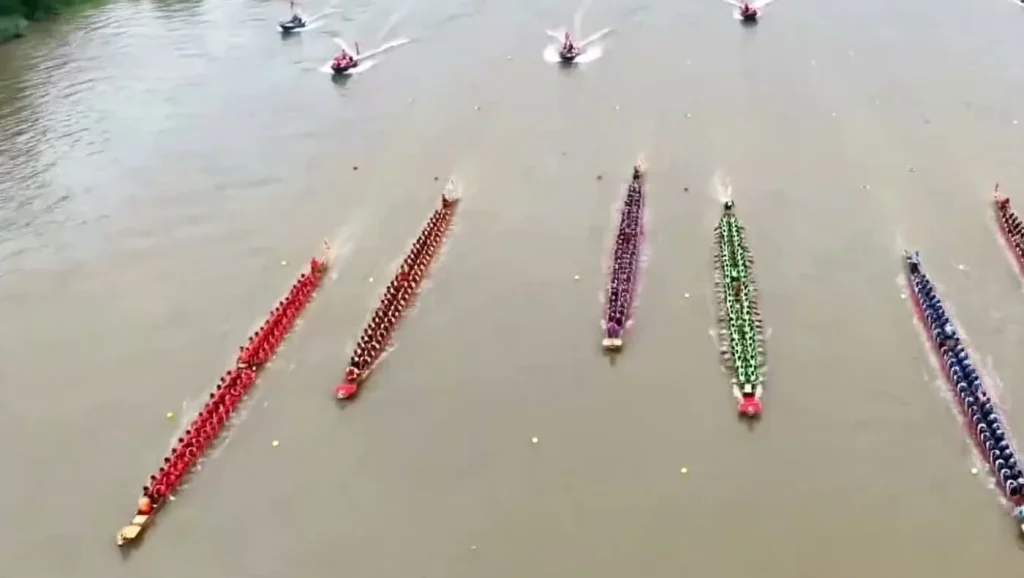
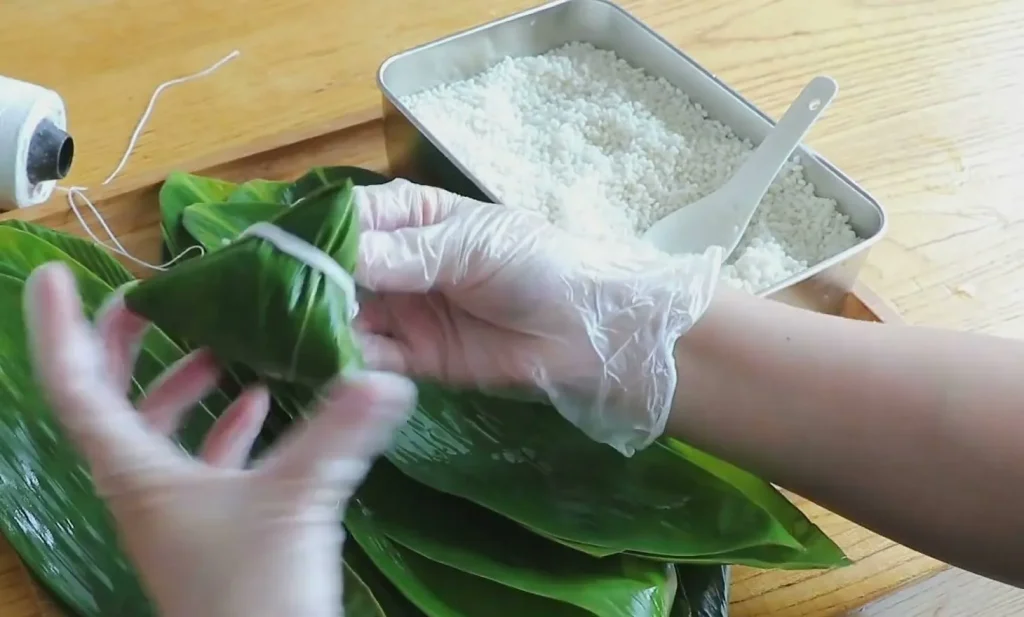
Two customs come from that story: racing long, narrow dragon boats to drumbeats, and eating zongzi, sticky rice wrapped in bamboo or reed leaves and boiled. In 2009 the festival became the first Chinese festival on UNESCO’s intangible heritage list.
The other half of Duanwu is protection. The fifth month was counted a dangerous month, and families hang bundles of mugwort and calamus by the door, tie five-colored threads on children’s wrists and ankles, and in some places drink realgar wine.
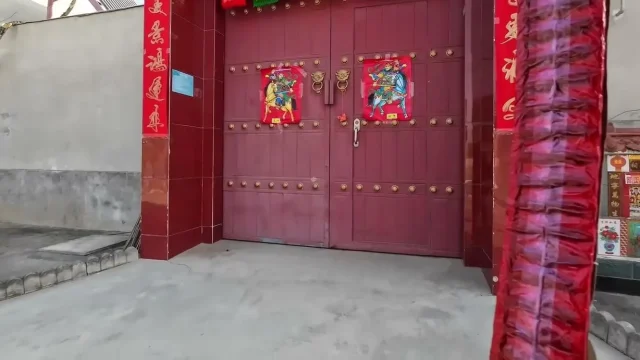
In southern Shanxi the protection takes a painted form: families put up an aihu (艾虎), a “mugwort tiger” to frighten off the summer pests, drawn large on red paper, on the screen wall facing the gate, and the older women of the house twist five-colored threads by hand for the children. Races, zongzi fillings and the Qu Yuan story in full are on the Dragon Boat Festival page.

The Hungry Ghost Festival in the seventh lunar month
1 min read · 2 photos
The Hungry Ghost Festival falls on the fifteenth day of the seventh month, August 16 in 2027, and some regions keep it a day early. Taoists call it Zhongyuan, Buddhists call it Ullambana (Yulanpen), and in everyday speech it’s Ghost Festival, Guijie.
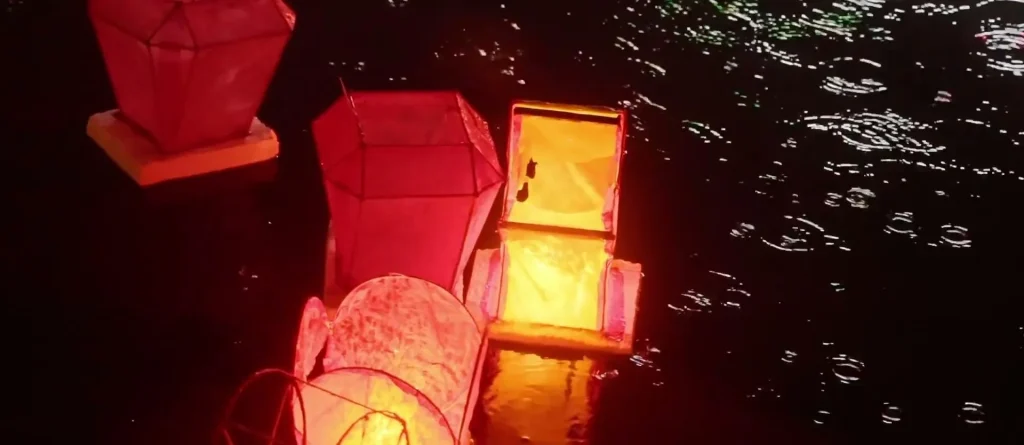
The idea underneath is that the gates of the underworld open for the seventh month. Families set out offerings for their own ancestors, and many also feed the wandering dead who have no family left to feed them. Burning joss paper, setting river lanterns afloat and holding temple rites for the dead all belong to the night.
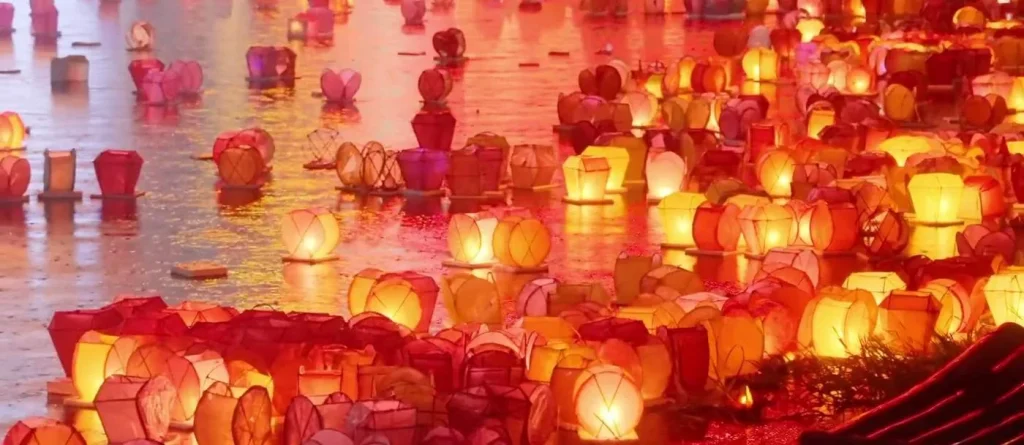
In Taiwan, Hong Kong, Singapore and Malaysia the whole seventh month is Ghost Month. In Singapore and Malaysia the outdoor getai stage shows play to a front row of empty seats, left for the spirits. What people avoid during the month, and why, is on the Hungry Ghost Festival page.
Mid-Autumn Festival: the harvest moon, mooncakes and Chang’e
1 min read · 3 photos
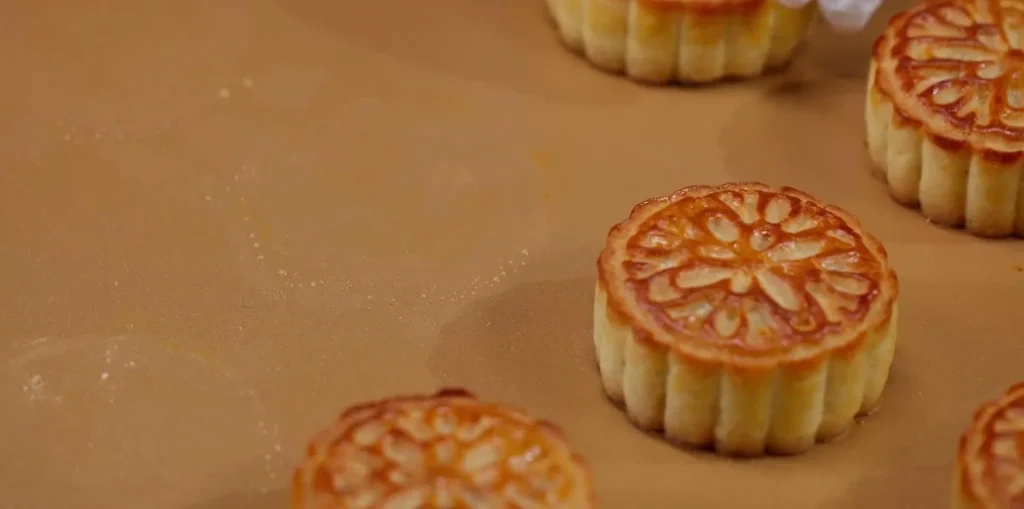
The Mid-Autumn Festival falls on the fifteenth day of the eighth month, September 15 in 2027, when the harvest moon is thought to be at its roundest. Families gather for dinner, set out fruit and mooncakes, and sit outside to look at the moon.
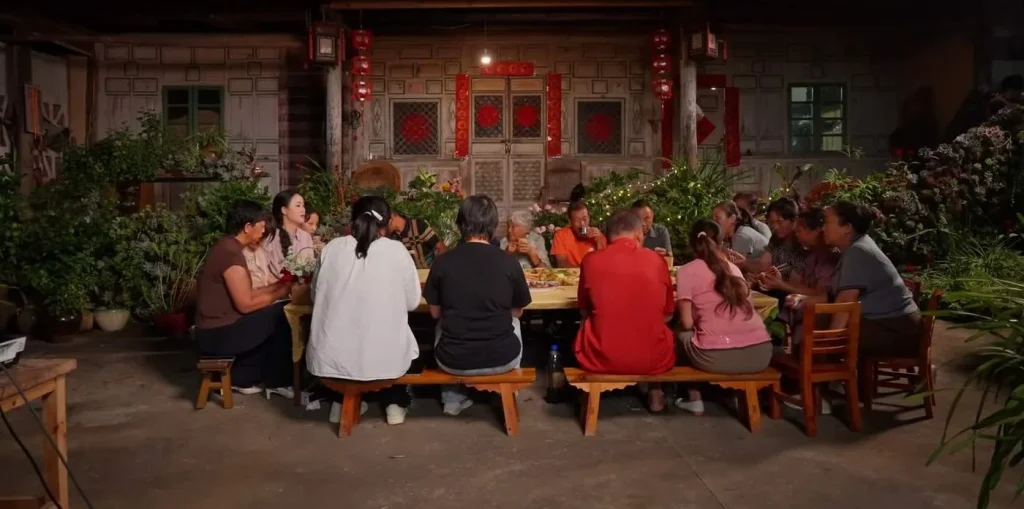
Its story is about Chang’e (嫦娥). Her husband, the archer Hou Yi, was given an elixir of immortality, and when a thief came to steal it she swallowed it herself and floated up to the moon. She stayed there alone, apart from the jade rabbit that pounds medicine beside her, so the full moon became the night for missing family.
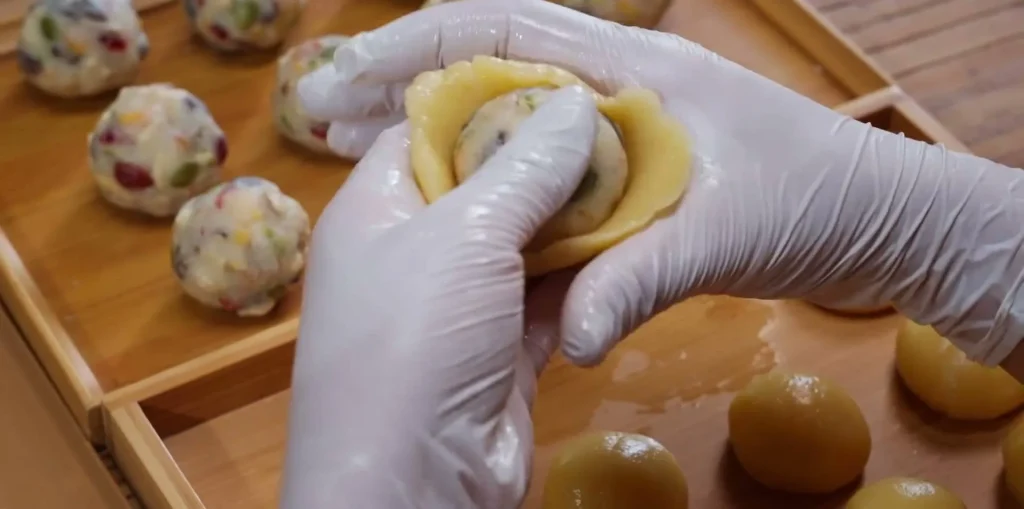
Mooncakes, the round pastries filled with lotus seed paste, red bean or salted egg yolk, are given as gifts in the weeks before. The mooncake page covers the types and fillings.
In old Beijing the moon rabbit came down to earth as Tu’er Ye, Lord Rabbit: a clay figure with a white rabbit’s face, a gold helmet and a general’s armor, sitting on a cloud or riding a tiger. Children got one for the festival, and the craft survives in Beijing today. The Mid-Autumn Festival page has the Chang’e story in full and the lantern customs of the south.
Qixi, Double Ninth, Winter Solstice and Laba: the smaller Chinese festivals
1 min read
Beside the big festivals, four smaller ones still mark the calendar, and each has one custom you’ll meet in Chinese homes or shops.
Qixi, the seventh of the seventh month (August 8 in 2027), tells of the Cowherd and the Weaver Girl. She was a goddess who married a mortal herdsman, and the Queen Mother of the West drew the Milky Way across the sky to part them, so they meet once a year on a bridge of magpies. Shops now sell the night as Chinese Valentine’s Day.
Double Ninth, the ninth of the ninth month (October 8 in 2027), is for climbing a hill, drinking chrysanthemum wine and wearing a sprig of zhuyu, a fragrant dogwood. An old tale has a man warned to take his family up a hill that day, wearing zhuyu; when they came down, their animals at home had all died in their place.
The festival’s tie to long life led China to name it Seniors’ Day in 2012, and families visit grandparents.
Winter Solstice (December 22 in 2027) is the turn of the year in the old calendar. A northern saying holds that eating dumplings that day keeps your ears from freezing. The saying goes back to the Han doctor Zhang Zhongjing, who handed out ear-shaped dumplings of mutton and warming herbs to villagers with frostbitten ears. Southern families eat tangyuan, and in parts of the south the solstice dinner rivals New Year’s Eve.
Laba, the eighth of the twelfth month (January 15 in 2027), is the day to cook Laba congee from many grains, beans and nuts. Buddhist temples give the congee away on the day of the Buddha’s enlightenment, remembering the bowl of milk porridge he ate before he sat down to meditate. In the north people also pickle garlic in vinegar that day, and it turns green in time for New Year dumplings.
The Three Yuan festivals in Taoism: heaven, earth and water
1 min read · 1 table
In the Taoist calendar I keep, three of these full moons belong together. Taoism names the fifteenth of the first, seventh and tenth months the Three Yuan, sanyuan (三元), and gives each to one of the Three Officials, sanguan (三官), the gods who keep the records of heaven, earth and water.
| Festival | Date | Official | What the day is for |
|---|---|---|---|
| Shangyuan (Lantern Festival) | 1st month, day 15 | Heavenly Official, Tianguan | Grants blessings |
| Zhongyuan (Hungry Ghost Festival) | 7th month, day 15 | Earthly Official, Diguan | Pardons sins |
| Xiayuan | 10th month, day 15 | Water Official, Shuiguan | Removes hardship |
Seen this way, the cheerful Lantern Festival and the somber Ghost Festival share one logic: the Heavenly Official comes down to bless the living in the spring, and in the seventh month the Earthly Official reviews and pardons, the dead included. Temples hold rites on all three days.
Xiayuan is the one people forget, and few outside temples still mark it. I find it worth knowing anyway, because it closes the set: the Water Official’s day is the one for asking that troubles be washed away before the year ends.
Traditional festivals vs public holidays in China: days off and Golden Week
1 min read · 1 table
Only four traditional festivals are official days off in mainland China: the Spring Festival, Qingming, the Dragon Boat Festival and the Mid-Autumn Festival. Qingming, Dragon Boat and Mid-Autumn became public holidays in 2008; before that the Spring Festival was the only traditional festival with time off.
Since 2025 China has 13 statutory holiday days a year:
| Holiday | Statutory days | Traditional festival? |
|---|---|---|
| New Year’s Day | 1 | No |
| Spring Festival | 4 | Yes |
| Qingming Festival | 1 | Yes |
| Labor Day (May 1) | 2 | No |
| Dragon Boat Festival | 1 | Yes |
| Mid-Autumn Festival | 1 | Yes |
| National Day | 3 | No |
Golden Week is the name for the two long breaks, National Day from October 1 to 7 and the Spring Festival week, made by joining the statutory days to swapped weekends. The catch is the swap: a weekend day before or after the break becomes a working day, so a “week off” often costs a six-day week on either side.
The Lantern Festival, Qixi, the Ghost Festival and Double Ninth are observed without days off.
How to say festival in Chinese: jie and the names behind each holiday
1 min read · 1 table
Festival in Chinese is jie (节), and a festival day is jieri (节日). To wish someone a happy festival you say jieri kuaile (节日快乐), “happy festival”, or put the festival’s name in front: zhongqiu kuaile for the Mid-Autumn Festival.
The character 节 first meant a joint in bamboo, the knot that divides one section of stem from the next. Festivals are the joints of the year, and the names tell you what each joint is:
| Name | Characters | Literal meaning |
|---|---|---|
| Chunjie | 春节 | Spring joint |
| Yuanxiao | 元宵 | First night |
| Qingming | 清明 | Clear and bright |
| Duanwu | 端午 | Start of the fifth |
| Qixi | 七夕 | Seventh evening |
| Zhongyuan | 中元 | Middle origin |
| Zhongqiu | 中秋 | Middle of autumn |
| Chongyang | 重阳 | Doubled yang |
| Laba | 腊八 | Eighth of the La month |
| Dongzhi | 冬至 | Winter arrives |
Read the names next to the calendar table at the top and most of the dates explain themselves. Yuanxiao is the first full-moon night, Duanwu the fifth of the fifth, Chongyang the doubled nine, and Zhongqiu the fifteenth of the eighth month, which sits in the middle of the three autumn months.
All guides in this topic
1 guide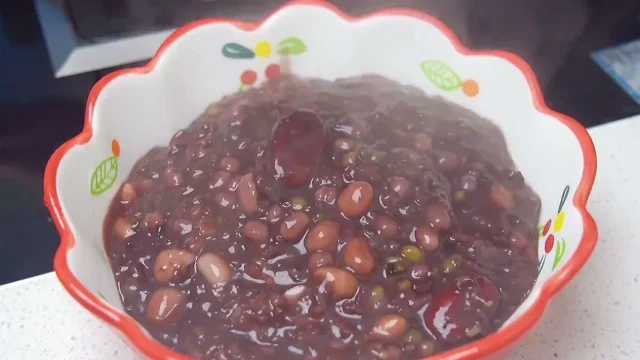
Laba Festival 2027: Date, Porridge, Garlic and Origins
The Laba Festival falls on the 8th day of the 12th lunar month, January 15, 2027. Here is why people eat Laba porridge, pickle garlic and start counting down to New Year.
Key terms in this guide
Full glossary →More topics
- Lunar New YearLunar New Year 2027 falls on February 6 and opens the Fire Goat year. Dates to 2031, the zodiac animals, couplets, temple rites and taboos.39 guides