Chinese New Year Decorations: Names, Meanings, When to Hang
By Daozhang MaMaoshan Taoist, Jintan, Jiangsu
In short
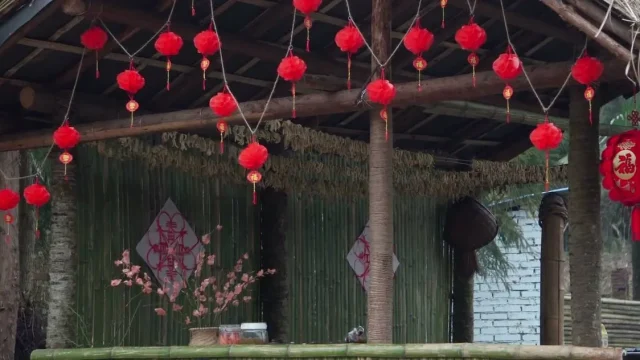
Chinese New Year decorations are mostly red paper, pasted on the parts of a house that face outward: couplets on the door posts, a fu character on the door, paper-cuts on the windows, door gods on the gate and red lanterns under the eaves. They go up in the last week of the lunar year and come down after the Lantern Festival.
Outside China the same set is sold as Lunar New Year or Spring Festival decorations, and the pieces don’t change with the name. I’ll go through the names and meanings, the paper on windows and doors, the hanging pieces, where each one goes, the dates, and how to scale it all down to an apartment.
Chinese New Year decorations and what each one means
Most Chinese New Year decorations fall into two groups: paper that gets pasted flat, and pieces that hang. The table gives the common ones with their Chinese names, where they usually go and what they stand for.
| Decoration | Chinese name | Where it goes | What it stands for |
|---|---|---|---|
| Spring couplets | 春联 chunlian | Both door posts, with a banner above | The family’s wishes for the year, in two matched lines |
| Fu character | fu | Doors, walls, rice bins | Good fortune; upside down, “fortune has arrived” |
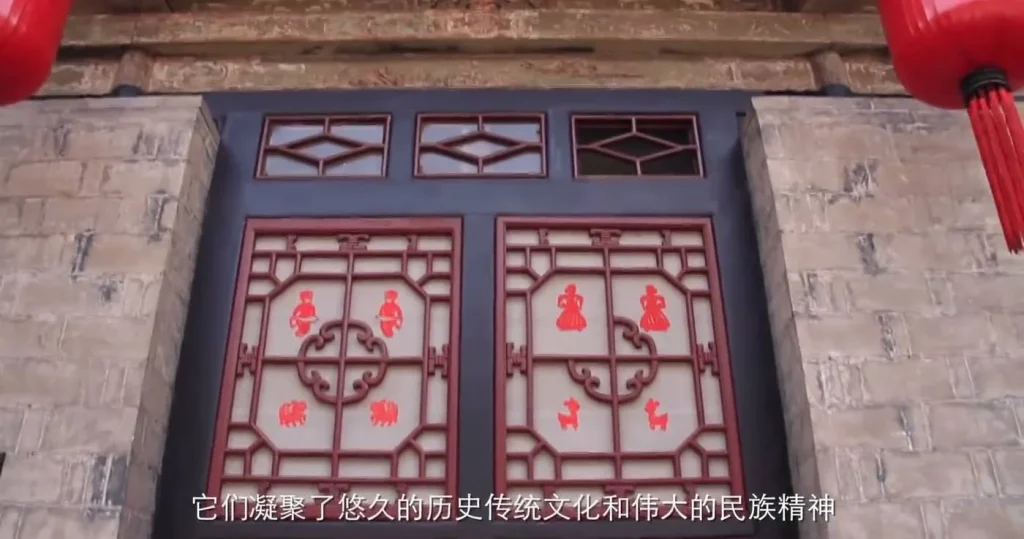
| Window paper-cuts | chuanghua | Window panes | Fish, flowers and lucky characters for plenty and luck |
| New Year prints | nianhua | Inside walls | Healthy children, a full house, a good harvest |
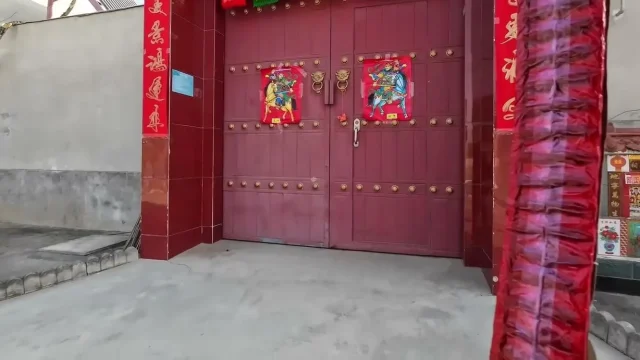
| Door gods | menshen | The two leaves of the main gate | Guards who keep harm out |
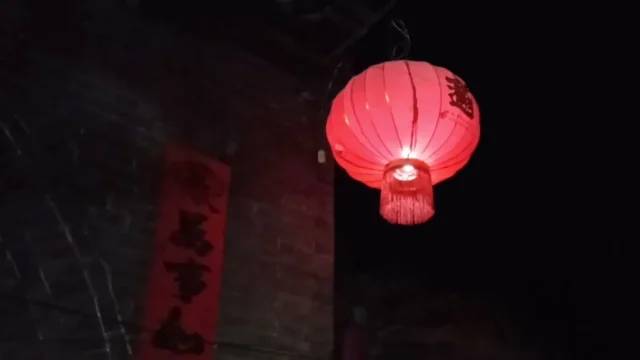
| Red lanterns | 灯笼 denglong | Eaves, gateways, porches | Reunion, light and a bright year |
| Chinese knots | zhongguo jie | Doors, walls, hooks indoors | Safety and good luck |
| Zodiac figure | 生肖 shengxiao | A shelf or table | The animal of the coming year |
| Kumquat tree | 金桔 jinju | Beside the door or on a table | Gold and good luck |
Red runs through every row. In the story behind the holiday, a beast called Nian came at the turn of the year and was scared off with noise, so the decorations meant to keep it away ended up bright, loud and red. The couplets have their own rules about which line goes on which side, and I cover those in the guide to dui lian.
Window paper-cuts (chuanghua): made for paper-covered windows
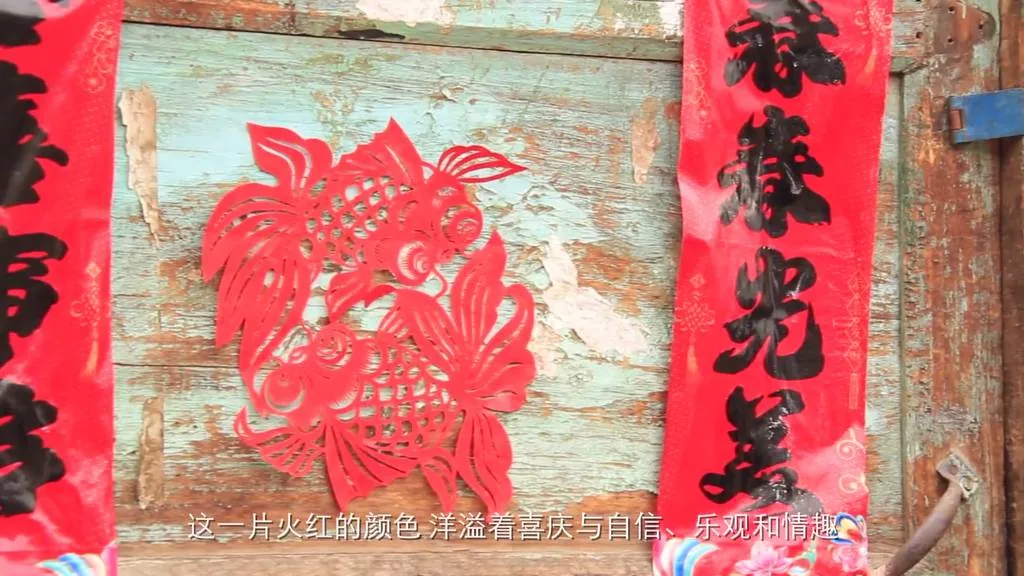
The first pasted piece in that table, the window paper-cut, makes more sense once you know what a window used to be. In older Chinese houses the wooden lattice was covered with white paper rather than glass, and a red cut pasted onto that paper caught the daylight from outside. The Chinese name, chuanghua (窗花), means “window flower.”
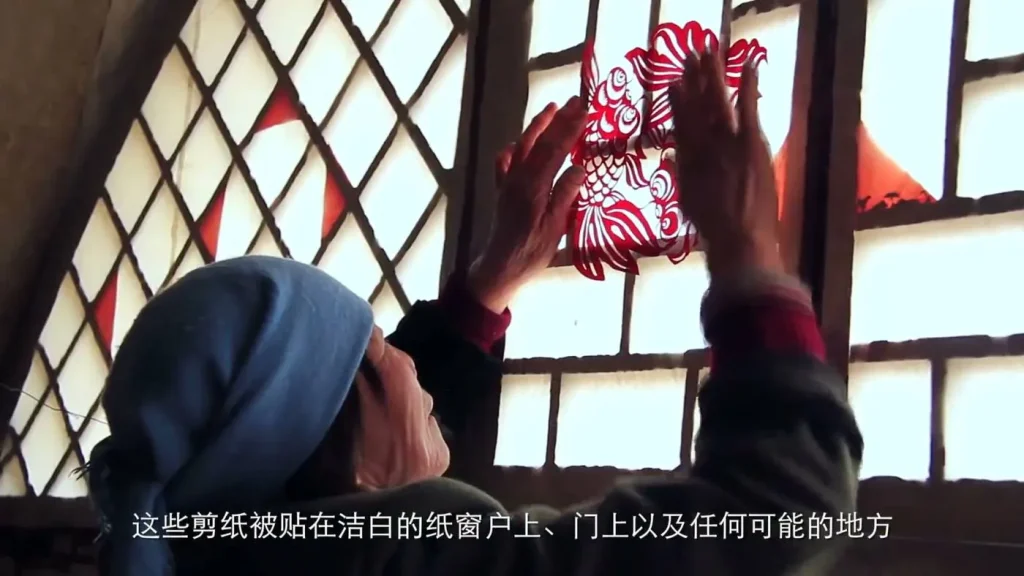
Traditional cutters stick their work on with a glue made from sticky rice. The cuts didn’t stay on windows alone, though: they went onto doors and walls too, anywhere a flat surface faced the room or the street.
Chinese paper-cutting was inscribed on UNESCO’s Representative List of the Intangible Cultural Heritage of Humanity in 2009, and the New Year window flower is the form of it that ends up on ordinary homes.
On glass the effect changes a little. From inside, a cut on a pane reads as red lace against the light; from the street it reads as a shape, so I put the cleaner side of a cut toward whichever view the household looks at most.
Reading paper-cut patterns: fish, fu and double happiness
The pattern is the message. Fish are a favorite New Year image because yu (鱼), fish, sounds the same as yu (余), surplus, and the phrase nian nian you yu (年年有余) wishes a family something left over every single year.
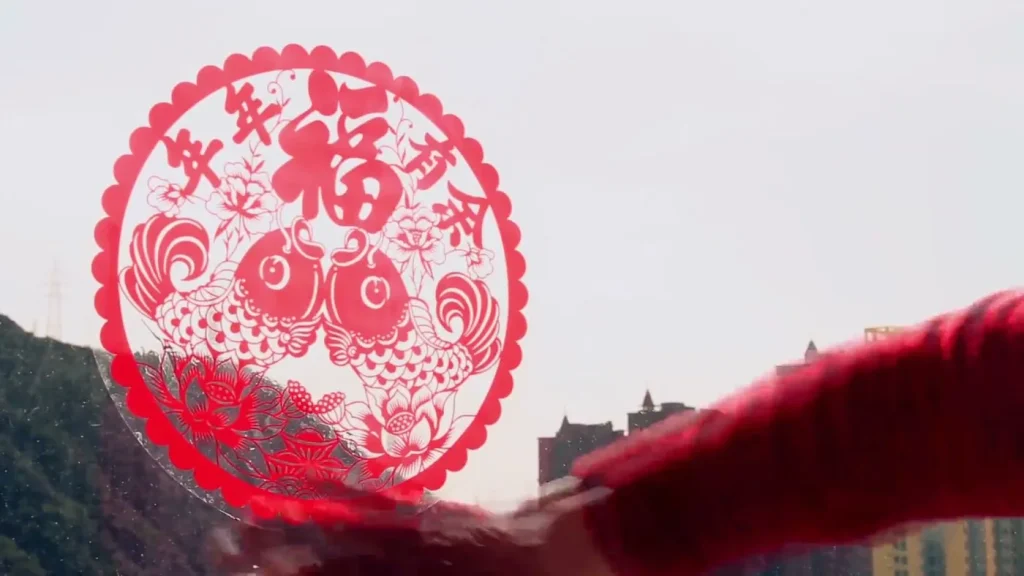
The other regulars are the zodiac animal of the coming year and four lucky characters: fu, lu, shou and xi, for luck, wealth, long life and happiness. Peaches, grain, dragons and phoenixes turn up as well, some as puns and some as figures from old stories.
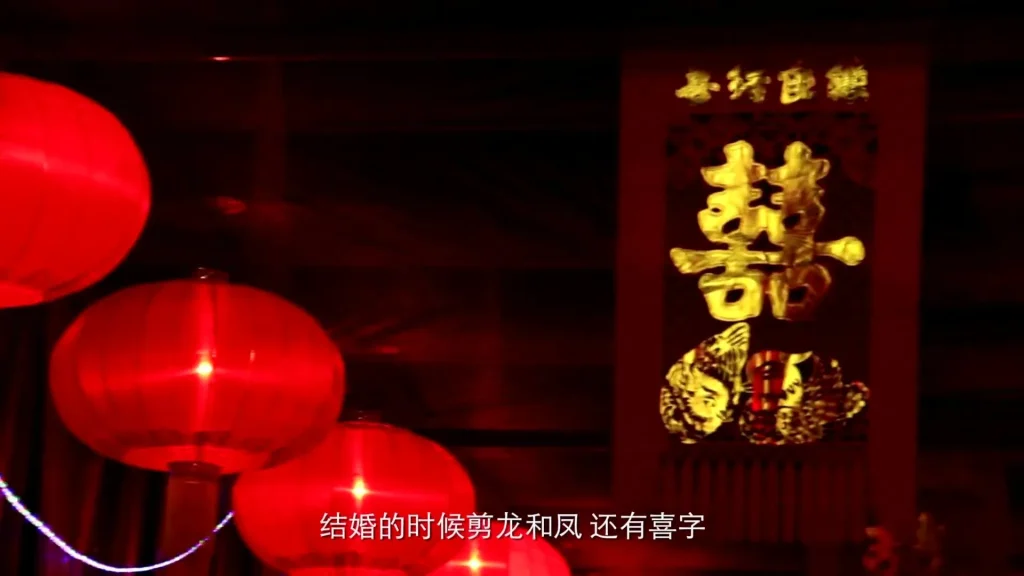
One pattern doesn’t belong on a New Year window: double happiness, 囍, two “happiness” characters joined side by side. It’s cut for weddings, along with dragons and phoenixes, and on a family’s door at New Year it would tell the neighbors someone had just married. If a pack of red cuts includes a 囍, I set it aside for the next wedding.
Fu characters, New Year prints and door gods
Paper-cuts are pictures in red; the next group of Chinese New Year decorations carries words and painted figures. The fu character (福), “good fortune,” is brushed in black or gold onto a square of red paper and pasted on doors, walls and windows. A lot of households turn it upside down, because “upside down” (dao, 倒) sounds the same as “arrived” (dao, 到). It’s a pun you can hang.
On the main gate most families keep the fu upright and save the upside-down ones for inner doors. I give the reasons for that, and the left-right rule for couplets, in the Lunar New Year guide.
New Year prints, nianhua (年画), are printed pictures for the walls inside, many of them made from carved woodblocks. The usual subjects are a chubby child, often hugging a big fish, beautiful women, gods and folk tales. Three print towns are the best known: Taohuawu in Suzhou, Yangliuqing in Tianjin and Weifang in Shandong.
Door gods, menshen (门神), are a special kind of New Year print: a pair of armored guardians, one on each leaf of the main gate, turned to face each other. The most common pair are the Tang dynasty generals Qin Qiong and Yuchi Gong; older prints show the gods Shentu and Yulei, and a single-leaf door gets Zhong Kui or Wei Zheng on its own.
The two generals earned the job in a story about Emperor Taizong: he heard demons crying outside his door at night, the two stood guard, the cries stopped, and he had their portraits pasted on the door instead.
As a Taoist I treat door gods as protectors before decoration, so I keep them to the main gate and the back door, which is where the old custom puts them, and never move them onto a bedroom door for the look of it.
Red lanterns, Chinese knots and other hanging decorations
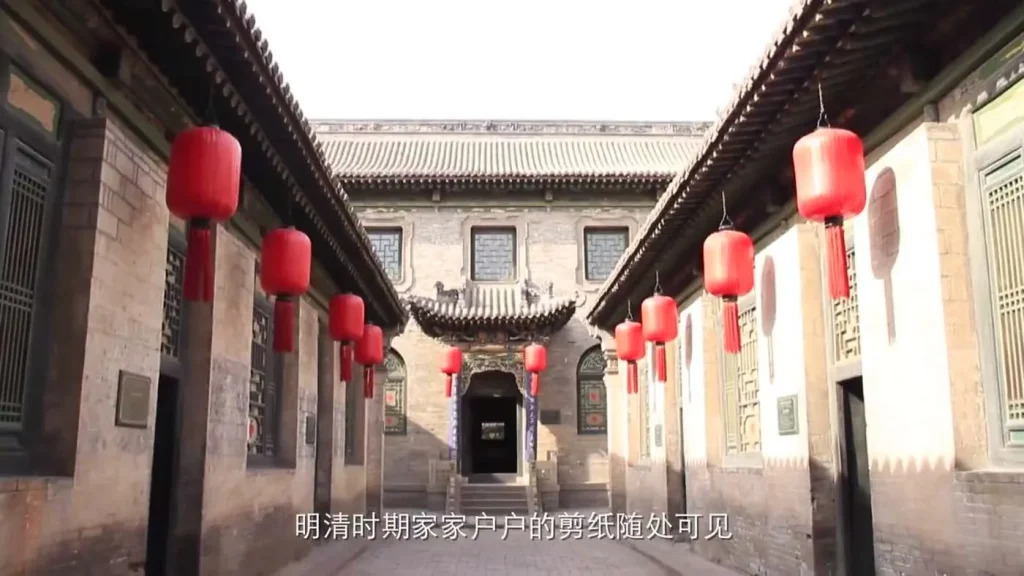
Everything so far lies flat on a door or a wall; the rest of a New Year house hangs. Red lanterns go under the eaves, over the gate and along the porch, and they stand for reunion, a full household and a bright year ahead. Lantern types and sizes have a guide of their own, so here they only need a place.
A Chinese knot, zhongguo jie (中国结), is tied from a single cord, with several simple knots built up into one larger shape. The names of the shapes revolve around safety and good luck, so a red knot with a tassel suits a front door, a wall or a hook anywhere indoors.
Strings of colored lights are a newer addition. Streets and shopping malls hung them first, and homes followed, so an old lane at New Year now has lanterns, banners and bulbs all at once.
Where each Chinese New Year decoration goes in a home
With every piece named, the practical question is where it goes, and the answer runs from the street inward. The front door gets the most, because it’s the first thing the new year meets.
- Front door or gate: couplets on the posts, the horizontal banner above, door gods on the two leaves, an upright fu, and a lantern or a pair of lanterns overhead.
- Windows: paper-cuts on the panes, with fish and fu patterns facing the street.
- Inner doors: smaller couplets and an upside-down fu.
- Living room walls: a New Year print and a Chinese knot.
- Rice bin, chests and storage: a small fu, a wish that the store of food and goods never runs out.
- Tables and shelves: a kumquat tree or New Year flowers, and the zodiac figure of the coming year.
Outdoors, paper doesn’t last. Paper on an exposed door fades and tears in rain and sun, and that’s part of the old timetable rather than a problem: the outdoor paper is expected to wear out over the year and be replaced. Lanterns and knots are the pieces worth keeping, so I’d hang the good ones under cover.
When to put up and take down Chinese New Year decorations
Put Chinese New Year decorations up in the last week of the lunar year, after the house has been cleaned, and paste the couplets and fu on the afternoon of New Year’s Eve. Take the hanging pieces down after the Lantern Festival on the 15th day; the paper on the doors can stay until it fades.
Order matters more than the date. Cleaning comes first because sweeping clears out the old year’s bad luck, and on New Year’s Day itself sweeping is avoided, so families clean in the days after the Little New Year, the 23rd or 24th of the last lunar month, then shop for red paper and decorate last.
For 2027, Lunar New Year falls on February 6, which puts New Year’s Eve on February 5 and the decorating week across the end of January and the first days of February.
Taking things down follows the same logic in reverse. The 15th day closes the festival, so lanterns, knots and indoor pieces usually come down after it, and some households leave them a few days longer for luck. The couplets and fu signs outside are mostly left to weather until they’re torn down for next year’s set.
Lunar New Year decorations for an apartment or a home abroad
Most of what’s above assumes a house with a gate and wooden doors. In an apartment, or a house outside China, the same set shrinks to the front door, one window and one table, and that’s still enough to read as New Year.
On a painted or rented door, I’d use removable tape or poster putty rather than glue, and a small fu with a short couplet rather than a full-height set. A paper-cut on a window that faces the street does the work of a whole row of lanterns.
For the table, 2027 is the Year of the Goat. One small goat figure is enough, next to a kumquat tree or a pot of New Year flowers.
If you want more red, swap one or two fabrics, such as cushions or a tablecloth. A few red pieces among the paper look festive; a room that’s red from floor to ceiling looks like a shop.
Written by
Daozhang MaMaoshan Taoist, Jintan, Jiangsu
Daozhang Ma is a Maoshan Taoist who has practiced for 22 years and is skilled at writing talismans and painting Taoist pictures. He runs Zodiac & Tradition.
About Daozhang Ma