Chinese New Year Flowers: Meanings and Lunar New Year Picks
By Daozhang MaMaoshan Taoist, Jintan, Jiangsu
In short
Chinese New Year flowers are the blooms and fruit trees families buy in the last days before the holiday: potted orchids, narcissus bulbs, kumquat trees, peach blossom branches, gladiolus, pussy willow and pots of yellow chrysanthemums. Each one is chosen because its color, its shape or the sound of its Chinese name carries a wish for the new year.
Most of those wishes are puns. Narcissus sounds like “who gets rich first,” gladiolus stands for climbing higher step by step, and the word for the kumquat sounds like the word for luck.
Flowers are also one of the five classic offerings on a Taoist altar, next to incense, lamps, water and fruit, so I’ve never thought of New Year flowers as mere decoration. Below I go through the flowers and what they mean, the puns behind the names, buying them at a flower market, where to put them at home, keeping them fresh until the Lantern Festival, and giving flowers as a gift.
Chinese New Year flowers and what each one means
The flowers that matter most in Chinese culture at New Year are the ones that bloom, or can be forced to bloom, in the middle of winter. That’s what limits the list, and it’s why the same handful of plants turns up in every home and every flower market.
| Flower | Chinese name | What it stands for |
|---|---|---|
| Moth orchid | 蝴蝶兰 hudie lan | Wealth, refinement, a long run of good luck |
| Narcissus | 水仙 shuixian | Getting rich first, a fresh start |
| Kumquat tree | 金桔 jinju | Gold and good luck |
| Gladiolus | 剑兰 jianlan | Promotion, rising step by step |
| Peach blossom | 桃花 taohua | Romance, growth, keeping bad luck out |
| Pussy willow | 银柳 yinliu | Silver, steady income |
| Chrysanthemum | 菊花 juhua | Long life (yellow pots only) |
| Peony | 牡丹 mudan | Wealth and rank |
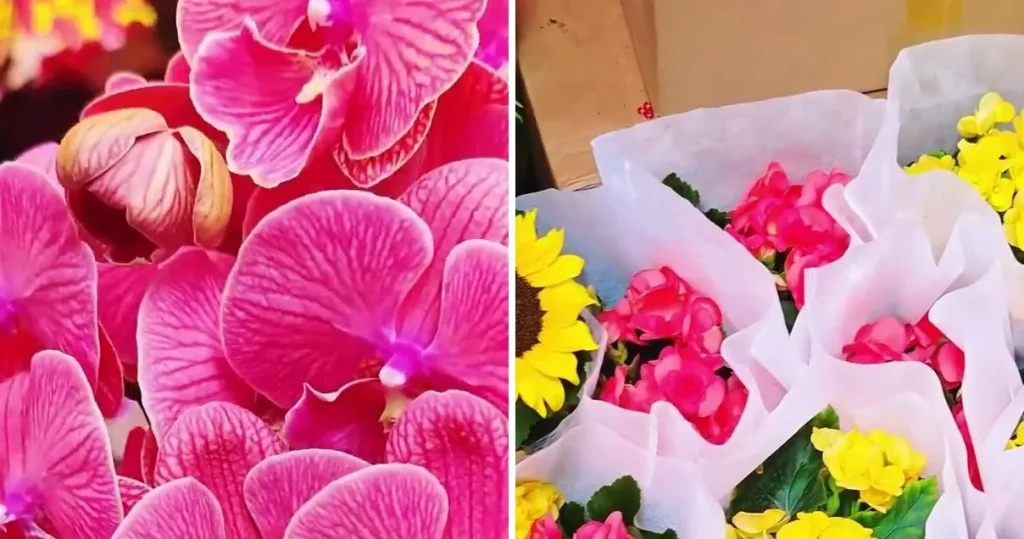
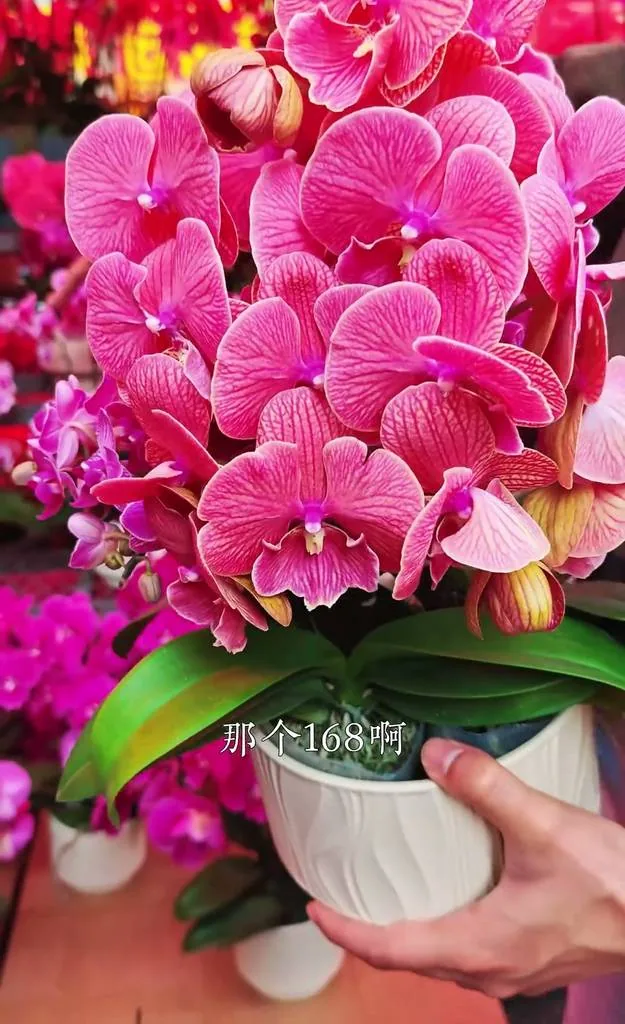
Moth orchids are the easy favorite. A pot of phalaenopsis holds its flowers for weeks indoors, so one bought before New Year’s Eve still looks fresh at the Lantern Festival. Pink, purple and magenta are the popular New Year colors, because they read as festive without being plain red.
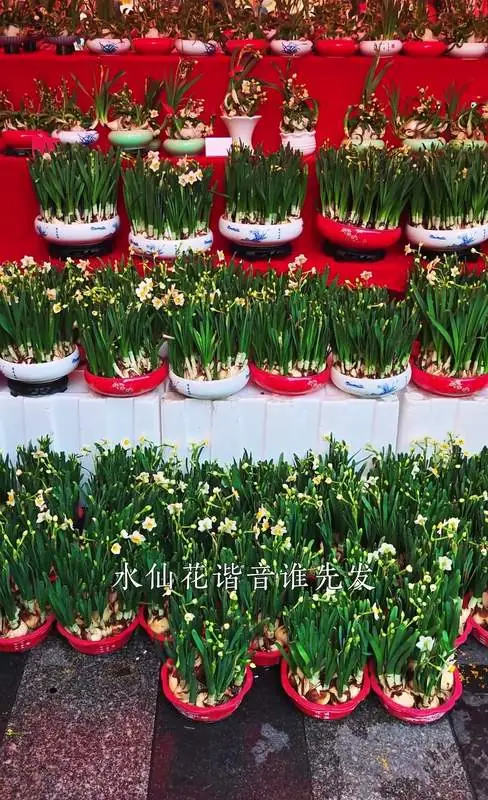
Narcissus is a classic New Year flower in southern China and in Chinese homes overseas. The bulbs sit in a shallow bowl of water and pebbles, grow fast, and open small white flowers with a yellow center and a strong sweet scent.
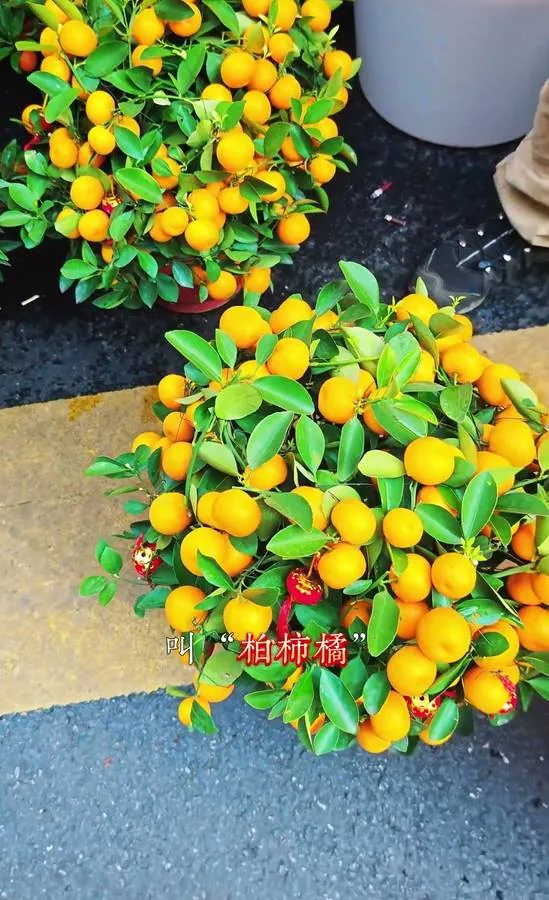
Kumquat trees aren’t flowers, they’re fruit, but nobody leaves them out. A potted tree loaded with small orange fruit is the centerpiece of a Cantonese New Year, and the more fruit on the branches, the better the year it promises.
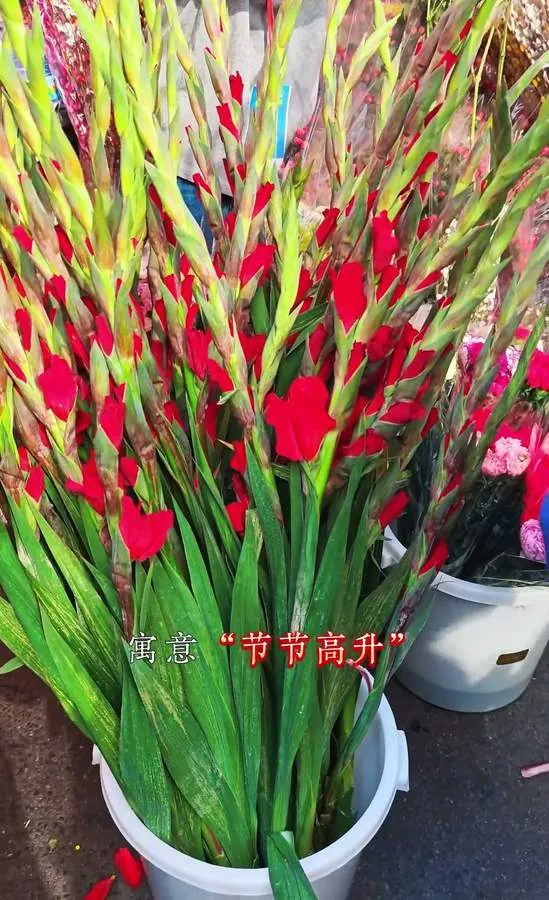
Gladiolus comes as tall cut stems with the flowers stacked up one side. Red is the color people buy for New Year, and it often goes on a shop counter or in an office, where a wish for promotion makes the most sense.
Peach blossom branches are the pick for anyone hoping for love that year, since “peach blossom luck” is the everyday Chinese phrase for romance. Peach wood also has an old reputation for keeping evil away, which is why Taoist ritual swords and charms are carved from it.
Pussy willow, with its soft silver buds, often comes dyed red or tied with small red envelopes. The silver color is the whole point: it stands for silver money.
Chrysanthemums need one warning. A pot of yellow mums is a long-life wish and a common New Year sight, but white chrysanthemums are funeral flowers in Chinese custom, so they don’t belong in a New Year arrangement. Fresh peonies are out of season in midwinter in most places, so families who want a peony at New Year usually hang a peony painting or use silk ones.
Lucky bamboo, money trees and jade plants are New Year favorites too, but they are houseplants rather than flowers and belong to a separate list of New Year plants.
Why narcissus, gladiolus and kumquats: the sound puns behind New Year flowers
Behind most of the meanings in that table is a pun, and once you hear the pun the choice of flower makes sense. Chinese has a lot of words that sound alike, and New Year customs lean on them hard, from the fish on the dinner table to the flowers by the door.
Narcissus is shuixian, literally “water immortal.” Said quickly, it sounds close to shei xian (谁先), “who first,” and people finish the phrase as shei xian fa (谁先发): who gets rich first. A narcissus that opens on New Year’s Day is a small promise that the household will be first in line for good fortune.
Gladiolus doesn’t rely on its name. It works through its shape. The flowers open one after another from the bottom of the stalk to the top, and that climb is read as jie jie gao sheng (节节高升), rising higher with every step. That’s why it suits a business or an office.
The kumquat pun is clearest in Cantonese. The ju in jinju, kumquat, is pronounced gat in Cantonese, exactly like the word for luck, and the jin means gold. So a kumquat tree is “golden luck,” and giving one is the same as wishing someone a lucky year.
Some markets stretch the idea further with bai shi ju (柏柿橘), a set of cypress, persimmon and mandarin that sounds like “luck in a hundred things.” I’m fond of this side of the custom: the plants are pretty, but the wish gets said out loud every time someone names them.
Buying flowers at a Chinese New Year flower market
All those flowers have to come from somewhere, and in southern China the answer is the New Year flower market. Families go in the last days before the holiday, usually in the evening, and come home with an armful of branches and a kumquat tree.
Guangzhou’s Spring Festival flower market and walking the flower street
Guangzhou’s market is the one I’d point you to first. A black stone plaque on Beijing Road traces it back to a flower ferry landing in the late Ming dynasty. A night flower market had become a New Year market by the 1860s, moved to what is now Beijing Road, and took its present form in the 1920s. In 1956 the city gave it the name Spring Festival Flower Market, and it runs until New Year’s Eve.
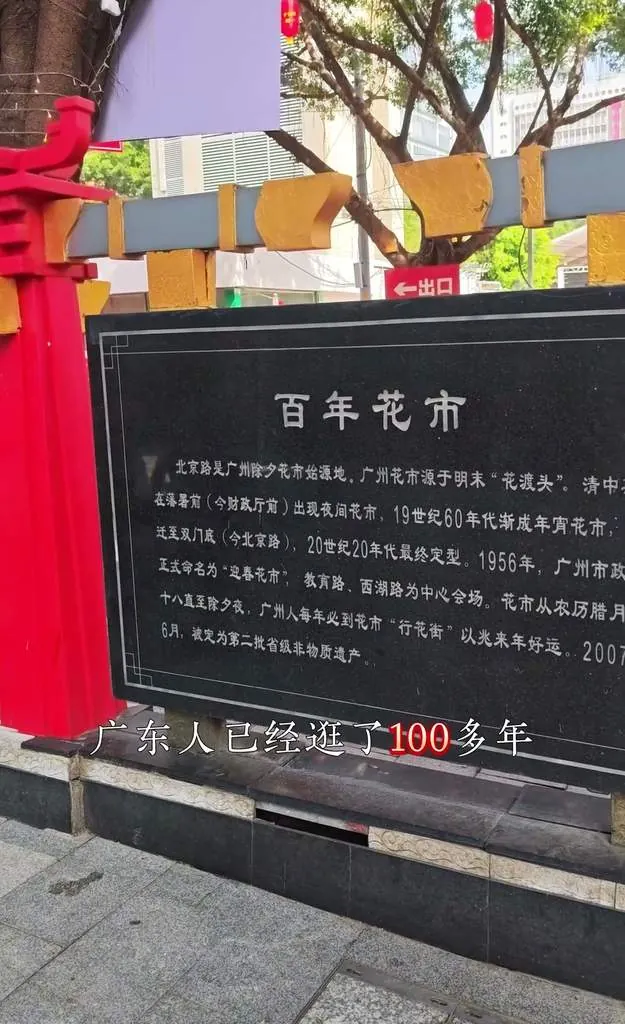
The plaque also names the custom itself: hang hua jie (行花街), walking the flower street, which Guangzhou families do every year to bring good luck into the new one. The point is the walk as much as the shopping. Even people with no room for another pot go to stroll the stalls on New Year’s Eve.
Markets like this put on a show as well as a sale. Stalls build towers of kumquats and banks of mixed flowers to pull people in.
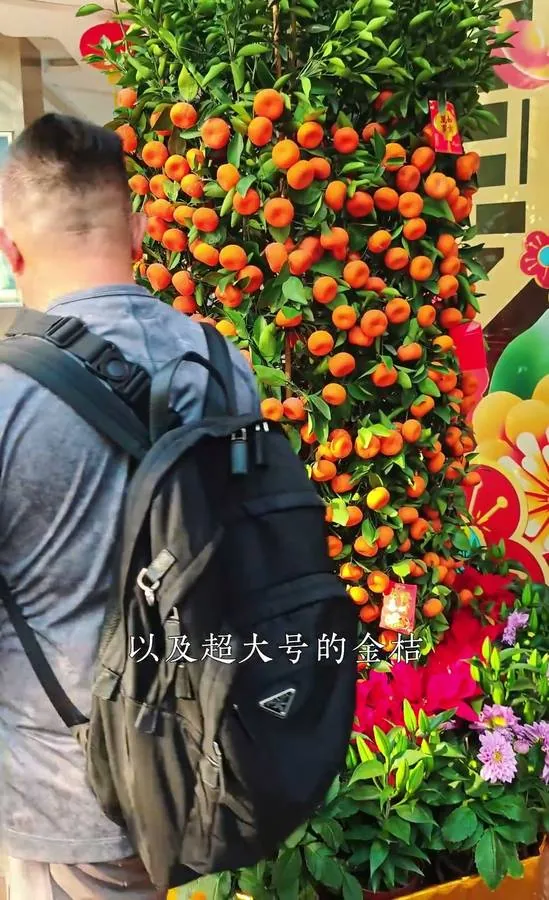
Imported tulips and roses sell right next to the narcissus. That tells you the custom is about color and cheer, not a fixed list of plants.
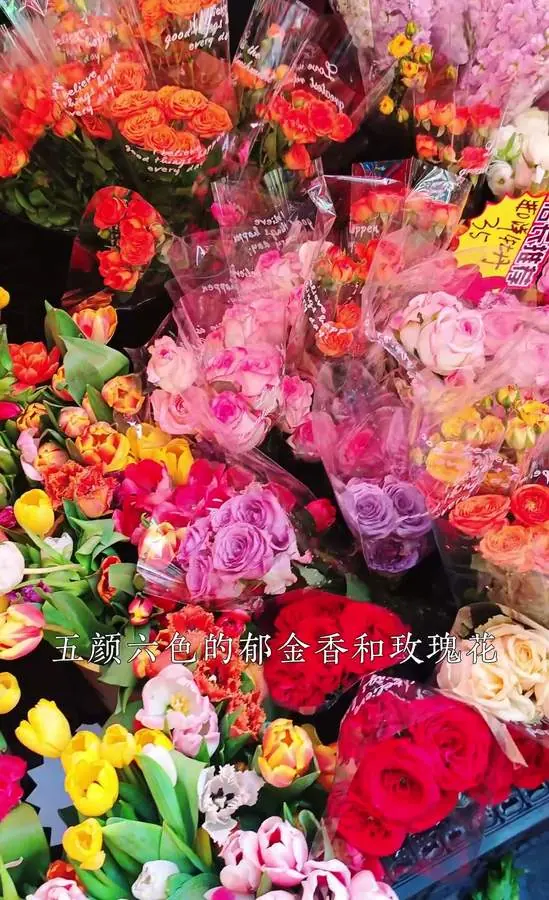
Outside China, the same flowers show up in the weeks before New Year at Asian supermarkets and Chinatown florists: narcissus bulbs, pussy willow, orchids and small kumquat trees. Chinatown street fairs in some US cities run a flower market of their own.
When to buy New Year flowers so they open on New Year’s Day
Timing matters more than the price. The goal is flowers that open on New Year’s Day and are still going at the Lantern Festival on the 15th day.
Narcissus bulbs need the longest lead time, and they’re the easiest to get wrong. I can’t give you an exact number, because warmth changes everything, but plan on roughly four to six weeks from setting the bulbs in water to the first flowers. Buy bulbs early, or buy pots already in tight bud in the last week.
For orchids, choose a pot with a few open flowers and plenty of buds still closed at the tip of the spike. For peach blossom and gladiolus, pick branches and stems with most of the buds still shut. Fully open flowers look great at the stall. They’re tired by the 5th day.
Where to put Chinese New Year flowers in your home
Once you’ve got the flowers home, the first decision is where they go. The custom is simple: the most important flowers go where visitors see them first, in the entryway and the living room.
A kumquat tree, or a pair of them, belongs by the front door or just inside it, so luck is the first thing to enter. Orchids and narcissus go on the living room table or near the family altar, where people sit and talk through the holiday. Gladiolus and pussy willow, tall and narrow, suit a corner vase.
Don’t keep anything wilted on display. A pot of dead blooms at New Year says the opposite of what you bought it for, and it’s the first thing guests notice.
How to keep New Year flowers fresh until the Lantern Festival
Where you put the flowers also decides how long they last, and that is where most New Year flowers fail. Central heating dries them out, and by the 7th day a warm living room can finish off a pot that looked perfect on the Eve.
Narcissus bulbs in water
Narcissus bulbs grow fastest when warm and slowest when cool. If the buds are racing ahead and it’s still a week before New Year, move the bowl to a cooler room or a bright windowsill at night; if they are slow, bring it into the warm.
Keep the water just touching the bottom of the bulbs, not covering them, and change it every few days so it doesn’t sour. Tall leaves tend to flop over, so many families tie a red ribbon around the bunch, which holds it up and looks festive at the same time.
Potted orchids, kumquat trees and cut stems
Orchids don’t ask for much: bright light out of direct sun and very little water. I water a potted phalaenopsis only when the bark feels dry, which in a heated room usually works out to about once a week, and I keep it away from heaters and drafts that make the buds drop.
Kumquat trees drop fruit when they dry out or sit next to a radiator. Water when the top of the soil feels dry and give them the brightest spot you have. For cut gladiolus and peach blossom, trim the stems every couple of days, change the water, and snap off the lowest gladiolus flowers as they fade so the ones above keep opening.
Giving flowers for Lunar New Year: colors, numbers and what to skip
Flowers for Lunar New Year also make a good gift, and a potted plant usually beats a bouquet because it keeps blooming through the holiday. Orchids and kumquat trees are the safest choices, especially for a business or an older relative.
You can’t go wrong with red, pink, purple, orange, gold or yellow. Skip white bouquets and any white chrysanthemums, because both read as funeral flowers. Blue and black wrapping isn’t a great idea either, for the same reason.
Numbers count as well. Eight is the lucky number, and pairs suit a celebration, while four sounds like the word for death and is left out of any count of stems or plants. When I’m bringing flowers to someone’s home at New Year, I’ll go for a pair of small orchids or a kumquat tree heavy with fruit. And I’ll check that nothing in it is white.
Written by
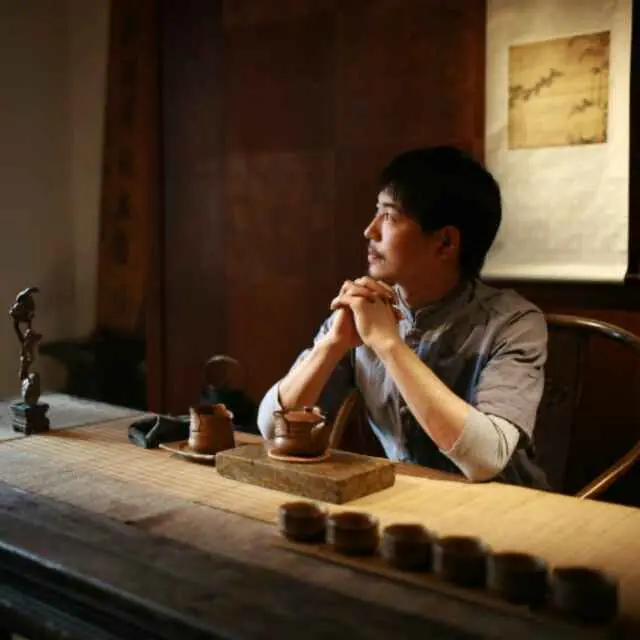
Daozhang MaMaoshan Taoist, Jintan, Jiangsu
Daozhang Ma is a Maoshan Taoist who has practiced for 22 years and is skilled at writing talismans and painting Taoist pictures. He runs Zodiac & Tradition.
About Daozhang Ma