Chinese New Year’s Eve: Traditions, Food and Meaning
By Daozhang MaMaoshan Taoist, Jintan, Jiangsu
In short
Chinese New Year’s Eve is the last night of the lunar year, called chuxi (除夕) in Chinese, and it falls on February 5 in 2027. Families come home for it, paste up red couplets in the afternoon, make offerings to their ancestors, and sit down to the biggest meal of the year. After dinner the elders hand out red envelopes, and many people stay awake past midnight while firecrackers go off outside.
The Eve matters more than the first day of the New Year in many homes, because it is the night the whole family is under one roof. I’ll go through the name, the dates, how the day runs from morning to midnight, the food and what it stands for, and the few things families try not to do that night.
New Year’s Eve in Chinese: chuxi and its other names
The standard word for New Year’s Eve in Chinese is chuxi (除夕). The first character, chu, means to remove or clear away, and xi means evening, so the name reads as “the evening that clears out the old year.” It is the night when one year is closed and the next one starts at midnight.
In everyday speech people often say da nian sanshi (大年三十), “the big thirtieth of the year,” because the Eve usually lands on the 30th day of the 12th lunar month. Some years that month has only 29 days, and then the 29th becomes the Eve, but people still call it nian sanshi out of habit. The dinner that night has its own name, nianyefan (年夜饭), the New Year’s Eve meal.
The Eve is the opening night of the Spring Festival, which runs about two weeks until the Lantern Festival. The cleaning before it and the 15 days after it, up to the lantern night, are laid out day by day on the main Lunar New Year page.
When is Chinese New Year’s Eve? Dates for 2026 to 2029
Chinese New Year’s Eve is always the day before the first day of the lunar New Year, so its date on the Western calendar moves every year. It always falls between late January and mid-February. The table gives the next few years.
| Year | Chinese New Year’s Eve | Chinese New Year (first day) |
|---|---|---|
| 2026 | February 16, 2026 | February 17, 2026 |
| 2027 | February 5, 2027 | February 6, 2027 |
| 2028 | January 25, 2028 | January 26, 2028 |
| 2029 | February 12, 2029 | February 13, 2029 |
The evening is when the night is counted from, not midnight on the clock in New York. Families in the United States usually hold the dinner on the Eve in their own time zone, and some also call relatives in China at the hour midnight arrives there.
How Chinese New Year’s Eve runs, from morning to midnight
The traditions of Chinese New Year’s Eve follow a rough order through the day. Regions and families differ, but the shape below is common across most of China.
| Time of day | What families do | What it stands for |
|---|---|---|
| Morning | Last shopping, cooking starts, house already cleaned | The old year’s dirt and bad luck are out before the New Year |
| Afternoon | Paste couplets and fu signs, hang lanterns | Red at the door keeps harm away |
| Late afternoon | Offerings to ancestors, at home or at the graves | The dead are invited to the reunion |
| Evening | Reunion dinner, red envelopes after the meal | The family is whole for one night |
| 8 p.m. on | The Spring Festival Gala on TV, cards, talk | Staying up together to see the year out |
| Midnight | Firecrackers and fireworks | Scaring off bad luck, greeting the New Year |
Nobody runs to this timetable to the minute, and the cooking often starts days before. What I’d keep in mind is the direction of the day: it moves from closing up the old year in daylight to the family gathered at night.
Couplets, fu signs and lanterns go up on the Eve
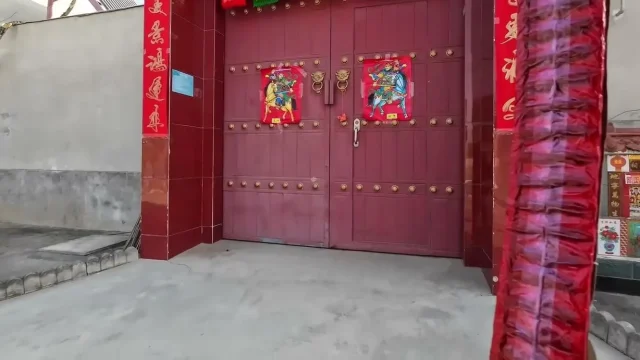
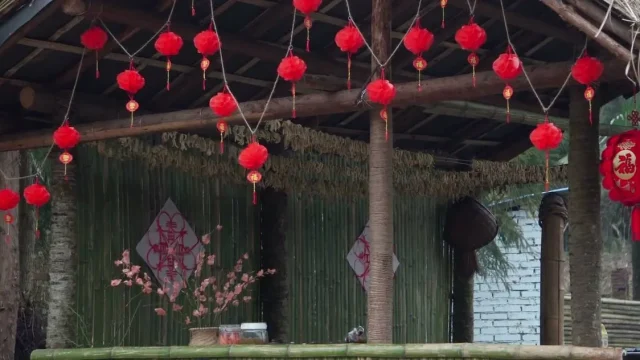
Red decorations are usually the last job before the cooking takes over. Many families paste their spring couplets (chunlian, 春联) on the door posts on the afternoon of the Eve, with a fu (福) character for good fortune on the door. Others do it a day or two earlier, but the door should be red before dinner.
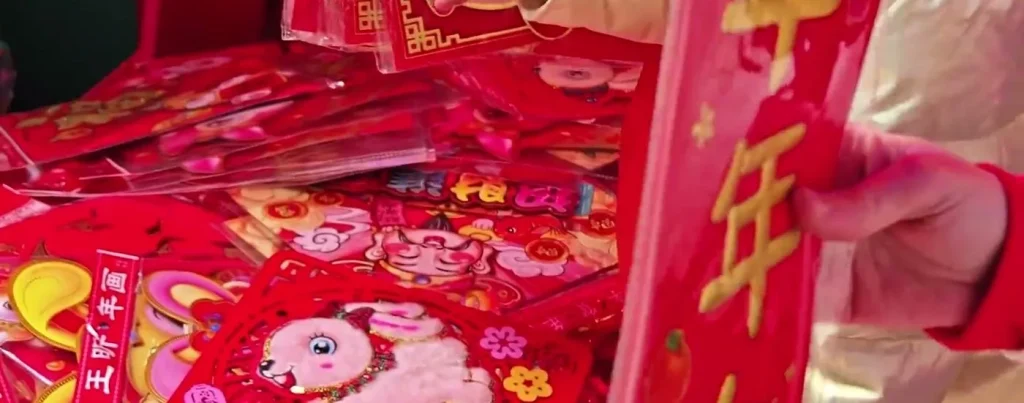
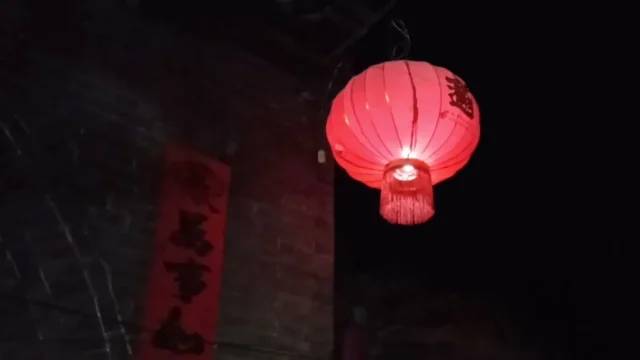
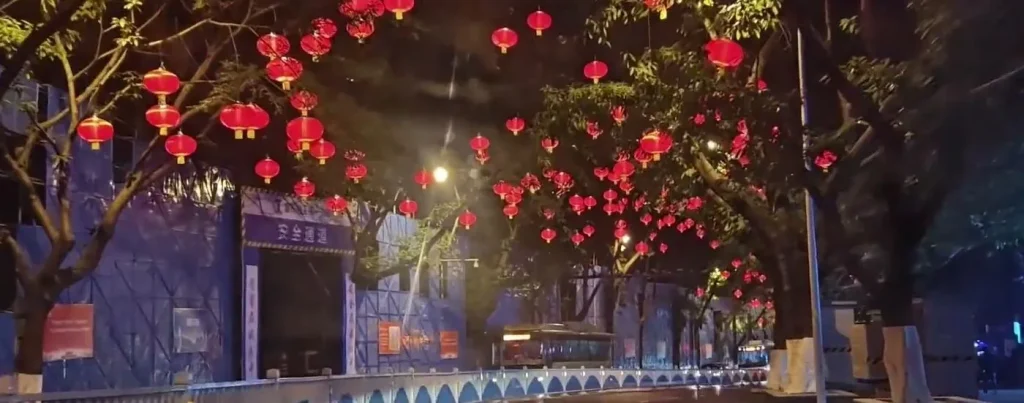
The usual set is red lanterns, rhyming couplets, Chinese knots and the fu character for luck. Red is the point of all of it. In the old story, a beast called Nian came out at the turn of the year and was driven off by red and by noise, so the color and the firecrackers belong to the same night.
Offerings to ancestors before the reunion dinner
Before the family eats, many households set out food for the ancestors. Some do it at a home altar with incense, and in the countryside people often go to the graves or burn paper money by the door. Plates of the dinner’s own dishes are set beside the offering.
The idea is simple: the reunion includes the people who are gone. I find this the part of the Eve that visitors miss most often, because it happens quietly in the late afternoon. It’s also why the dinner waits until the offering is done.
Behind it sits the belief that a family includes its earlier generations, so the offering works as an act of remembrance as well as an invitation.
The reunion dinner: Chinese New Year’s Eve food and its meanings
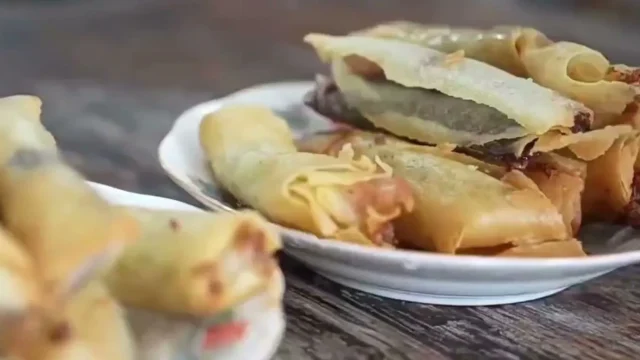
The reunion dinner, nianyefan or tuanyuanfan (团圆饭), is the center of Chinese New Year’s Eve. People travel across the country to be at that table, which is why China’s roads and trains are so packed in the weeks before. The menu changes by region, but a few dishes carry the same meaning almost everywhere.
| Dish | Where it’s common | Why it’s on the table |
|---|---|---|
| Whole fish | Everywhere | Fish, yu, sounds like the word for surplus; “may every year have more than enough” |
| Dumplings (jiaozi) | Northern China | Shaped like old gold and silver ingots, so they stand for wealth |
| Rice cake (niangao) | Southern and eastern China | Nian gao sounds like “higher every year” |
| Whole chicken | Many regions | A whole bird for a whole family |
| Cured and smoked meats | Southwest, including Chongqing and Sichuan | Made weeks ahead in the cold, served at every holiday meal |
The fish is the dish with a rule attached. It is usually served whole, with the head and tail, and many families leave some of it uneaten so there is “surplus” carried into the New Year.
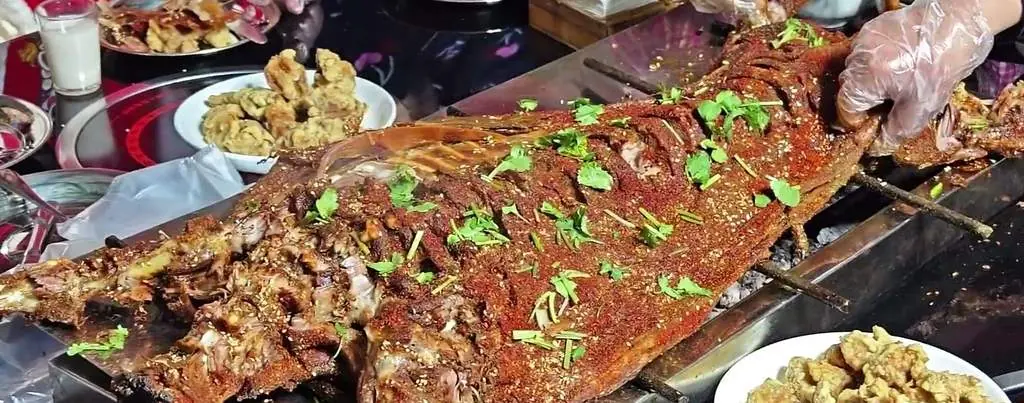
In Chongqing, smoked pork is a must for the New Year. It is smoked weeks in advance over a smoky fire, then hung to dry, and slices of it turn up at every holiday meal through the festival.
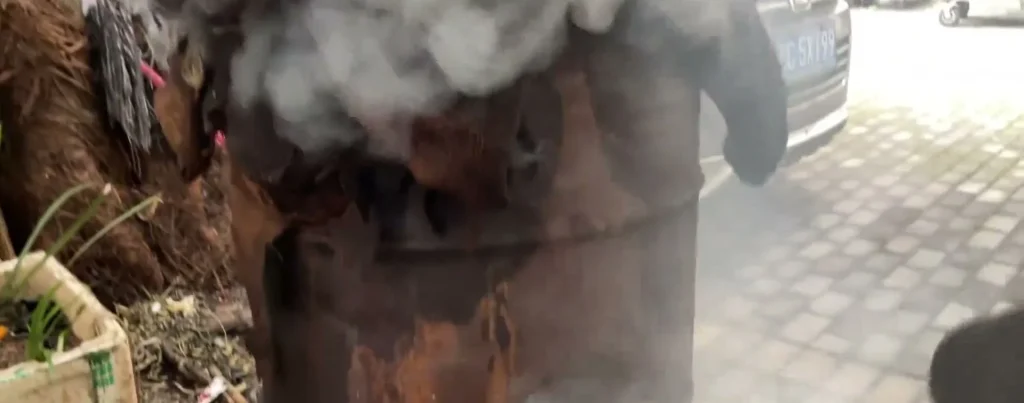
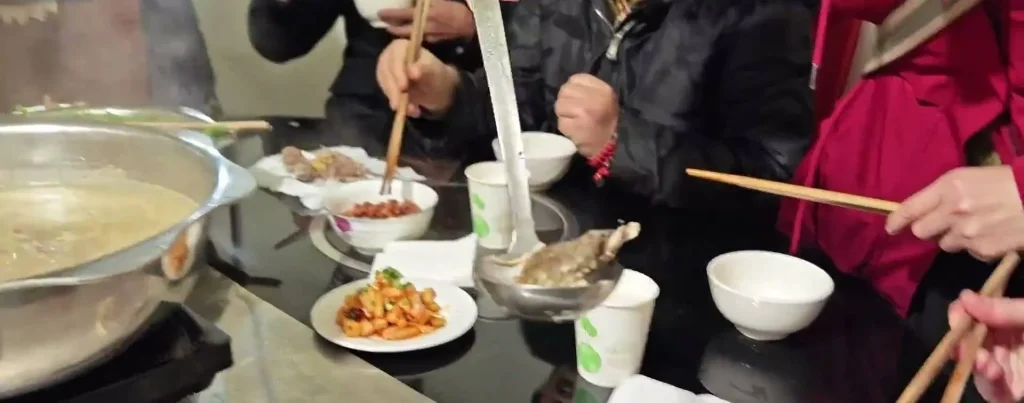
In Chongqing and Sichuan the big family meals do not stop after the Eve. Through the whole festival people go from house to house, and those meals pull in the wider family and friends, not only parents and children. The Eve dinner is the one kept for the closest family.
Red envelopes on the Eve: why the money is called yasuiqian
Red envelopes are usually handed out after the reunion dinner, from the older generation to children. The money inside has a special name, yasuiqian (压岁钱), “money that holds down the year.” Sui, the word for a year of age, sounds the same as a word for an evil spirit, so the gift was once meant to keep a child safe through the turn of the year.
In some families the envelope is slipped under the child’s pillow to sleep on. Amounts are often in even numbers, and many people avoid anything with a 4, since four sounds like the word for death. Married adults also give envelopes to their parents in many homes, which turns the gift into a thank-you.
These days a lot of relatives send them electronically as digital red envelopes on their phones, so cousins in other cities still get theirs at midnight.
Staying up past midnight (shousui) and the Spring Festival Gala
After dinner comes shousui (守岁), “guarding the year,” which means staying awake to see the old year out. A common folk belief holds that children who stay up help their parents live longer. Most people simply sit up together, talk, play cards or mahjong, and snack on seeds and candy until midnight.
In the countryside, whole neighborhoods stay noisy and bright into the early hours.
Since 1983 the background to all this has been the CCTV Spring Festival Gala, a variety show that starts at 8 p.m. Beijing time and runs past midnight. Many families keep it on through the evening, more as company than as something to watch closely. The countdown to midnight in the show is the moment a lot of homes stop to say Happy New Year.
Firecrackers and fireworks at midnight on Chinese New Year’s Eve
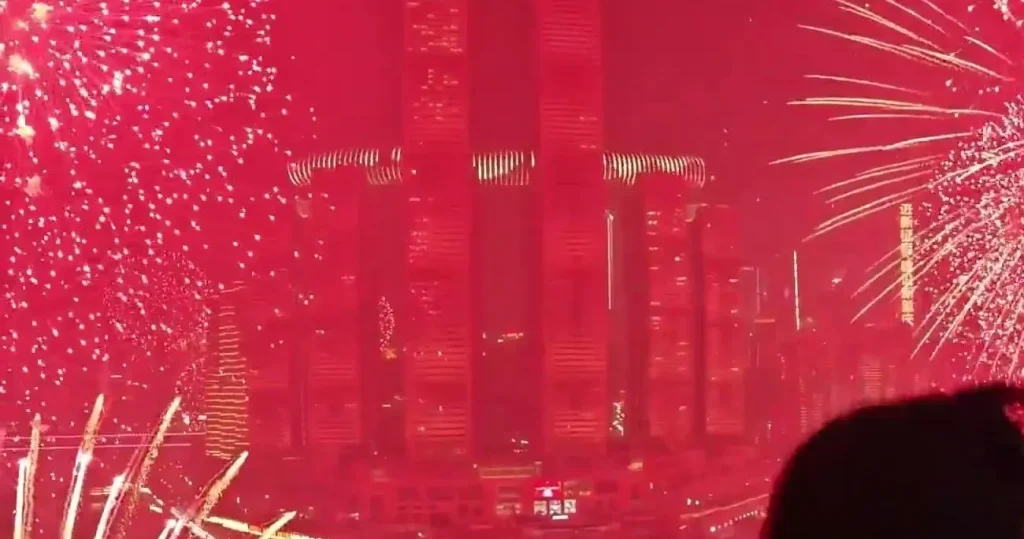
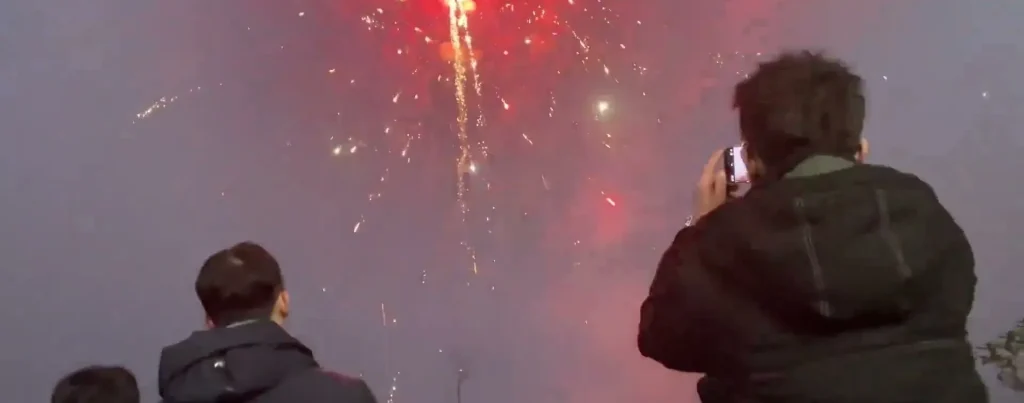
At midnight the noise starts. Firecrackers are set off to chase away bad luck and fear and to call in good luck for the coming year, the same idea as the old story of the Nian beast. In the countryside they also go off earlier in the day, partly as a signal to everyone nearby that the meal is almost ready.
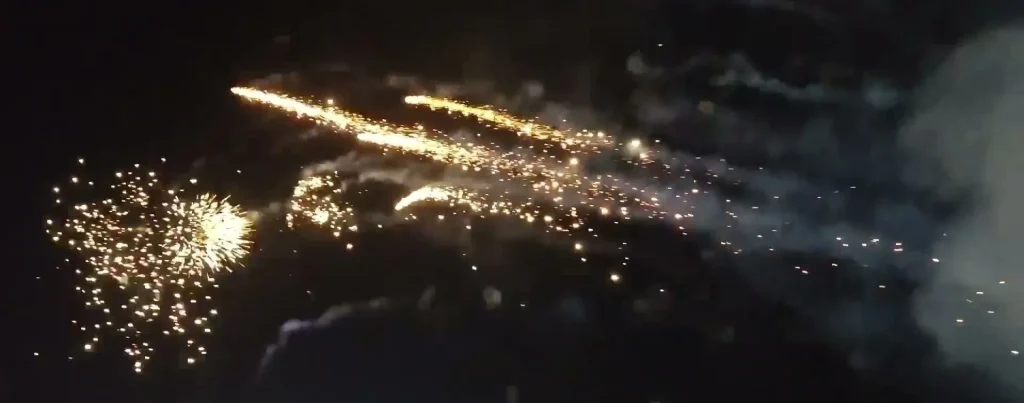
Many Chinese cities now limit or ban fireworks inside their centers, so the biggest displays are often in the countryside or on the edge of town. The restrictions are mostly about air pollution and safety, and some city families play firecracker recordings or use electronic strings instead. People step outside and watch the sky together, and that walk outside after hours at the table is part of the night too.
What families avoid on Chinese New Year’s Eve and the next morning
A few habits come with the night, and they matter to many older relatives. They’re folk superstitions rather than rules, kept mostly out of consideration for the older generation, and every family keeps a different set.
- Finish the cleaning before the Eve. Sweeping or taking out the trash on the first day of the New Year is often said to sweep the new luck away.
- Keep the talk lucky. Words about death, illness or breaking things are avoided at the dinner table.
- Be careful with dishes. A broken bowl is answered at once with sui sui ping an, “peace year after year,” because sui (碎), to break, sounds like sui (岁), a year.
- Leave some fish. Clearing the fish plate to the bone undoes the wish for surplus.
If you are a guest at a Chinese family’s table on the Eve, the easy approach is to follow what the oldest person does. I’d also say Happy New Year at midnight, in Chinese if you can: xin nian kuai le (新年快乐).
Written by
Daozhang MaMaoshan Taoist, Jintan, Jiangsu
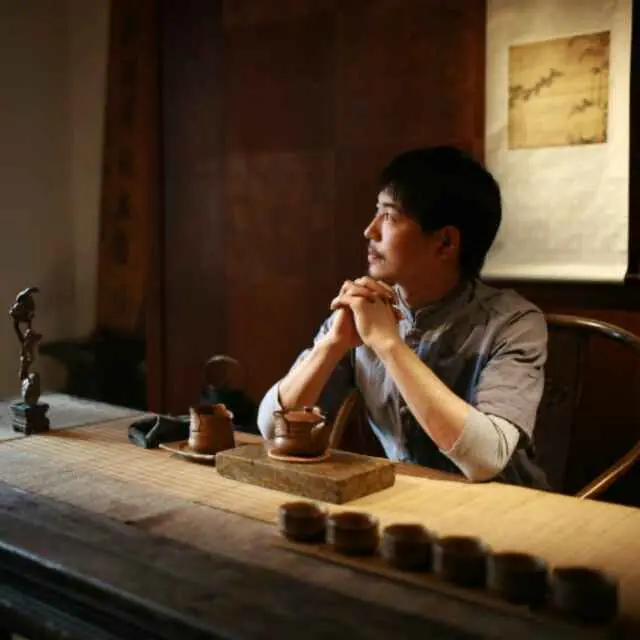
Daozhang Ma is a Maoshan Taoist who has practiced for 22 years and is skilled at writing talismans and painting Taoist pictures. He runs Zodiac & Tradition.
About Daozhang Ma