Laba Festival 2027: Date, Porridge, Garlic and Origins
By Daozhang MaMaoshan Taoist, Jintan, Jiangsu
In short
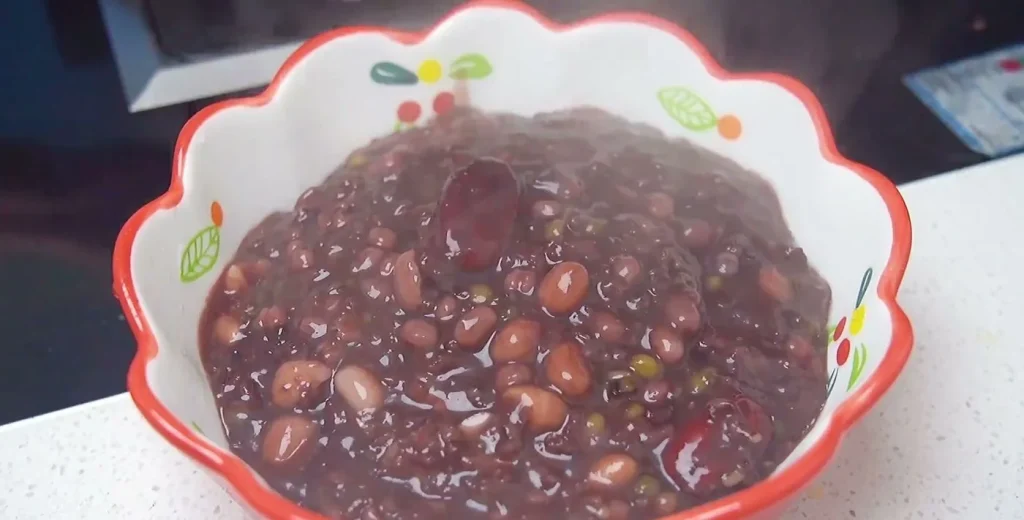
The Laba Festival (腊八节, Làbā jié) falls on the eighth day of the twelfth lunar month, which is January 15, 2027. Its signature food is Laba porridge, a slow-cooked pot of mixed grains, beans, nuts and dried fruit, and the day is traditionally treated as the first step toward Chinese New Year. An old saying puts it plainly: once Laba has passed, the New Year has arrived.
I have lived on Maoshan for more than twenty years, and Laba is the morning I stop thinking of winter as just cold weather and start thinking of it as the run-up to the New Year. The almanac on my desk gets opened more often from this day on.
When is the Laba Festival?
Because Laba follows the lunar calendar, its Western date moves every year, landing somewhere between late December and late January. “La” is the name of the twelfth lunar month, and “ba” means eight. If you want to see how Laba sits among the other dates on the lunar calendar, my guide to Chinese festivals walks through the whole year.
| Lunar year | Laba Festival date | Day of the week |
|---|---|---|
| 2025–2026 (Snake) | January 26, 2026 | Monday |
| 2026–2027 (Horse) | January 15, 2027 | Friday |
| 2027–2028 (Goat) | January 4, 2028 | Tuesday |
Laba usually comes about three weeks before Chinese New Year, so when I mark it in the almanac I also start planning the cleaning, the couplets and the shopping that fill the weeks after it.
Where the name and the day come from
There are two older strands behind Laba, and they have been woven together for so long that no one can cleanly separate them.
The first strand is the “la” sacrifice. At the end of the year, people made offerings to their ancestors and to the gods to give thanks for the harvest, and this year-end rite is older than Buddhism in China. The date of the la day was not fixed at first; it settled on the eighth day of the twelfth month around the Southern and Northern Dynasties period.
The second strand is Buddhist. The eighth day of the twelfth month is honored as the day the Buddha attained enlightenment, and the story goes that before it, a herding girl offered him a bowl of milk porridge. Monasteries took up the custom of cooking porridge on this day as an offering. Treat this as a religious tradition rather than a historical record.
Which strand came first is still argued. Some writers see Laba as a blend of native year-end rites and Buddhist practice, some think the Buddhist explanation was attached later, and a few folk tellings drop the Buddhist side entirely. I lean toward the blend, because that is how most festivals I know actually grew.
Folk legends add more layers. One popular story says the Hongwu Emperor, Zhu Yuanzhang, once survived a hungry stretch by cooking whatever odd grains and beans he could gather into a single pot, and that this became Laba porridge. Other tales circulate too, about frugal young couples and lazy sons who learned the value of saving grain. These are stories told for meaning, not history.
Temple porridge giving, then and now
By the Song dynasty, the name Laba porridge and the habit of eating it were well established. A memoir of the Northern Song capital, the Dongjing Meng Hua Lu, describes the great temples of Kaifeng holding a Buddha-bathing ceremony on the eighth day of the twelfth month and sending “seven-treasure, five-flavor porridge” to their followers, which it calls Laba porridge. Households in the city cooked their own pots that day with fruit and mixed ingredients.
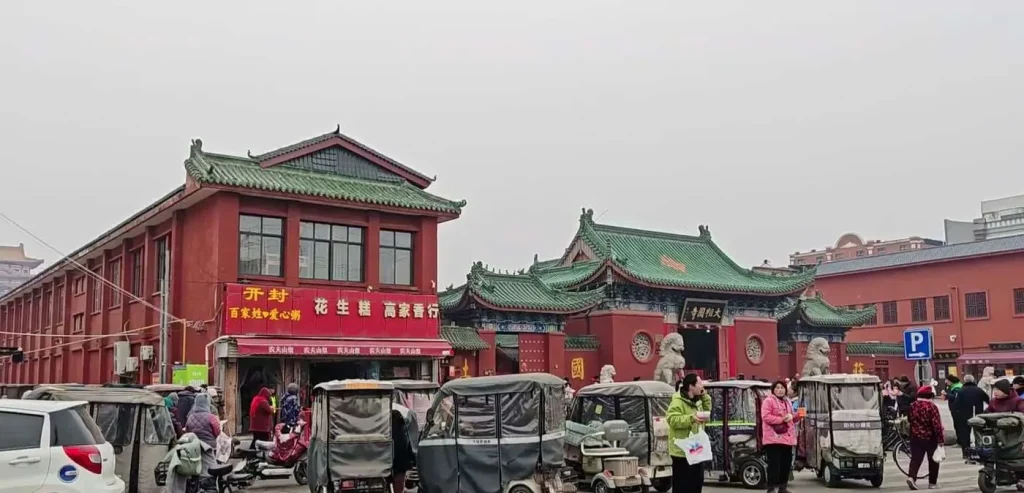
The custom spread from temples into ordinary homes. The poet Lu You, living in the countryside in the twelfth month of 1192 at age 68, wrote a poem called Walking to the West Village on the Eighth Day of the Twelfth Month. Its closing lines describe villagers passing Buddha’s porridge to one another and the season’s food making the river village feel new. In the Southern Song, records of Hangzhou list walnuts, pine nuts, mushrooms, persimmons and chestnuts going into the pot.
The Qing court took it further. At Yonghe Temple in Beijing, the lamas cooked porridge as an offering to the Buddha on the night of the eighth, in a pot that could hold several dan of rice, and the court sent a minister to oversee it, as Dunchong recorded in his Yanjing Suishiji (1906). Qing descriptions of Beijing’s Laba porridge mention several kinds of rice, chestnuts, red beans and date paste, finished with dyed peach kernels, almonds and melon seeds on top.
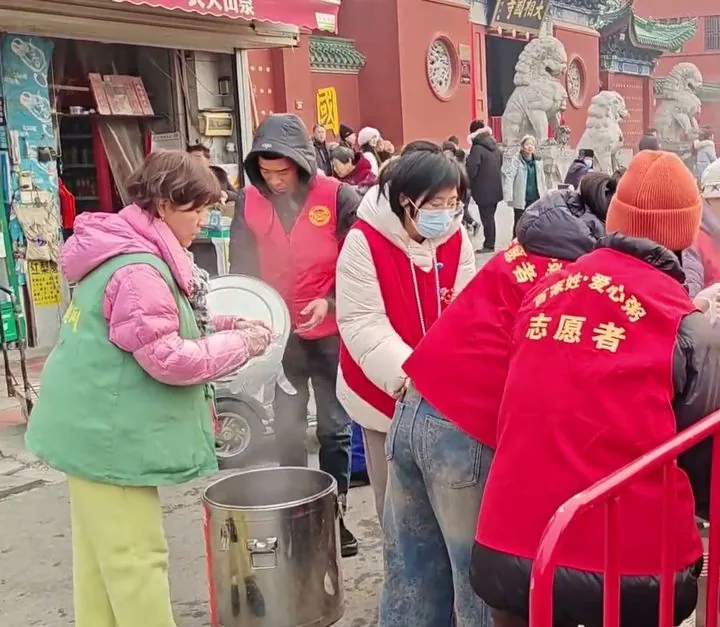
The giving has not stopped. On Laba morning, many temples in China still set up pots outside their gates and ladle out free porridge to anyone who joins the line. On Maoshan the morning is busy too: I light incense, make my offerings, and then a bowl of porridge is the first warm thing I have all day.
How Laba porridge is made
There is no single recipe. The rule is variety: rice and other grains, several kinds of beans, nuts and dried fruit, all simmered together until the beans break down and the pot turns thick and dark red.
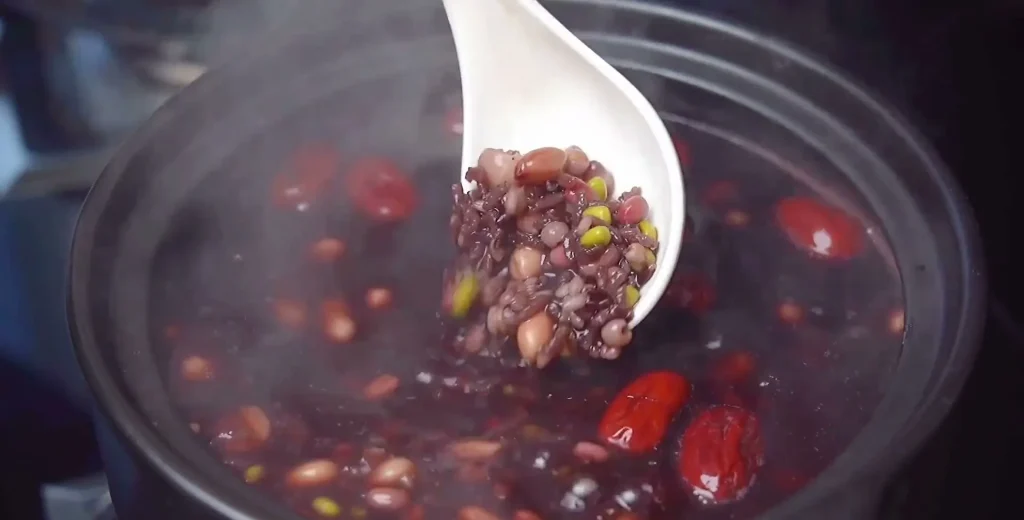
My own pot follows a simple rhythm. The night before, I soak red beans, peanuts and the harder grains such as black rice, because they take far longer than anything else. In the morning, I drain them and put them in a clay pot with fresh water, plus mung beans, glutinous rice and a handful of red dates.
I bring it up to a boil, then turn it down and leave it at a lazy simmer with the lid slightly open. Every so often I stir from the bottom, since the rice likes to stick once the pot thickens. Mine takes around two hours to reach the point where the peanuts are soft right through.
Sweetening comes last. I stir in rock sugar or brown sugar to taste once the beans are tender, because sugar added early keeps beans firm. If you like it richer, a few longan or lotus seeds go in near the end.
Local versions go far beyond the sweet bowl. In parts of Hubei and eastern Qinghai, Laba porridge is cooked with meat, and some villages in Hebei and Shaanxi traditionally dabbed a little porridge on their fruit trees in hope of a good crop. Here in Jiangsu, the porridge I see is sweet, and nobody I know would add meat.
Laba garlic
The other Laba food is Laba garlic. On Laba day, peeled garlic cloves go into a jar of rice vinegar and stay sealed until the New Year, when they turn a clear jade green and are eaten with dumplings.
I make a small jar every year. I peel the cloves, pack them into a clean glass jar, pour vinegar over until they are covered, and set the jar somewhere cool. By New Year’s Eve the cloves have turned green, lost their sharp bite, and the vinegar has become a good dipping sauce in its own right. If yours stay white, the room was probably too warm; a cooler spot gives better color.
What Laba porridge is said to mean
Traditionally, a pot of Laba porridge carries wishes for peace and a good harvest. Gathering many grains into one pot is read as abundance, and sharing it with neighbors and strangers is read as goodwill passed along before the year ends. These are traditional meanings, not promises; to me, the meaning is simply that the year is ending and the New Year preparations can begin.
Written by
Daozhang MaMaoshan Taoist, Jintan, Jiangsu
Daozhang Ma is a Maoshan Taoist who has practiced for 22 years and is skilled at writing talismans and painting Taoist pictures. He runs Zodiac & Tradition.
About Daozhang Ma