Red Envelope Meaning: How Much Money to Give and Etiquette
By Daozhang MaMaoshan Taoist, Jintan, Jiangsu
In short
A red envelope, called hongbao (红包) in Mandarin and lai see in Cantonese, is a small red paper packet with money inside. At Chinese New Year, married adults and older relatives give red envelopes to children and unmarried young people. The money should be crisp new bills, in an even amount that avoids the number four.
The red matters as much as the cash. Red stands for luck and protection, and the oldest story behind the custom is about keeping a child safe through New Year’s Eve.
To a Taoist of the Maoshan tradition like me, living on Maoshan in Jintan, Jiangsu, the old name for this money matters more than the amount. The sections below start with that name, then cover who gives to whom, how much to put in, how to prepare and hand one over, where the custom came from, and how the digital version works.
What a red envelope means: money that “holds down” the year
The old name says it most clearly. Red envelope money for children is called yasuiqian (压岁钱), and ya (压) means to press down or hold in place. The money holds the coming year down around the child, so that nothing bad slips through.
The story behind the name is about a demon called Sui (祟) that came on New Year’s Eve and touched sleeping children, who woke with a fever.
One family gave their little son eight copper coins wrapped in red paper to play with until the boy fell asleep. When the demon reached for the child, the coins flashed with light and drove it off. Some tellings say the coins were the Eight Immortals in disguise.
Word spread, and families began wrapping coins in red paper and tucking them under their children’s pillows. The demon’s name sui (祟) sounds exactly like sui (岁), a year of age, so over time the second character replaced the first. “Money to suppress Sui” became “money that holds down the year,” and that is the name families still use.
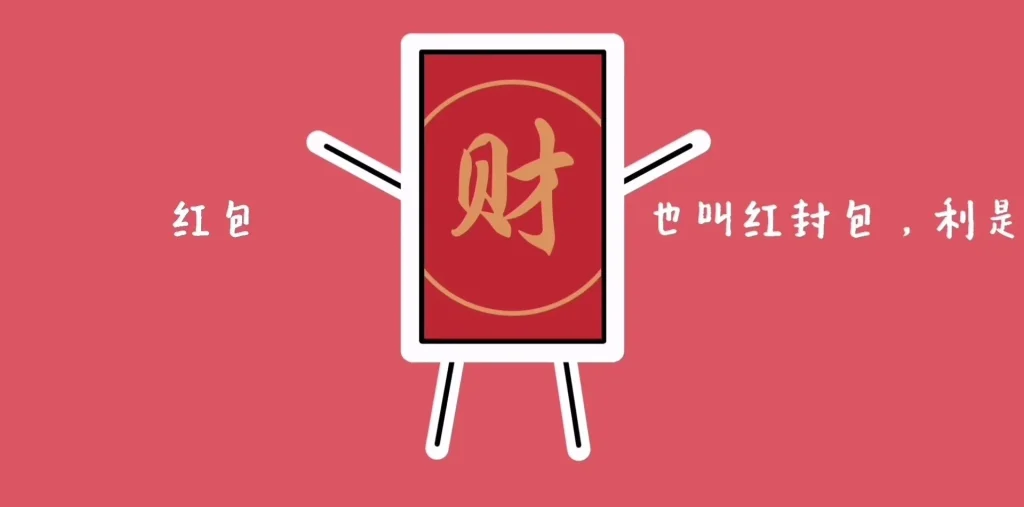
The envelope goes by several names. Lai see (利是) is the Cantonese word, and in Singapore and Malaysia you’ll hear the Hokkien angbao or ang pao. All of them mean the same red packet of money.
To me the word ya is the key to the whole custom. An elder is putting a little protection and a little luck into a child’s hands for the year ahead. That is why the color and the condition of the bills matter as much as the amount.
Who gives red envelopes at Chinese New Year, and who gets them
Red envelopes flow from the married to the unmarried, and from older to younger. Children receive the most, from parents, grandparents, aunts and uncles, and from family friends they see over the holiday.
Unmarried adult children usually keep receiving them, however old they are. Older relatives like to tease, “When can I stop giving you red envelopes?” It is their not-so-subtle way of asking when you plan to marry.
Giving usually starts once you’re married, and in some families once you earn your first paycheck. Newlyweds are often excused for their first New Year as a couple, so the first year of marriage is a grace year.
Red envelopes also travel up and outward. Grown children with a steady income often give one to their parents and grandparents, as thanks rather than blessing. Bosses give them to their staff. In Hong Kong, Singapore and Malaysia, people also hand small ones to doormen, cleaners and security guards in the first days of the year.
If you’re not Chinese and a family invites you to New Year dinner, nobody expects you to bring red envelopes. If you’d like to, one small envelope for each child in the house is a warm gesture, and most parents will read it as respect for the custom.
How much money to put in a red envelope
The amount depends on how close you are to the person and what your family usually gives. In China it can be anything from under 100 yuan (roughly $14) to tens of thousands. The digits follow a few rules everyone knows: an even amount, eights where you can, and never a four.
Even amounts are the norm. Good things come in pairs. Eight is the favorite digit, since ba (八) sounds close to fa (发), to prosper. Nine is the one odd digit people accept, because jiu (九) sounds like jiu (久), long-lasting.
Four is the number to keep out. That covers any amount with a 4 in it, so $4, $14, $40 and $400 are all wrong. The word si (四) sounds like si (死), death, and nobody wants that wish in an envelope.
Odd amounts belong to funerals, so they feel off in a red envelope. Weddings are the exception in some communities, where guests give an odd sum on purpose because it can’t be split in two.
Here is how I’d translate those rules into US dollars for a family in America. These brackets are my own rough suggestion, not a fixed rate. If your relatives already have a going amount, follow theirs.
| Who you’re giving to | A sensible amount |
|---|---|
| A friend’s child you meet at a party | $6 to $20 |
| Your nieces, nephews and godchildren | $20 to $88 |
| Your own children | $20 to $100, more for teenagers |
| Your parents or grandparents | $100 to $200 |
| A coworker or someone who works for you | $10 to $20 |
Inside each bracket, pick a number with an eight or a six in it if you can. An amount like $88 or $66 reads as a wish, and the person opening it will notice.
Preparing red envelopes: new bills, no coins
Once you know the amount, the money itself needs a little care, because the condition of the bills is part of the gift. Crisp, new bills say you prepared for this person. Wrinkled ones look like you emptied your wallet at the door.
Before New Year in Chinese communities, people line up at banks to swap old notes for fresh ones. If you’re in the US, I’d ask your bank a week or two ahead whether they can give you new bills, because the request is easier with notice.
Put paper money in, not coins. Notes also keep the amount hidden from the outside, which keeps the giving polite. Malaysia has one small twist: some families add a single coin to a child’s notes for a little extra luck.
The envelopes themselves are cheap and easy to find. Asian grocery stores sell them in packs before the holiday, and so do many online shops. Look for red with gold printing, often the character 福 (fortune) or the zodiac animal of the coming year; 2027 is a Goat year, so expect plenty of goats.
Red envelope etiquette: when to give, how to hand over and receive
With the envelopes ready, the rest comes down to timing and manners, and the giver and the receiver each have a part to play.
Giving a red envelope
Most families give children their red envelopes on New Year’s Eve or New Year’s Day, and give everyone else theirs the first time they meet during the holiday. Lunar New Year 2027 falls on February 6, so New Year’s Eve is February 5.
Some families slip the children’s envelopes under their pillows on New Year’s Eve, which goes straight back to the old story about Sui. In Suzhou, children keep the envelope in their bedroom and leave the money unspent until the New Year season is over.
Hold the envelope out with both hands and say a short New Year wish as you give it. Gong xi fa cai (恭喜发财), “wishing you prosperity,” is the safe line for anyone. For a child, I’d add a wish for good grades or good health, since a wish aimed at the person means more than the stock phrase.
Receiving a red envelope
Take the envelope with both hands, thank the giver and wish them a good year back. In some families, children kneel or bow to an elder before taking it, and that is still done in parts of China.
Wait to open it until you are out of the giver’s sight. Opening it on the spot looks like you’re checking the amount, which is rude. In Hong Kong, families traditionally wait until the seventh day of the New Year before opening their red envelopes.
Some people believe the money shouldn’t be spent in a hurry, since spending it fast is like throwing the blessing away. Children, meanwhile, learn early to greet visiting adults with “Gong xi fa cai, hong bao na lai,” best wishes, now hand over the red envelope. It’s cheeky, and adults laugh and hand one over.
If you’re a guest and someone’s grandmother presses an envelope into your hands, take it. A small polite hesitation is fine, but turning it down flat is more awkward than accepting with a warm thank-you.
The history of red envelopes, from charm coins to paper packets
The rules about crisp bills and paper money make more sense once you see how the custom changed, because the red envelope began as coins and charms.
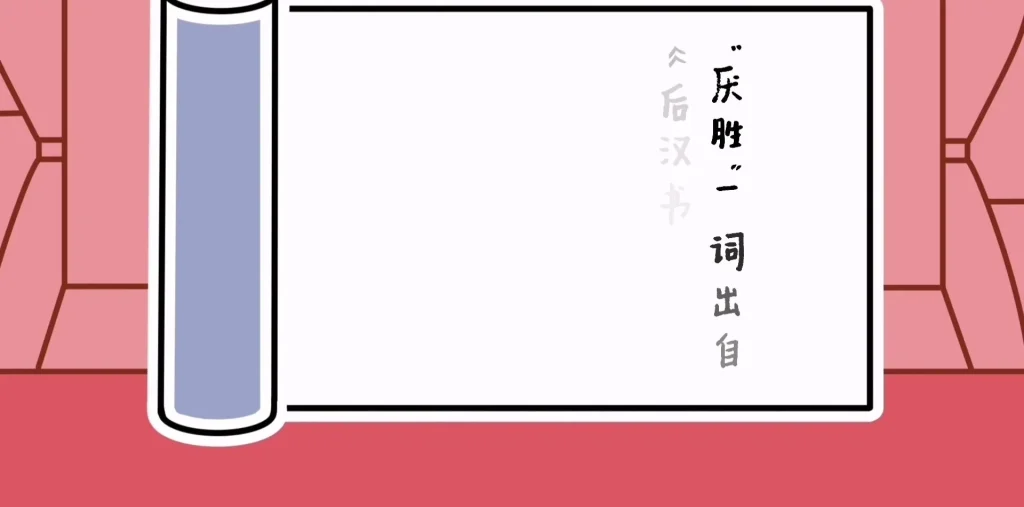
The idea goes back to the Han dynasty (202 BCE to 220 CE). People made coin-shaped charms called yashengqian (压胜钱) to ward off evil and sickness, inscribed with lucky words. These were strung on red thread or wrapped in red paper, since red was already the color of good fortune.
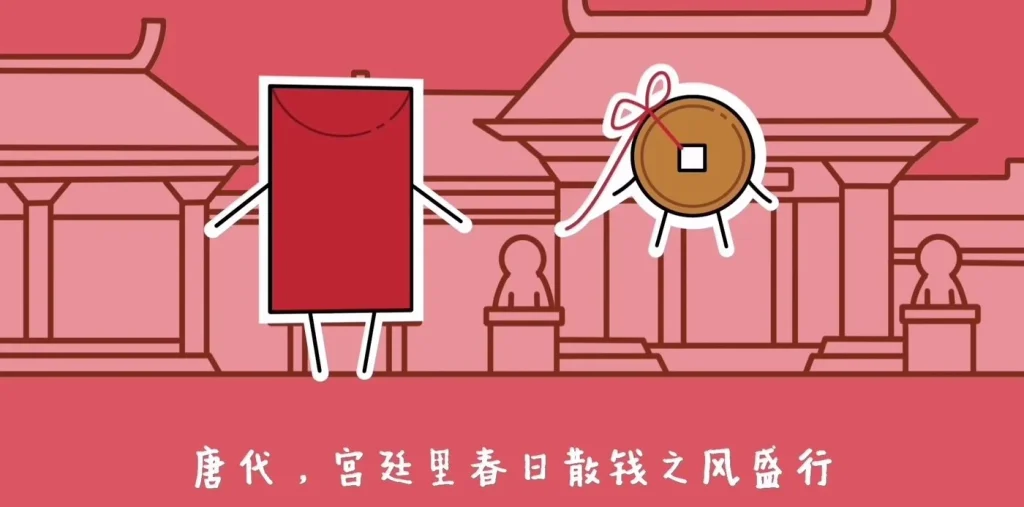
By the Tang dynasty, New Year was treated as the start of spring, and elders gave children money to keep evil away. Wealthy families carried cash gifts in small woven bags, and ordinary people copied them with folded red paper, which I think of as the direct ancestor of the envelope most of us now buy in packs at the grocery store.
Later, elders strung coins on red thread for the children, and in the Qing dynasty the name yasuiqian shows up in writing. A Qing book of Suzhou customs, the Qing Jia Lu (清嘉录), describes elders giving children coins threaded on a red string and calling it yasuiqian.
In the Republic era, families wrapped 100 coins in red paper as a wish for a hundred years of life. Modern coins have no hole for a string, so the paper packet won out, and once banknotes replaced the coins, the flat red envelope settled into the shape I hand out every New Year today.
Mass-printed envelopes appeared in Singapore around the turn of the 20th century, and in the US the earliest mass-produced ones appear to date from 1961, made by Wells Fargo in California.
Digital red envelopes: phone apps and group “grab” envelopes
From paper money, the next step was the phone, and in China plenty of red envelopes now never touch paper. Tencent’s messaging app launched its red envelope feature over Chinese New Year 2014 and promoted it during the CCTV New Year’s Gala, China’s most-watched TV show. Alibaba answered with its own version, and the fight between them became known as the red envelope war.
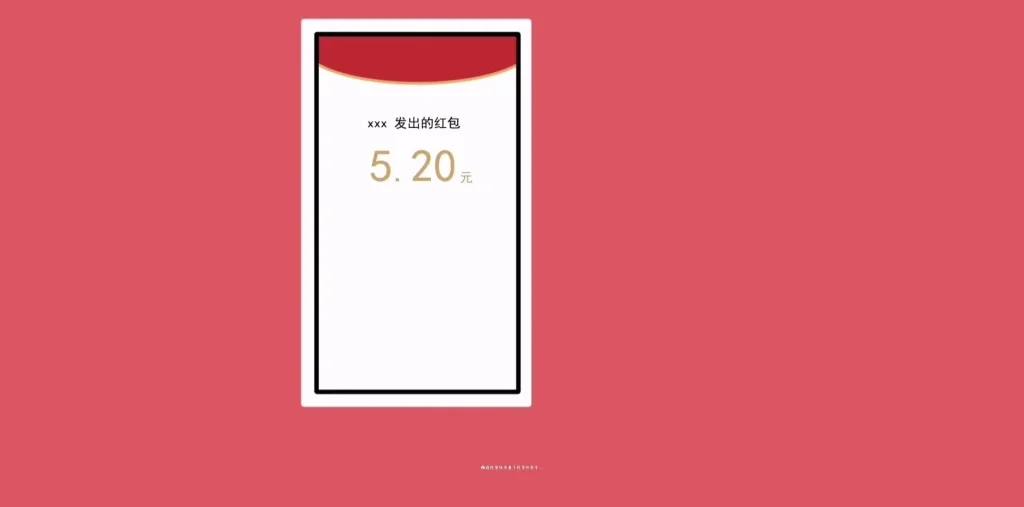
A one-to-one digital envelope works like a paper one: you pick an amount, add a wish and send it. The fun is in group envelopes. You put in a total, set how many people can claim it and drop it into a family chat. Whoever taps in time gets a share, and in the lucky-draw kind the shares come out uneven.
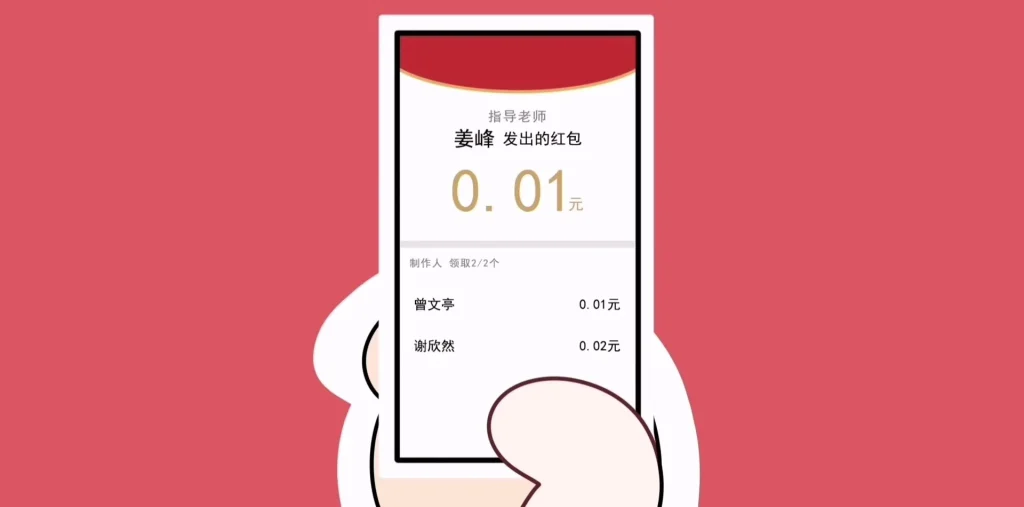
Tiny amounts like these are part of the joke. Nobody gets rich from a group envelope; the fun is racing your cousins to tap first and seeing who drew the biggest share.
The idea has reached the US too. In January 2022, Venmo added a “gift-wrapping” feature that hides the amount behind a themed cover, with Lunar New Year designs at launch. In Singapore, by contrast, most people still prefer paper envelopes. For children I’d still give paper, because a tap on a phone can’t go under a pillow.
Red envelopes beyond New Year: weddings, lion dances and white envelopes
New Year is the big season, but the same red envelope turns up at most happy occasions. Wedding guests bring one, and the amount often aims to cover their seat at the banquet. Families give them for a birth, a birthday, a new house or a new business.
During lion dances, people feed red envelopes into the lion’s mouth, as luck for the household and a donation to the troupe. Red envelopes also carry payment to teachers, doctors and religious practitioners.
Color is the hard rule. Funerals use white envelopes with an odd amount, called dianyi (奠仪), and handing someone the wrong color is a real mistake. In Singapore, banks also print green packets for Hari Raya, a sign of how far the idea has traveled.
Whatever the occasion, I keep that old word ya in mind. A red envelope holds a wish in place for someone, and new bills, the right numbers and two hands are how you show you mean it.
Written by

Daozhang MaMaoshan Taoist, Jintan, Jiangsu
Daozhang Ma is a Maoshan Taoist who has practiced for 22 years and is skilled at writing talismans and painting Taoist pictures. He runs Zodiac & Tradition.
About Daozhang Ma