Whole Fish for Lunar New Year: Meaning, Table Rules and Recipe
By Daozhang MaMaoshan Taoist, Jintan, Jiangsu
In short
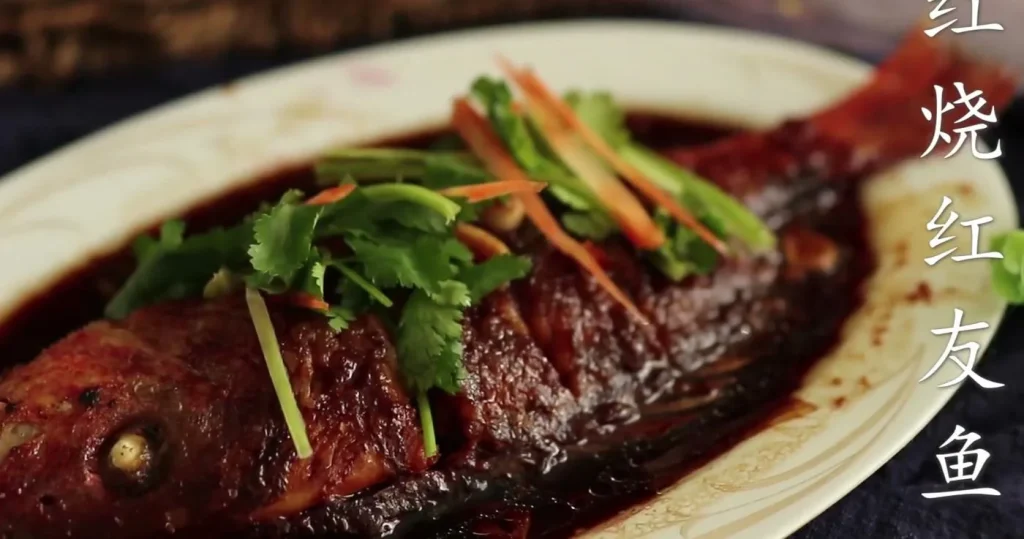
A whole fish, head and tail on, is the traditional centerpiece of the Lunar New Year’s Eve dinner in most Chinese homes. Families in Guangdong and Hong Kong usually steam it with ginger and scallion, while in Jiangsu, Shanghai and much of the north it is braised in a dark soy and vinegar sauce.
The fish stays whole because of a pun that each new generation of Chinese children learns early. Fish is yu (鱼) in Mandarin, which sounds like yu (余), surplus, and an uncut fish with its head and tail stands for a year that runs whole from start to finish, with something left over at the end.
Living on Maoshan as a Taoist, I keep coming back to the leftover, since it shapes how the fish is served as much as how it is cooked. Here’s what follows: what the pun means, the table rules that follow from it, which fish to buy, a braised whole fish in seven steps, the Cantonese steamed version, and a few other fish dishes for the same dinner.
Why whole fish for Lunar New Year: yu and “surplus”
Eating fish at Chinese New Year is a wish for surplus in the year ahead. The New Year greeting nian nian you yu (年年有余), may every year leave you more than enough, is written with the surplus character, but people hear the fish in it. That’s why New Year prints so often show a plump child hugging a big carp.
The whole body carries the second half of the wish. A head and a tail on the platter mean the year has a proper start and a proper finish, what Chinese calls you tou you wei (有头有尾). Cutting the fish into pieces before it reaches the table spoils that presentation, so plenty of families who cook fish in pieces the rest of the year buy a whole one for this celebration.
I read the custom through chapter 9 of the Daodejing, which says that filling a vessel to the brim is not as good as stopping in time (持而盈之,不如其已). The New Year fish turns that line into dinner. You cook a generous fish, eat well from it, and stop before the plate is bare. That’s the Taoist side of the tradition, and I think it’s the part people outside China miss most often.
New Year fish table rules: where the head points, the last piece and the flip
Because the fish stands for a whole year with something left over, most families handle it with three rules once it reaches the table.
The head points at the guest of honor. Set the platter so the head faces the eldest person at the table, or the most important guest. In many homes that person takes the first bite, and in some regions whoever faces the head is expected to raise a toast before the fish is touched. Waiters in Chinese restaurants usually know this and set the platter down accordingly.
A piece stays on the plate. Eat the fish at the New Year’s Eve dinner, but leave some of it, usually the tail end, and keep it overnight. That leftover is the surplus carried into New Year’s Day, which is why nobody scrapes the bones clean on this one night. It isn’t stinginess; it’s the wish itself, sitting on a plate in the kitchen.
Nobody flips the fish. When the top side is eaten, lift the backbone away and keep eating the meat underneath instead of turning the fish over. The rule comes from fishing families along the coast, for whom turning a fish sounds like a boat capsizing, and it has spread to New Year tables far inland. Superstition or not, I’d keep it at any family table, especially one with grandparents at it.
If the table mixes generations or includes guests new to the holiday, I’d mention the flip rule before the platter arrives. A newcomer who turns the fish offends nobody, but the older guests will notice, and one quiet sentence beforehand spares everyone the moment.
Which fish to buy for the New Year table
Those rules only work with a fish that arrives whole, so buy it with the head, tail and fins on, and have the fishmonger scale and gut it for you.
In China the classic choices carry puns of their own. Carp, li yu (鲤鱼), sounds like li (利), profit, and crucian carp, ji yu (鲫鱼), sounds like ji (吉), good luck. Grass carp and yellow croaker are common too, depending on the region and what the local market sells.
In an American supermarket, red snapper, branzino, black sea bass and tilapia are the easy whole fish to find, with tilapia the inexpensive one. Each works for both recipes below, so don’t worry if the snapper’s sold out.
For this dinner my pick is a red-skinned fish such as snapper, because red is the holiday’s own color and the skin stays red after braising. For four people, a fish of about 1.5 to 2 pounds (0.7 to 0.9 kg) fits a standard oval platter and a 12-inch (30 cm) skillet.
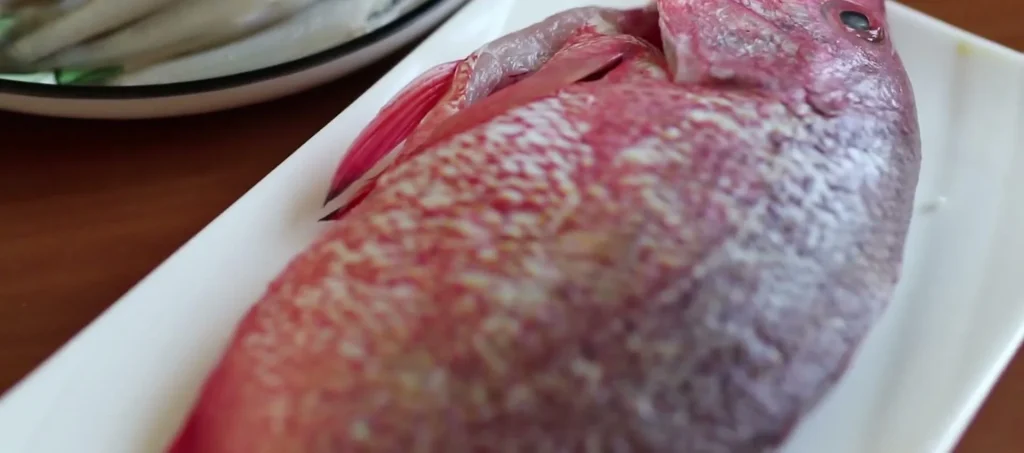
At the counter, check three things: clear eyes, bright red gills and flesh that springs back when you press it. Ask for the scales and guts out but the head and tail kept on; it’s the one dish of the year where the fish should still look like a fish.
Braised whole fish for Lunar New Year: ingredients
The braised version below is a home-style hongshao (红烧), or red-braised, fish: the fish is scored, dusted with starch and pan-fried, then finished in a sweet and sour soy sauce that turns the skin a deep red-brown.
For the fish
- 1 whole red snapper or other white-fleshed fish, about 1.5 to 2 pounds (0.7 to 0.9 kg), scaled and gutted
- Cooking wine (Shaoxing wine) and salt, for rubbing into the cuts
- Dry cornstarch, for dusting
- Cooking oil, for pan-frying
For the sauce
- 1 spoon cooking wine
- 1 spoon light soy sauce
- 1 spoon dark soy sauce
- Salt to taste
- 2 spoons sugar
- 2 spoons white vinegar
- A few scallions cut into lengths, a few slices of ginger, a few garlic cloves and a little fresh red chili
For the garnish
- Cilantro, carrot cut into thin strips and a little shredded scallion
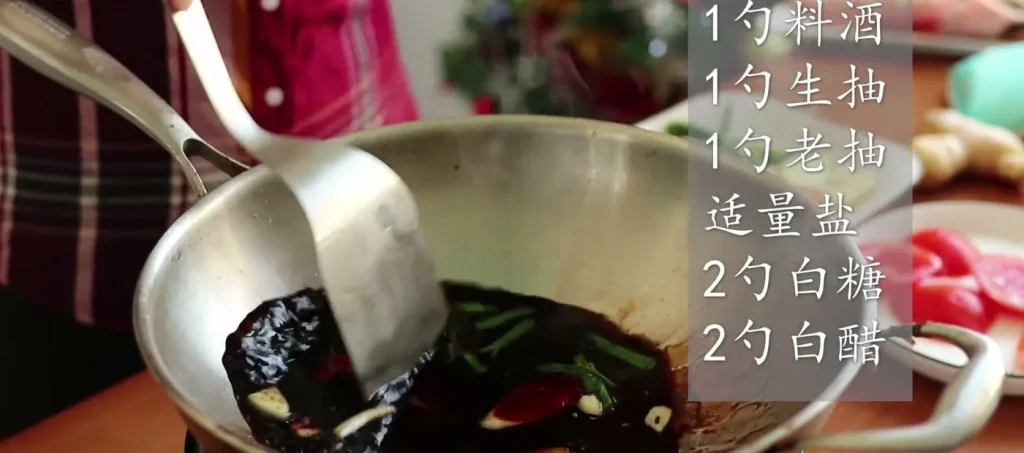
The spoon here doesn’t need to be exact; a Chinese soup spoon or a tablespoon both work. What matters is the proportion: two parts sugar and two parts vinegar to one part each of wine, light soy and dark soy, which gives a sauce that is sweet first and sour at the back.
How to cook a braised whole fish for Lunar New Year, step by step
With the fish bought and the sauce measured, the cooking takes seven steps, and the order matters because the starch coat has to set in the pan before the fish meets the sauce.
- Start with the cleaned whole fish. Lay it on a board with the head and tail intact. My own addition here is to pat the skin and cavity dry first, because water left on the skin makes the oil spit, and you’ll get a gluey coating instead of a crust.
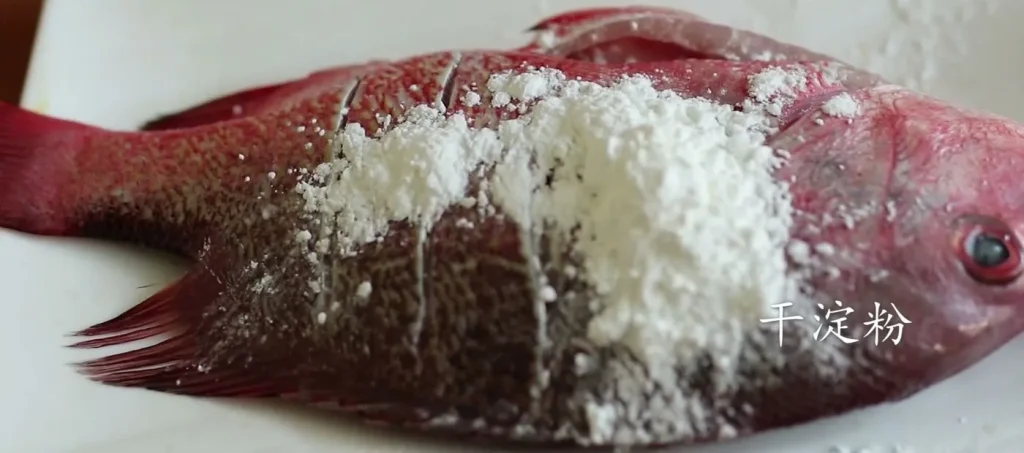
- Score and season it. Cut a row of deep slashes across the side of the fish, down toward the bone, then rub cooking wine and salt over the skin and into the cuts. The slashes let the heat reach the thick middle and give the sauce somewhere to settle.
- Dust it with dry starch. Scatter dry cornstarch over the scored fish and rub it over the skin and into the slashes until the whole side has a white coat.
- Pan-fry both sides. Heat a little oil in a nonstick skillet, lay the fish in and leave it until the underside releases and turns golden. Don’t rush it. Turn it with a spatula, steadying it with a large spoon, and fry the other side the same way. Turning it in the pan is fine; the no-flip rule belongs to the table.
- Make the sauce. In a wok, fry the scallions, ginger, garlic and chili in a little oil until they smell fragrant, then add the cooking wine, light soy, dark soy, salt, sugar and vinegar and stir until the sugar melts into a dark, glossy sauce.
- Braise the fish in the sauce. Slide the fried fish off its plate into the wok rather than lifting it. Then pour water from a kettle down the side of the wok, not straight onto the fish, so the crust you just fried stays on, and stop when the fish sits half-sunk in the dark liquid. Once it bubbles around the fish, put the lid on and let it braise until steam fogs the lid.
- Plate it facing the guest of honor. Ease the fish onto an oval platter, pour the sauce around it and top it with cilantro, carrot strips and shredded scallion. Set it down with the head toward the eldest person at the table.
The step I’d watch most closely is the fourth. A fish that goes into the sauce with a thin, firm crust stays whole on the platter, and a whole fish is the point of the dish.
Common problems with a braised whole fish, and swaps
Most of what goes wrong with this dish happens in the pan, when a delicate skin meets hot oil.
- The skin sticks and tears. The pan wasn’t hot enough or the fish was wet. Dry it well, heat the oil first, and don’t touch the fish until it slides when you nudge the pan.
- The fish breaks on the way to the platter. Slide it from pan to plate, supported by two spatulas, instead of lifting it with tongs. A long fish can lose its tail this way, and that’s the half of the meaning you can’t put back.
- The middle stays raw. The slashes were too shallow. Cut them deep enough to reach the bone, and check the thickest cut before plating: the flesh should be white all the way through and lift away easily.
- The sauce tastes sharp. Give it a little longer at a bubble before you plate; cooking softens the vinegar, so the sweetness comes through.
For swaps, dry sherry stands in for Shaoxing wine, and rice vinegar gives a softer sourness than white vinegar. Potato starch works the same as cornstarch. Without dark soy, the main difference is color: the sauce tastes much the same but comes out paler, so the fish looks less red at the table.
The Cantonese steamed whole fish, and how long to steam it
Braising suits a fish that has to sit through a long dinner. In Guangdong and Hong Kong the New Year fish is steamed instead, and that is the version most English-language recipes show.
Steam a whole fish of about 1.5 pounds (0.7 kg) for 8 to 10 minutes over rapidly boiling water, then check the thickest part: the flesh should be opaque throughout and come away from the backbone. If it still looks translucent near the bone, give it another minute or two; a bigger fish needs a few minutes more.
Before steaming, lay the fish on slices of ginger and scallion on a heatproof plate, and don’t season it until it’s cooked. To finish, pour off the cloudy liquid on the plate, scatter fresh shreds of ginger and scallion over the fish, pour smoking-hot oil over them so they sizzle, then add soy sauce around the fish.
If you’re choosing between the two, I’d steam a very fresh fish for guests who like clean flavors. For a long, busy dinner, braise it. The sauce keeps the fish moist while the dumplings come out, and it reheats well on New Year’s morning, which suits the leftover rule.
Other ways families cook New Year fish
A whole fish is the centerpiece, but on a big New Year table it is rarely the only fish. The same dinner often includes a fried fish dish, a sliced fish dish and a few small fish cooked whole.
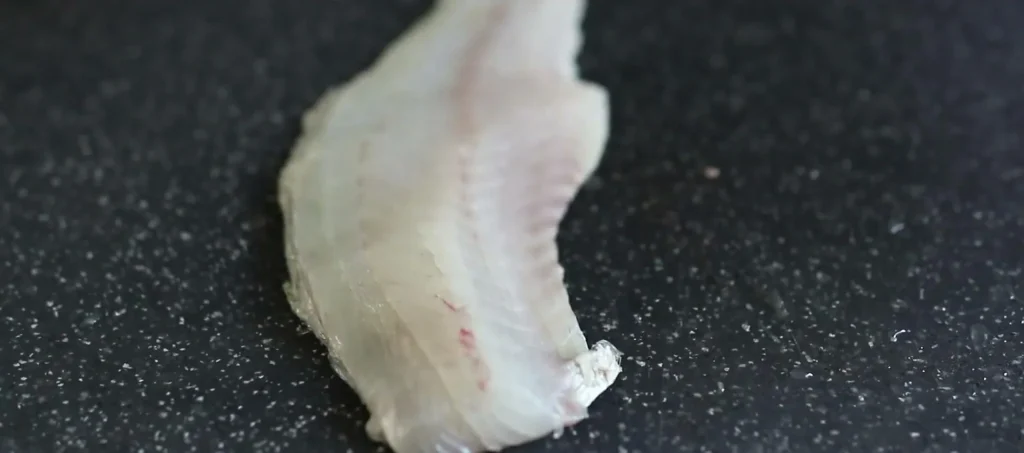
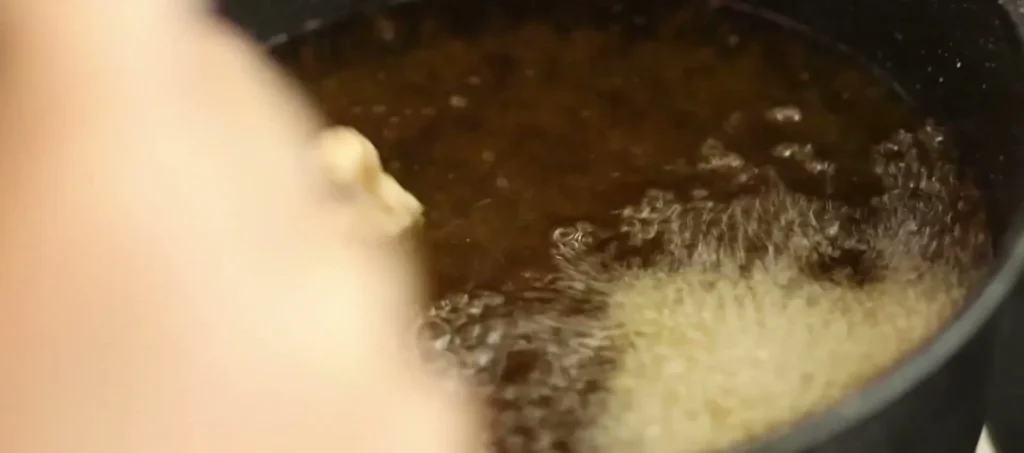
Sliced and fried fish dishes start with fillets. The pieces are coated in batter, deep-fried and tossed in a sauce, often a sweet and sour one. These dishes are easier to share than a whole fish, but they carry less of the symbolism, so I’d treat them as extras rather than the New Year fish.
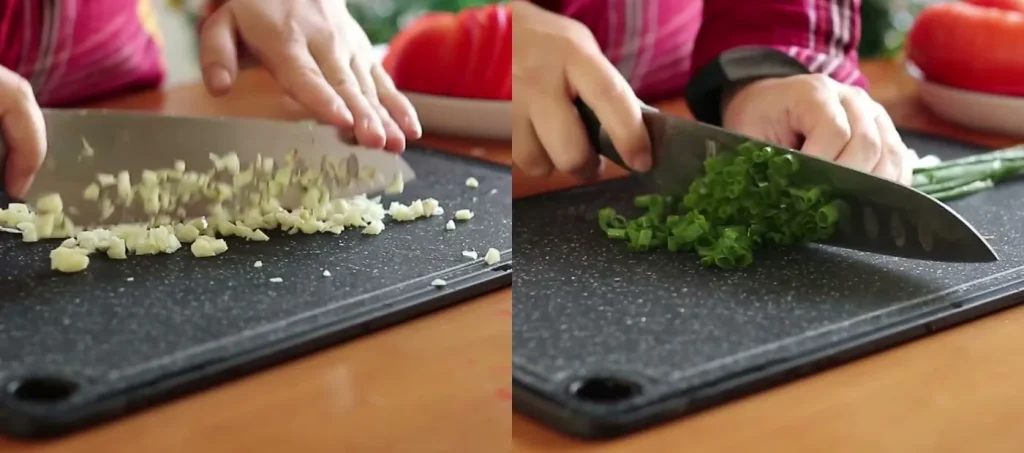
The sauce for those fried pieces, or for a steamed fish head under chopped chilies, starts with a pile of finely chopped garlic and scallion. I’d chop more than you think you’ll need, because it disappears into hot oil quickly.
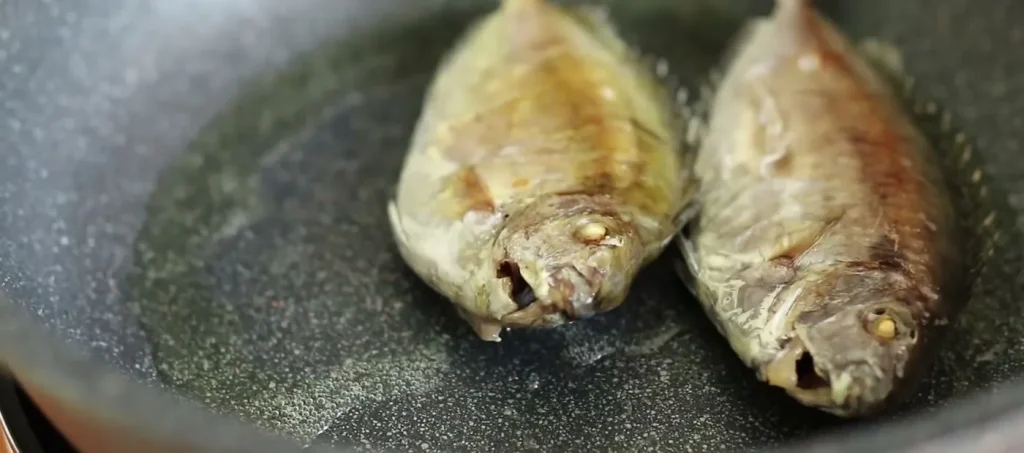
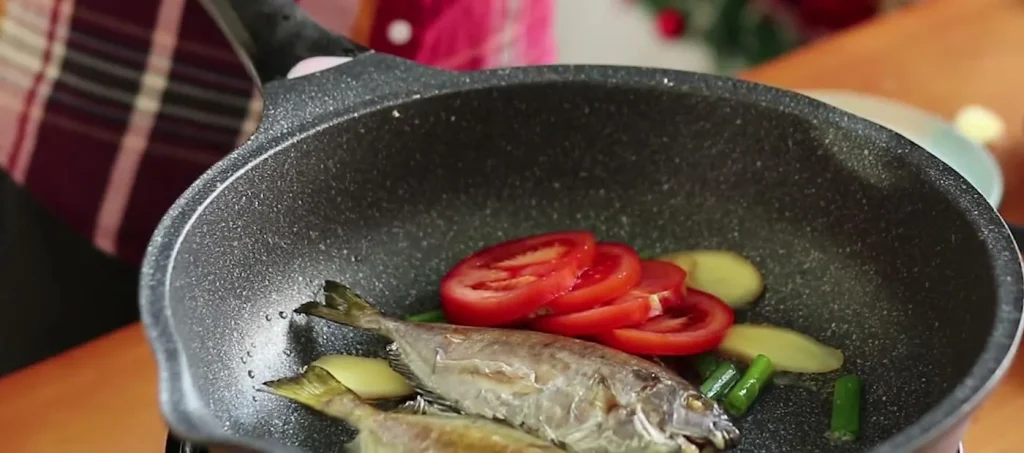
Small fish keep the whole-fish idea at a smaller scale. Two or three small fish pan-fried golden, heads and tails on, can stand in for one big fish at a small table, or sit beside it at a big one.
Small whole fish also simmer well with tomato, ginger and scallion. The tomato gives a light, sour sauce that suits anyone who finds the braised version too sweet.
Whichever of these you add, keep one fish whole, set its head toward your eldest guest, and leave the last piece for the morning. In northern homes that platter shares the table with dumplings, the other dish of the night.
Written by

Daozhang MaMaoshan Taoist, Jintan, Jiangsu
Daozhang Ma is a Maoshan Taoist who has practiced for 22 years and is skilled at writing talismans and painting Taoist pictures. He runs Zodiac & Tradition.
About Daozhang Ma