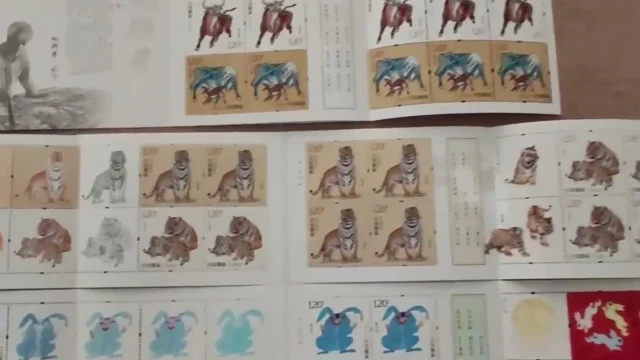
Chinese Zodiac Birth Year Jewelry: Choosing a Zodiac Pendant
By Daozhang MaMaoshan Taoist, Jintan, Jiangsu
In short
Chinese zodiac birth year jewelry is any piece that shows the animal of the year you were born, most often a pendant. Choosing one comes down to two things: getting the animal right, then deciding what wish the piece should carry. Go by the Lunar New Year date rather than January 1, since a January or early February birthday can belong to the animal before.
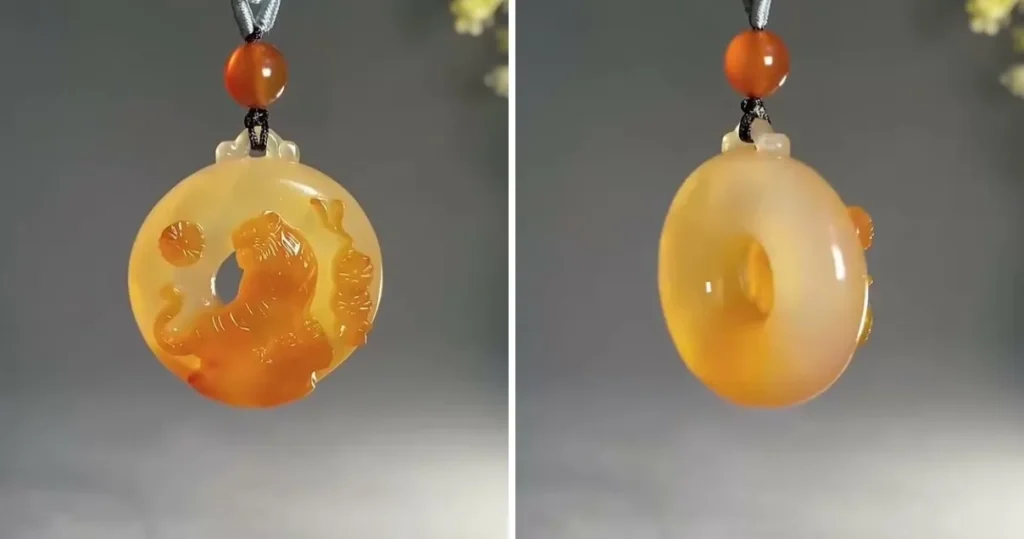
One carved Year of the Tiger pendant, ordered for a ninth grader’s birthday, is my worked example: a yellow stone disc with a tiger, plum blossoms and a hole through its center. It’s the only piece I show up close, so gold and red cord get pointers instead of photos. The animal comes first, then the pendant, the carving and what to ask before you pay.
Which Zodiac Animal Goes on Birth Year Jewelry
Your birth year animal is set by the lunar year you were born in, and that year doesn’t start on January 1. Chinese New Year moves between January 21 and February 20, so the first weeks of any calendar year can still belong to the old animal. It’s the mistake I’d worry about most, because a carved animal can’t be corrected later.
Take 2010, which most charts list as a Tiger year. The Year of the Tiger didn’t begin until February 14, 2010, so a baby born on January 20 that year is an Ox. When people ask me which animal to put on a gift, I ask for the full birthday, not just the year, and then check it against this chart of Chinese zodiac years.
Almanacs and birth charts start the animal at Lichun (立春), a solar term that lands around February 4, so you may see a second answer for an early birthday. For a piece someone will wear, I’d go by the New Year date, since that’s the animal most Chinese families would name. The Zodiac and Tradition home page lists all twelve if you’re starting from nothing.
Birth year jewelry and benmingnian jewelry overlap, but they aren’t the same thing. The first shows your animal and suits any year. A benmingnian (本命年) is the year your animal comes back, every twelve years, and it brings a question of its own that I’ll get to after the carving.
What a Birth-Year Zodiac Pendant Looks Like
Once the animal’s settled, the pendant has to show it, and the Tiger piece has four parts worth reading.
- The shape: a ping’an kou (平安扣), literally a “peace buckle.” It’s a round disc with a hole through the center, worn for peace and safety, and US jewelers often call the same shape a donut pendant.
- The animal: a tiger raised in relief on the front, for the wearer’s birth year.
- The second motif: plum blossoms around the tiger. They’re a choice for this wearer, not a rule for the sign.
- The back: left smooth, so all the carving stays on one side.
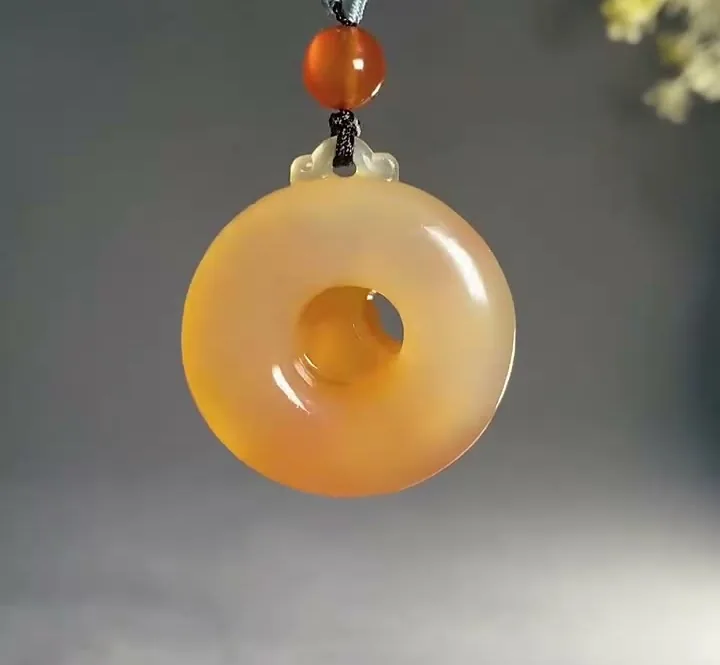
Judging by the fingers holding it, the disc is roughly 1 1/4 to 1 1/2 in (3 to 4 cm) across, and that’s my estimate, not a stated size. A small lug at the top takes a knotted cord, with a red bead sitting above the knot.
The stone is a warm, half-translucent yellow. The material isn’t on record for this piece, and I won’t guess from a photo, so yellow stone is all I’ll call it.
Carved stone is only one route. For gold zodiac pendants and red cord versions, see what to look for in a zodiac gift, while Chinese New Year jewelry goes through bangles, longevity locks and red string.
Why This Tiger Pendant Carries Plum Blossoms
The plum blossoms are on this pendant because of who it was for. The order came from a father who’d saved about half a year of spending money to pay for it. His son, born in a Tiger year, was in ninth grade and boarding at school, so they saw little of each other. The father felt he couldn’t help much with schoolwork, and he wanted something that could stay with the boy every day in his place.
Each part of the design carries one piece of that wish. The peace buckle asks for safety. The tiger stands for hu hu sheng wei (虎虎生威), a stock phrase for tiger-like vigor. Plum blooms in late winter, often with frost and snow still around, so it stands for holding up through a hard stretch, however hard the road ahead gets. The tiger’s wider place in Chinese folk art is on my Year of the Tiger page.
That’s the idea I’d take from this piece. An animal alone says only when someone was born. A second motif says why you’re giving it, so decide on the wish before you start looking at designs.
How a Zodiac Pendant Gets Carved
Getting that wish into stone follows a set order, and knowing the order helps you judge a carved piece. A wet saw slices the rough stone first, and the slice gets ground down into a round disc. Then the design goes on by hand: the tiger, the blossoms and a circle marking the border, all drawn on the face.
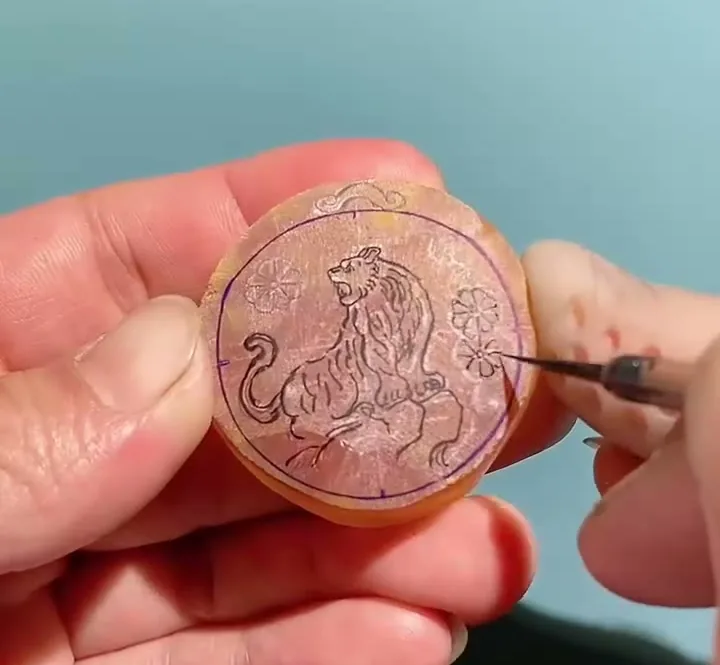
Line work is the backbone of my own Taoist painting, which makes this the stage I’d look at hardest. A tiger that’s stiff in the line drawing stays stiff in relief, and the face is what gives it away, on stone as much as on paper.
A fine rotary bit follows the lines next, working under a thin stream of water that keeps the stone and bit cool and holds down the dust. The tiger and blossoms come out outlined in dark line but still shallow.
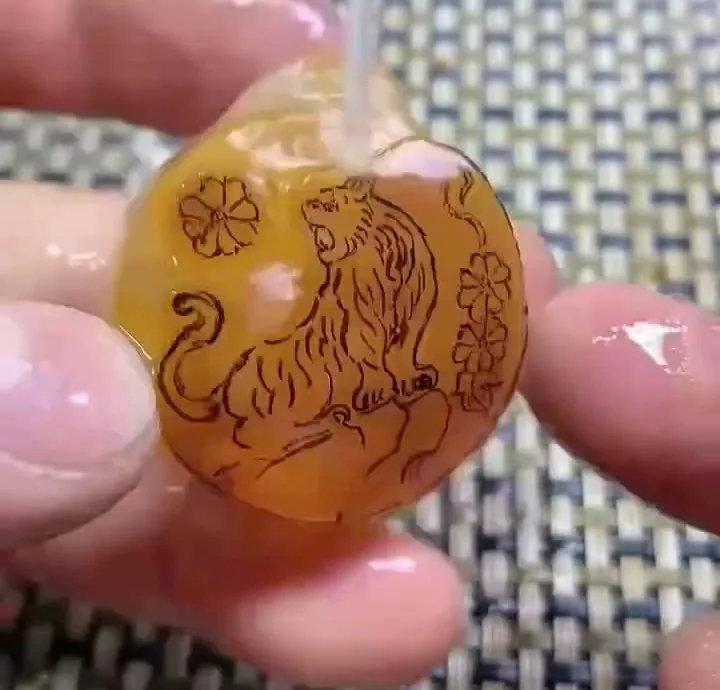
The relief comes after that. The bit cuts stone away around the figures, so the tiger and blossoms start to stand up from the disc.
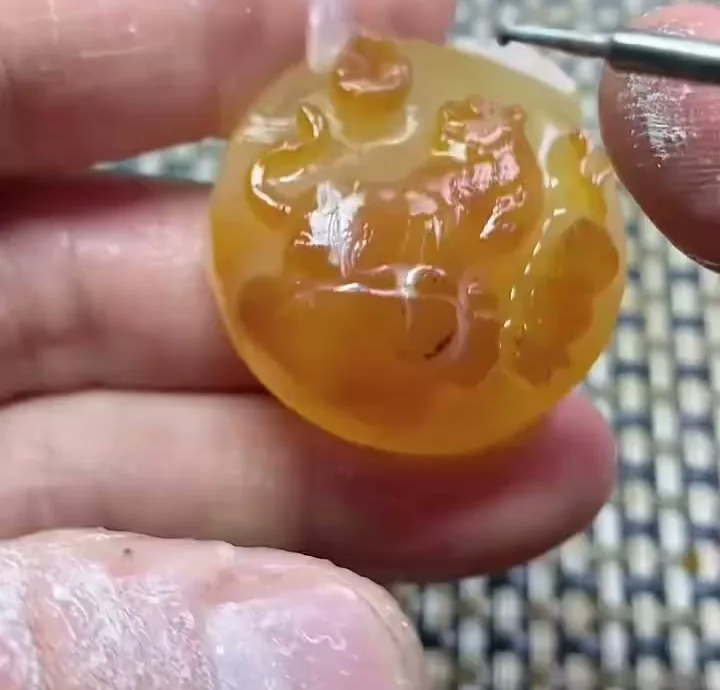
The center opening appears only in the last stretch of work, along with the smoothed back and the lug at the top, and the finished tiger ends up wrapped around the hole. Work like this is why two hand-carved pendants of one animal won’t match exactly. If a listing shows the identical tiger on every piece, I’d assume machine work. That’s no fault, but the price should say so.
Should You Wear Your Own Animal in a Benmingnian?
Yes, you can wear your own animal in a benmingnian, though you’ll hear the opposite too. Tradition treats the year your animal returns as a bumpy one, and some Chinese feng shui writers say your own animal should stay in the drawer until it’s over. Others say that’s the very year to wear it. I don’t know of an old text that settles this, so I’d wear the piece that means something to you.
A third camp points you to your animal’s allies. In the traditional pairings, each sign has one six-harmony partner (六合, liuhe), also called a secret friend, and two triple-harmony partners (三合, sanhe). A pendant of one of those animals is worn as a friendly helper for the year. These are old pairings, not a promise, but they do answer the question for all twelve signs.
| Your animal | Recent birth years | Six-harmony partner | Triple-harmony partners |
|---|---|---|---|
| Rat | 1996, 2008, 2020 | Ox | Dragon, Monkey |
| Ox | 1997, 2009, 2021 | Rat | Snake, Rooster |
| Tiger | 1998, 2010, 2022 | Pig | Horse, Dog |
| Rabbit | 1999, 2011, 2023 | Dog | Goat, Pig |
| Dragon | 2000, 2012, 2024 | Rooster | Rat, Monkey |
| Snake | 2001, 2013, 2025 | Monkey | Ox, Rooster |
| Horse | 2002, 2014, 2026 | Goat | Tiger, Dog |
| Goat | 1991, 2003, 2015 | Horse | Rabbit, Pig |
| Monkey | 1992, 2004, 2016 | Snake | Rat, Dragon |
| Rooster | 1993, 2005, 2017 | Dragon | Ox, Snake |
| Dog | 1994, 2006, 2018 | Rabbit | Tiger, Horse |
| Pig | 1995, 2007, 2019 | Tiger | Rabbit, Goat |
The next one to come around is the Goat, on February 6, 2027, so most people born in 1967, 1979, 1991, 2003 or 2015 are heading into a benmingnian. The 2027 zodiac forecast goes through that year sign by sign.
Whichever animal you settle on, red is the part tradition actually asks for in that year. A pendant on a red cord covers it, and so does a knotted red bracelet worn alongside.
What to Ask Before You Order a Zodiac Pendant
With the animal and the wish decided, the rest is a short conversation with whoever’s making or selling the piece. These are the points I’d raise, in this order.
- The birthday: check the animal against the full date yourself. Don’t leave it to the seller.
- The material: ask what the stone is and whether it’s been dyed or heat-treated, and get the answer in writing. A photo can’t tell you, as the yellow stone above shows.
- The drawing: for a custom piece, ask to see the line drawing before any cutting starts. It’s the last easy moment to change the tiger’s face.
- The second motif: tell the carver the wish instead of picking from a list. Plum suited this father, and something else may suit you.
- The back: a plain back leaves room, so ask whether a name or date can go on it.
- Price and date: agree on both before the first cut, especially if the piece is for a birthday.
One more question comes up on Maoshan every New Year: should a new pendant be blessed? Kaiguang (开光, “opening the light”) is the rite that consecrates an image or object, and I’ve done it for pendants people carried up the mountain. I’d say do it if the wearer cares and skip it if they don’t. The stone stays the same stone either way.
Written by
Daozhang MaMaoshan Taoist, Jintan, Jiangsu
Daozhang Ma is a Maoshan Taoist who has practiced for 22 years and is skilled at writing talismans and painting Taoist pictures. He runs Zodiac & Tradition.
About Daozhang Ma