Red Qipao, Winter Layers: Wear a Qipao for Chinese New Year
By Daozhang MaMaoshan Taoist, Jintan, Jiangsu
In short
Choosing a qipao for Chinese New Year comes down to two questions: which red do you want, and how will you stop winter air coming through the side slit? A long red or red-print qipao with sleeves suits the holiday best, and a slim velvet skirt or lining trousers underneath takes care of the draft. I’ll go through the reds, the prints, the collar and slit, the fabrics, the layers and the days worth dressing up for.
I spend every New Year on Maoshan, where the February wind goes straight up a long robe, so I’ve got strong opinions about that last layer. Most people settle the color in a minute and only remember the cold halfway through dinner.
Red qipao shades for the New Year
Red qipao shades run from wine red to bright crimson, and they’re all festive, so choose the one that still looks good in a dim restaurant. If you want to know which days call for red and how much of it you need, that’s a separate question from the dress itself. New to the qipao altogether? Start with its history, its two names and how to read a collar, then come back here.
Plain wine red is the easiest place to begin. With no print to carry it, the cut does the work, and your eye goes to the frog buttons at the collar. Frog buttons, or pankou (盘扣), are the knotted cloth fastenings on a qipao. A deep shade also forgives a splash of soup better than a bright one does.
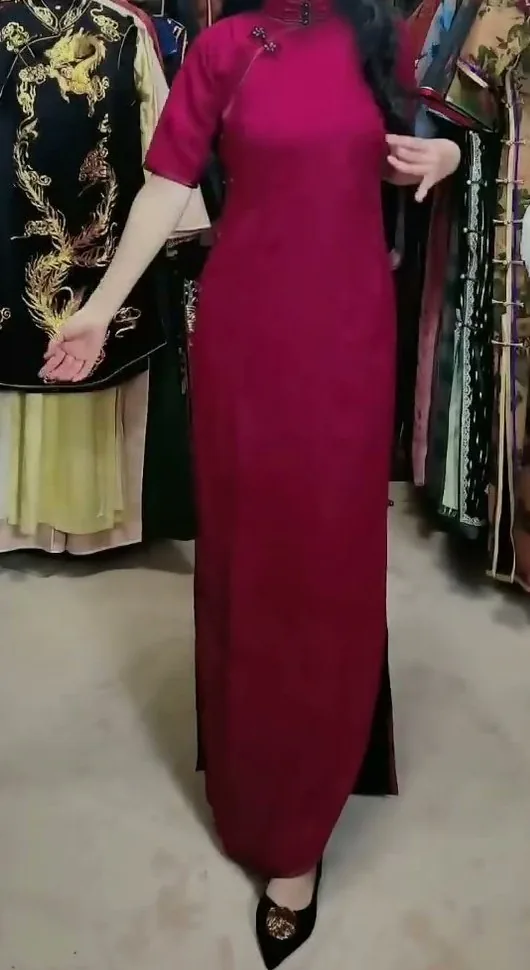
Bright red is louder, and at New Year that’s the point. Full gathered sleeves give you a long-sleeved qipao without adding a jacket, and I’d take them over short sleeves for any house with thin walls.
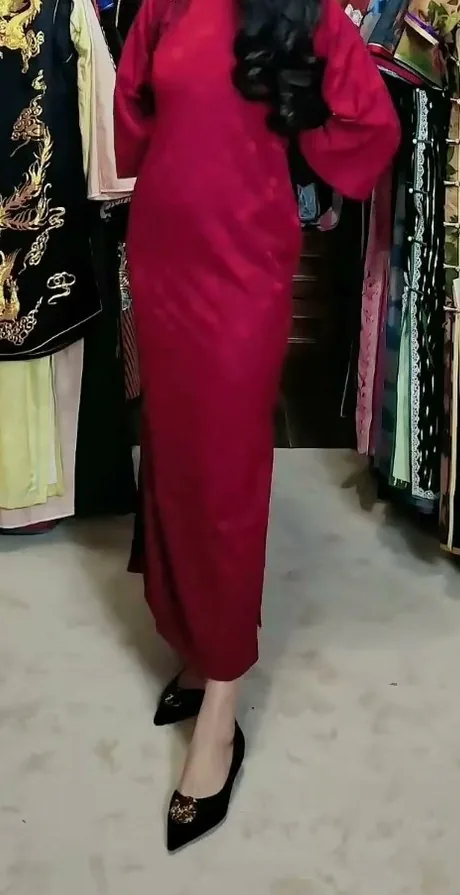
A good red qipao can also work twice. Chinese brides often change into a red qipao to toast their guests at the wedding banquet, so the dress you buy for New Year can serve as a toasting dress later, or the other way round.
Prints and patterns on a New Year qipao
Once you’ve picked your red, the next choice is whether it stays plain or carries a print. A print gives relatives something to talk about at the table, and it hides creases after a long car ride.
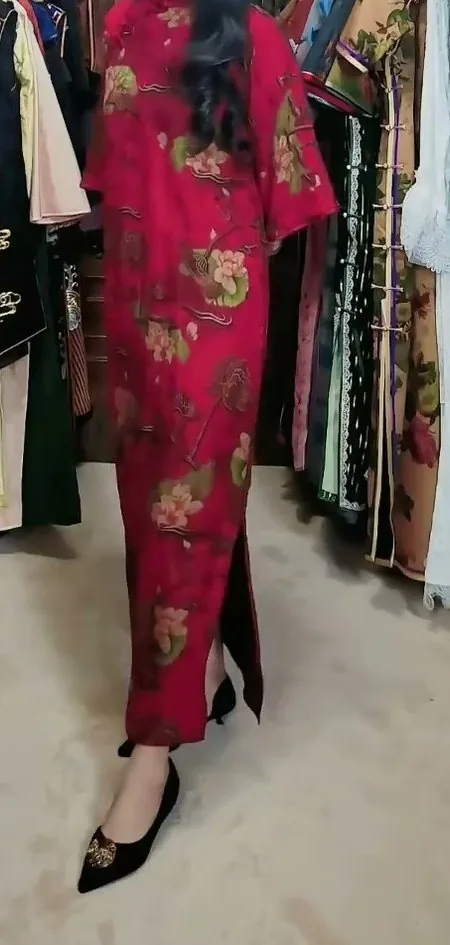
Butterflies and flowers on red make the friendliest print. Chinese folk art uses butterflies for joy and happy couples, so the pattern sits well at a family gathering. Elbow-length sleeves are practical here too, because they stay out of the dishes when you reach across the table.
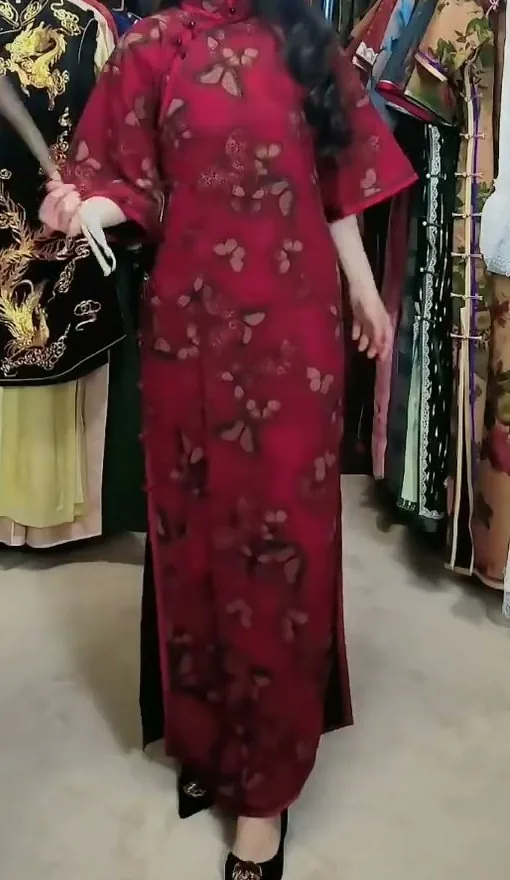
Large painted flowers are the boldest choice. Try this kind on before you commit, because the biggest bloom can land on your hip or your chest, and that’s what people will notice first.
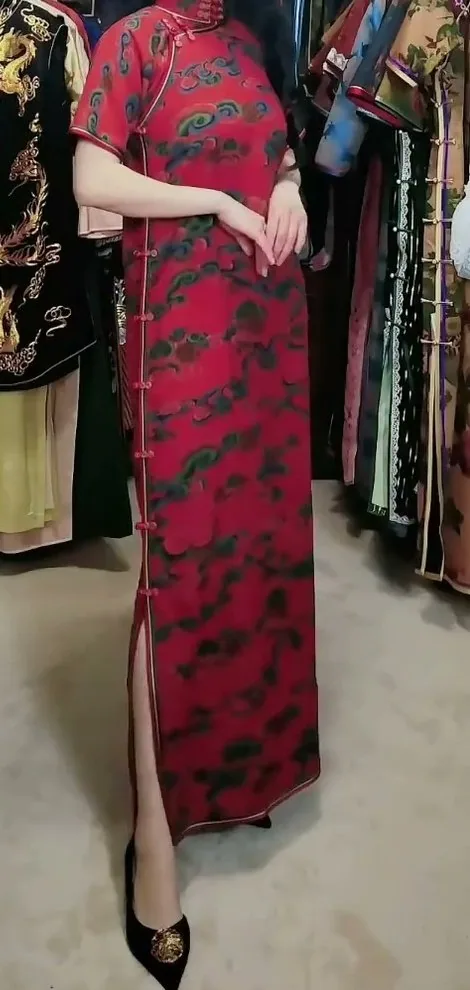
A second color can cool the red down. Dark green cloud shapes break up the bright ground, and clouds have long been a good-luck motif in Chinese decoration. The buttons on this style follow the side seam, which draws a long line down the body.
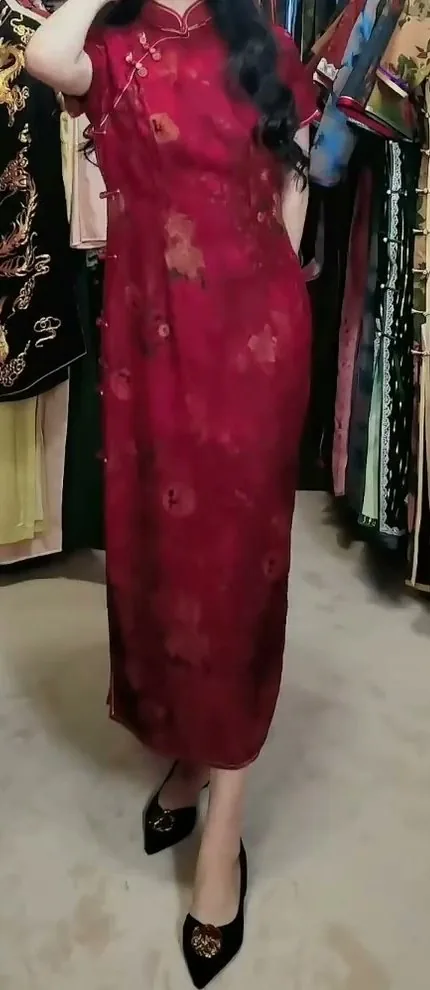
Tone-on-tone is the quiet option, with flowers in nearly the same red as the ground. You only see them when the light moves across the cloth, which makes this the print I’d choose for a visit to older relatives.
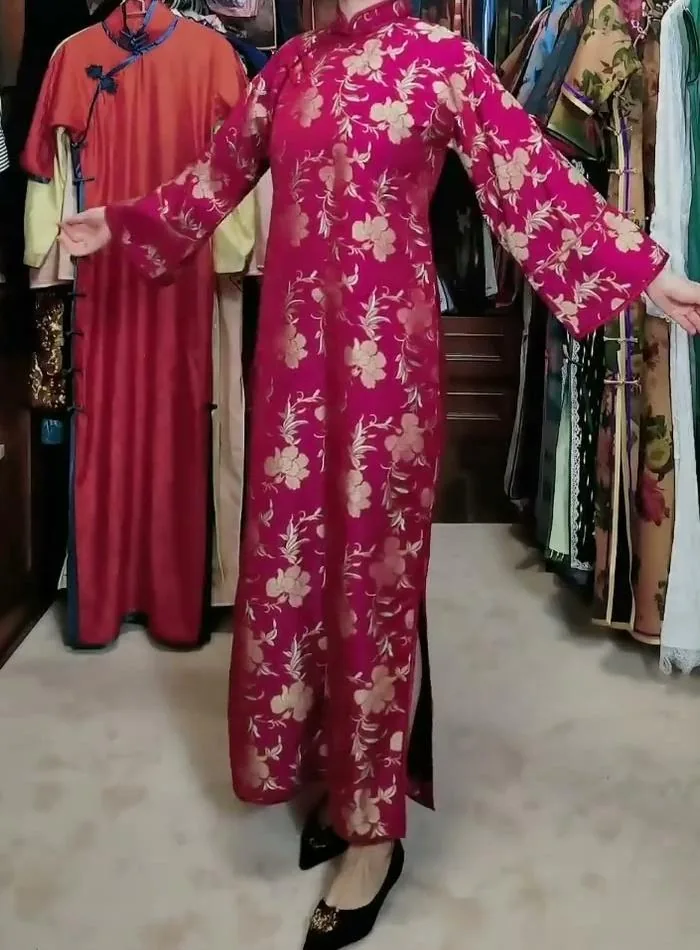
You can also step sideways from red altogether. Magenta with gold flowers still looks like a holiday dress, and pink, orange and purple all work at New Year for anyone who’s tired of crimson.
My favorite of these is the least red. Years of painting Taoist pictures have left me with a soft spot for any pattern built from one repeated arc. These arcs look like fish scales to me, which suits the season, since yu (鱼), fish, sounds like the word for surplus. That’s my own reading of the print, not a rule.
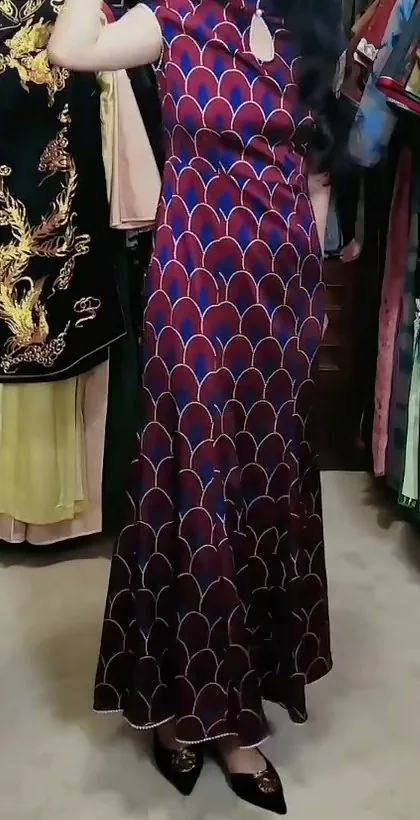
Collar, frog buttons and slit: what to check on a qipao
A print you love won’t help if the qipao fights you at dinner, so test three parts of the dress before you buy it. Try these with the dress on and a chair nearby:
- Collar: Turn your head both ways and swallow. You should be able to slip one finger inside the stand collar, and if you can’t, you’ll feel it by the third course.
- Frog buttons: Undo and fasten each one yourself. The ones at the neck and under the arm are fiddly, and many modern qipao hide a zip and keep the knots as decoration.
- Slit: Sit down, then walk up a stair or two. Slits on long qipao run from around the knee to about mid-thigh, going by the dresses shown here; that’s my rough estimate, so measure the one you’re buying.
Frog buttons are also the detail people spot from across a room, above all when they’re pale against red. A contrast color turns a plain row of fastenings into a line of decoration.
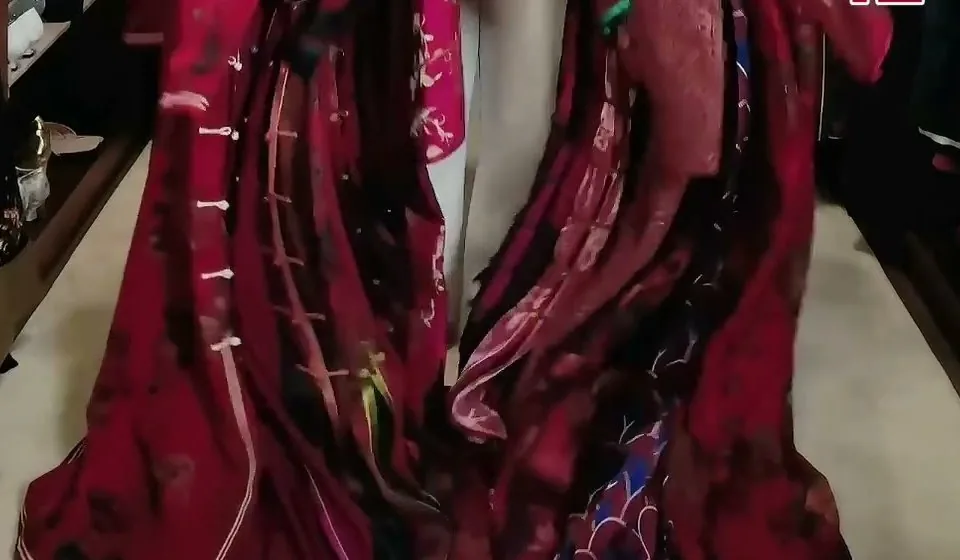
Silk, xiangyunsha, wool or velvet for a winter qipao
The collar and slit decide how a qipao fits, but the fabric decides whether you’re cold. Red New Year qipao come in all four of these, and they don’t behave alike in January:
- Silk is light and catches the light well, and it gives you almost no warmth by itself.
- Xiangyunsha (香云纱) is a crisp silk from Guangdong, dyed with a plant tuber and coated with river mud. It’s a hot-weather cloth, so save it for a New Year in southern China or Southeast Asia.
- Wool is the warmest of the group, with a soft matte look and less shine at the table.
- Velvet is heavy, holds its shape and looks rich in low light, so it’s my first pick for a cold house.
Staying warm in a qipao in January and February
Even a wool qipao has a slit, and that’s where the cold gets in. Chinese New Year falls in late January or February, which means a fitted dress and a cold street at the same time. The answer is layers that sit under or over the qipao without spoiling its line.
Close the slit with lining trousers or a slim skirt
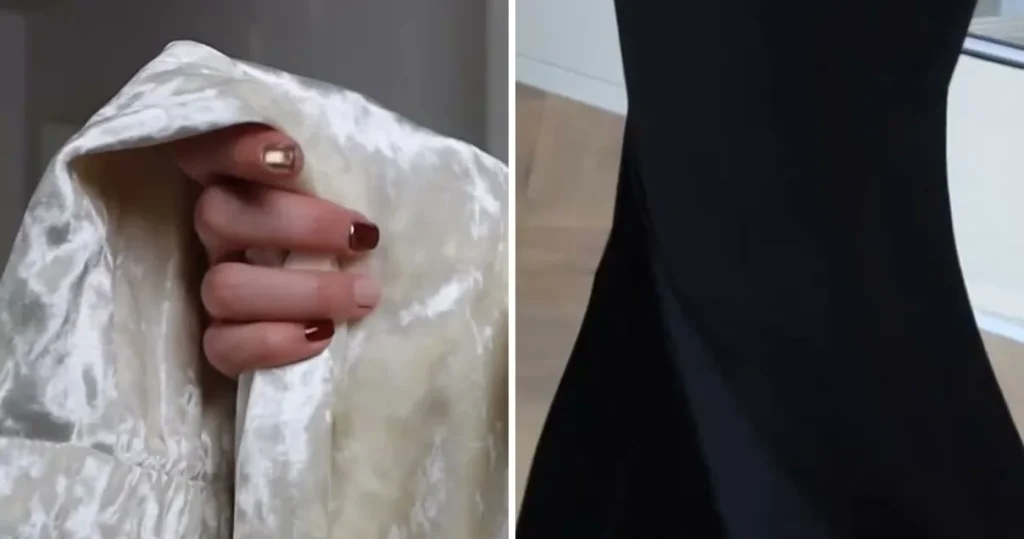
The simplest fix goes underneath: a pair of lining trousers or a slim half skirt. Either one fills the gap at the side, and you stop feeling the draft on your leg as soon as you step outside.
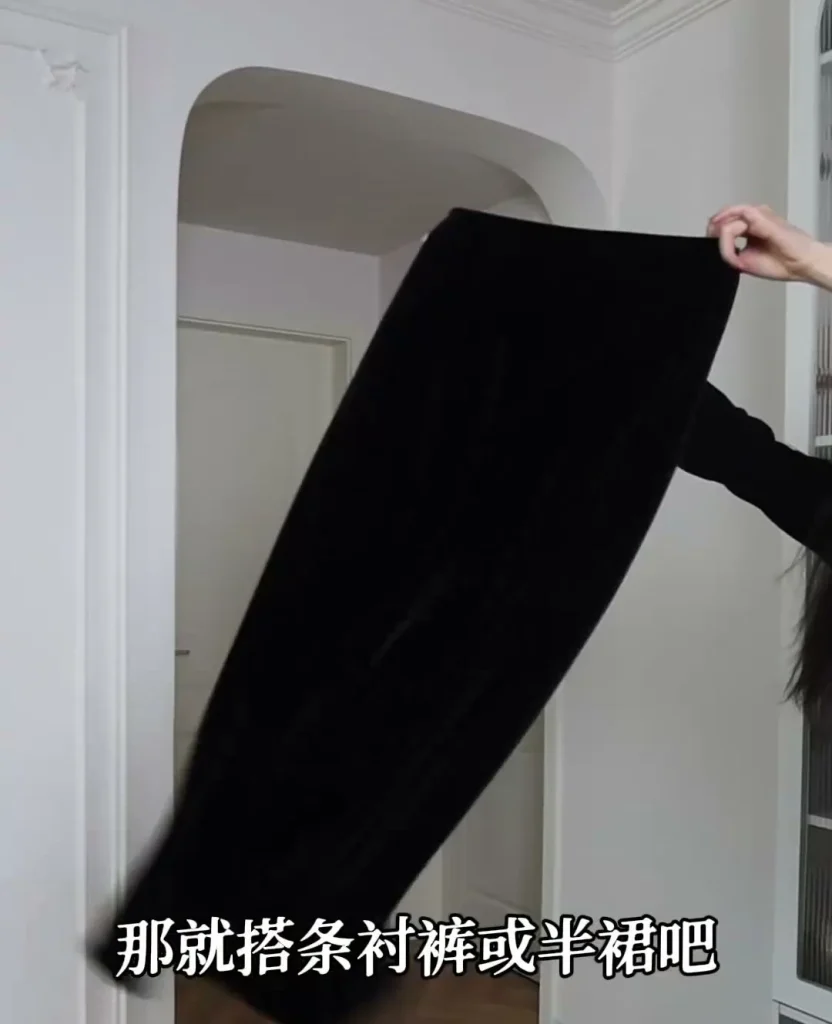
There’s nothing modern about the idea. By most accounts women wore trousers under the gown about a century ago, before silk stockings took over from the late 1920s.
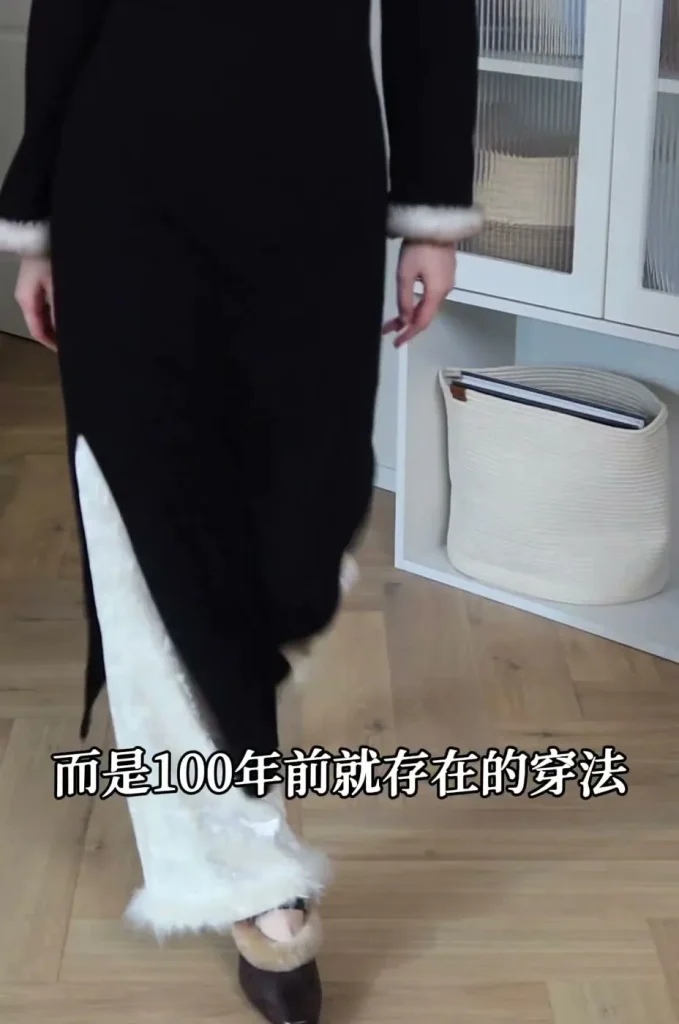
A skirt changes the shape of the outfit as well. Pick one that’s narrow at the hip and let the flare start low, so the hem swings when you turn.
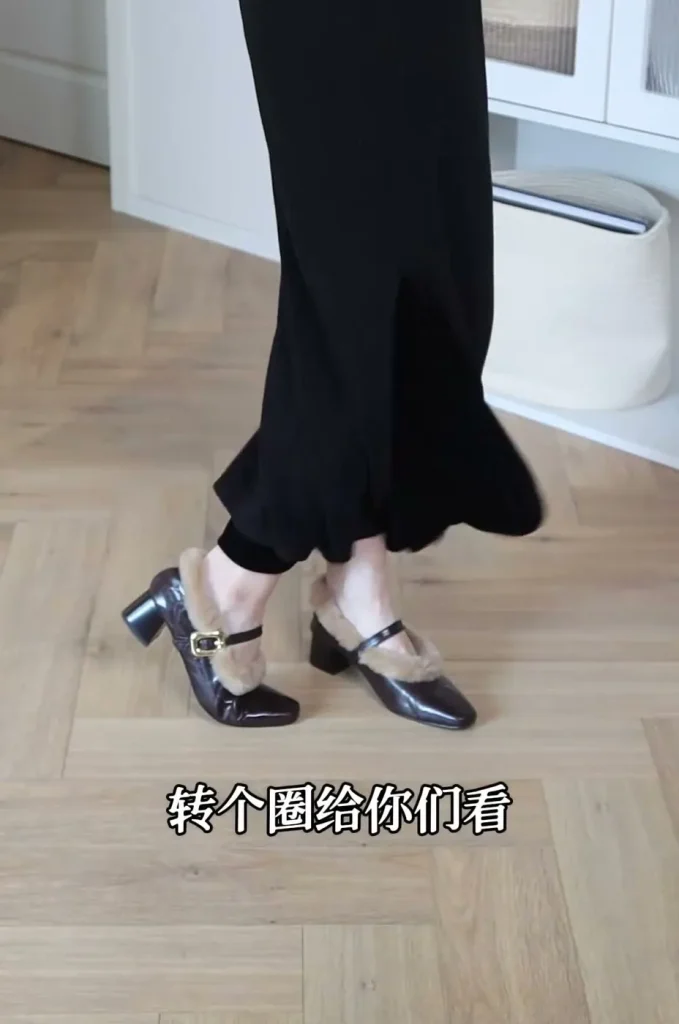
The wrong layer ruins all this, so check these points before you wear it:
- Cut: Skip anything A-line or pleated, or anything that flares out at the hip. That fabric bunches up and won’t fit under a fitted qipao.
- Fabric: Choose velvet first. It sits happily with winter qipao in velvet, knit or tweed.
- Weight: Avoid thin layers. Next to a heavy dress, they look like two outfits that have never met.
- Length: Go past the top of the slit at the very least. Ankle length covers the whole gap.
Hold the layer up next to the qipao before you decide. A heavy piece with some shine can stand beside a winter dress, where a thin lining would hang limp.
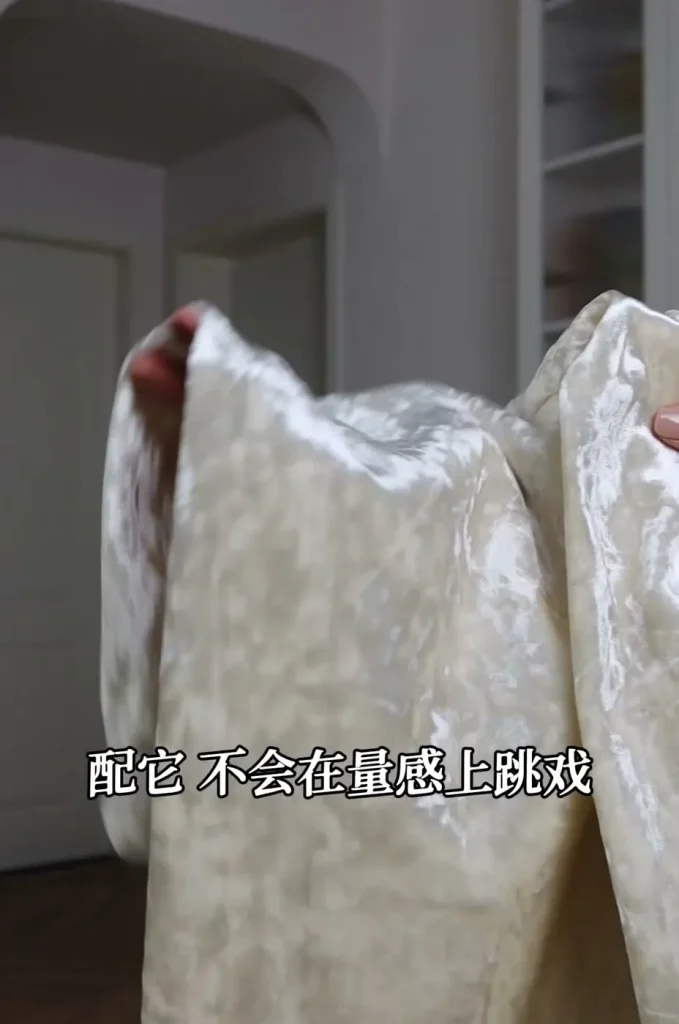
Take the idea from these photos, not the colors. Black and cream make a handsome winter look, but many Chinese families avoid all-black or all-white outfits at New Year. A red qipao over a black velvet skirt shows only a strip of black at the slit, and I wouldn’t think twice about that.
Add a padded vest or a fur collar
Fur and a winter qipao go together better than almost anything. A Chinese-style vest with a quilted lining and fur edging adds warmth across the back and chest, and velvet is again the safe fabric. A fur collar does the same job at the neck, and faux fur looks just as good at a dinner table.
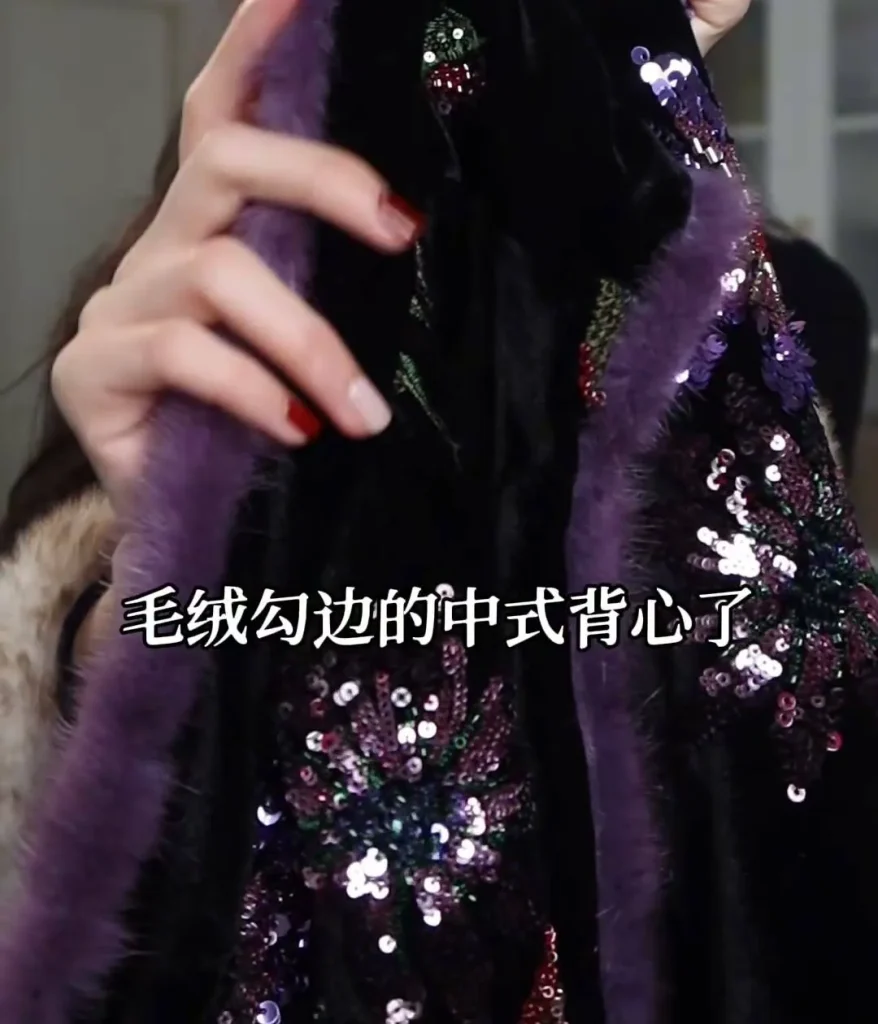
Give a sleeveless qipao sleeves, then belt the jacket
A sleeveless velvet qipao can still work in winter. Wear a long-sleeved knit or cashmere top in the same color underneath, and the sleeves look like part of the dress. You can lift your arms freely too, which is more than most fitted winter dresses allow.
For the street, choose a loose short jacket with wide sleeves and gathered cuffs, and don’t leave out the belt. Loose above and tight at the waist is what keeps the outfit from looking like a sack, and it pulls the eye upward so your legs look longer.
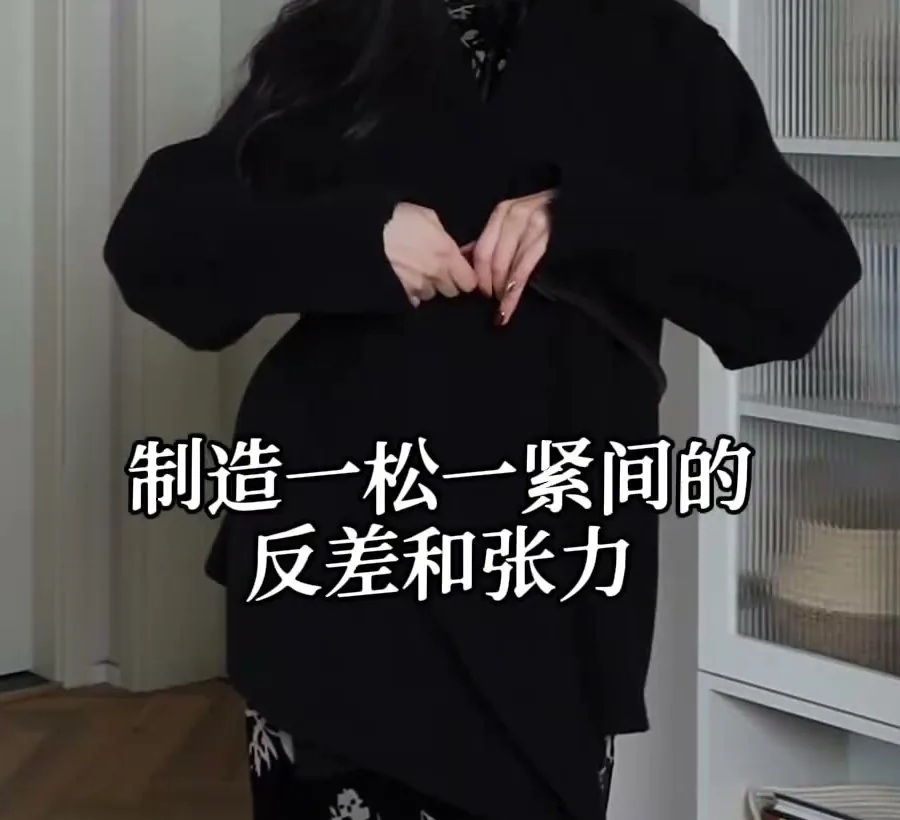
When to wear a qipao during Chinese New Year
With the layers sorted, the question left is which days deserve the dress. Nobody expects you to wear one for all fifteen days of the Lunar New Year holiday. New everyday clothes are what most families put on, and a qipao is a step up from that.
Start with the reunion dinner on New Year’s Eve, since it’s indoors and everyone’s dressed for photos. Visits to relatives on the first days of the year come next, and the Lantern Festival on the 15th night closes the season if you’ve got one more outing in you.
Temple visits need a coat first. In the opening days of the year I see people climbing up to burn incense with a red qipao under a long down coat, and that’s the right instinct: the coat stays on outside, and the red comes out once you’re indoors. Whichever day you pick, a browse through more Chinese customs will give you plenty to talk about at the table.
Qipao for Chinese New Year: common questions
Can I wear a qipao for Chinese New Year if I’m not Chinese?
Yes. Wearing a qipao for Chinese New Year is generally welcomed, whether or not you’re Chinese. Choose a real, well-fitted dress in a festive color and avoid party-costume versions.
What is the traditional costume for Chinese New Year?
The qipao for women and the Tang suit jacket for men are the best-known traditional outfits for Chinese New Year. Most people in China simply wear new everyday clothes for the holiday, often with some red.
What is the difference between a cheongsam and a qipao?
A cheongsam and a qipao are the same dress. Qipao is the Mandarin name and cheongsam comes from Cantonese, which is why you’ll hear cheongsam more often in Hong Kong and in English.
Where did the qipao dress come from?
The qipao grew out of the robes worn by Manchu bannermen in the Qing dynasty. The fitted version people picture today took shape in 1920s Shanghai, when tailors cut the loose robe closer to the body.
Can I wear a black qipao for Chinese New Year?
I’d leave an all-black qipao at home for New Year, since many Chinese families avoid all-black outfits during the holiday. A black qipao with red or gold embroidery, or a black skirt under a red qipao, is a safer way to keep the color.
Written by
Daozhang MaMaoshan Taoist, Jintan, Jiangsu
Daozhang Ma is a Maoshan Taoist who has practiced for 22 years and is skilled at writing talismans and painting Taoist pictures. He runs Zodiac & Tradition.
About Daozhang Ma