Feng Shui Bathroom Colors by Element and Direction
By Daozhang MaMaoshan Taoist, Jintan, Jiangsu
In short
Feng shui bathroom colors work best when they steady water rather than add to it. A bathroom is the wettest room in the house, so traditional practice favors earth tones (sand, beige, soft yellow, warm taupe) and wood greens, with white or light gray as clean metal accents. Black and deep navy pile on more water, and a strong red sets fire against it, so keep both to small touches.
That is the short answer. The rest of this page walks through why the bathroom is read this way, what each element color does in a wet room, and how to pick a shade that suits where the bathroom sits in your home.
Why Feng Shui Reads the Bathroom as a Water Room
Feng shui sorts every room by the element that rules it, and the bathroom belongs to water. Water runs in, water drains out, and steam hangs in the air. In the old way of thinking, drains also carry qi (the life energy feng shui tracks) out of the house, which is why the classic bathroom advice is about holding things steady: close the toilet lid, keep the door shut, and keep the room dry and bright.
Color is the easiest lever you have. If you are new to the five elements and the bagua map, my overview of how feng shui works at home covers the basics; here I stay with the one room most people would rather not think about.
I live on Maoshan in Jiangsu, where the mountain air is damp for half the year. A bathroom here never fully dries, and I can feel the difference between a dark, cold-tiled washroom and one in a warm, pale color. That feeling is most of what feng shui is getting at.
Five Element Colors in a Bathroom, and What Each One Does
Each element has its own colors, and each one meets water in a different way. In the productive cycle, water feeds wood. In the controlling cycle, earth holds back water. That is why wood greens and earth tones are the usual picks, while fire and extra water are the ones to handle with care.
| Element | Colors | What it does to bathroom water | How to use it |
|---|---|---|---|
| Earth | Beige, sand, soft yellow, terracotta, taupe | Holds water back, grounds the room | Walls, floor tile, large surfaces |
| Wood | Greens, from sage to forest | Draws on water and turns it into growth | Walls, vanity, plants, towels |
| Metal | White, light gray, silver, brass | Feeds water, but reads clean and bright | Fixtures, trim, mirror frames |
| Water | Black, navy, deep blue | Adds more of what the room already has | Small accents only |
| Fire | Red, pink, orange, purple | Clashes with water; softer pinks clash less | Accents, art, one feature wall in a soft shade |
A simple split keeps the balance: about 60% of the room in an earth or wood color, about 30% in a second calm shade, and about 10% left for an accent. I treat those numbers as a habit rather than a rule.
Green Bathrooms: Wood That Draws on the Water
Green is the color I would point most people toward. Wood grows from water, so a green bathroom puts all that moisture to use instead of letting it pool. It also brings the feel of a garden into the room, which suits a space where you start and end the day.
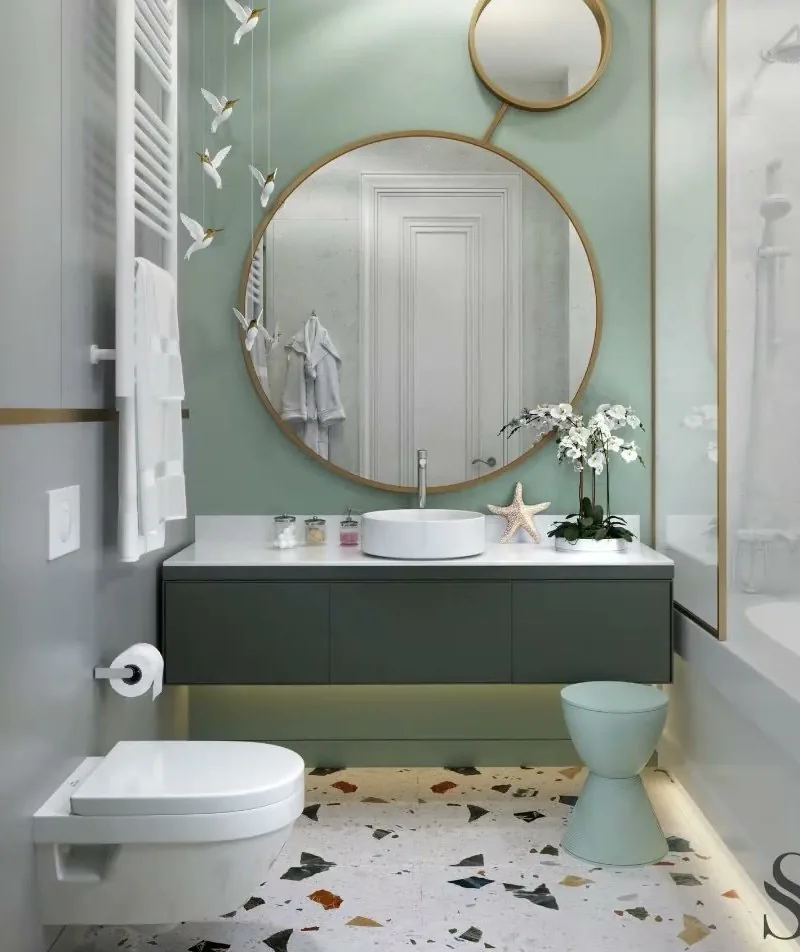
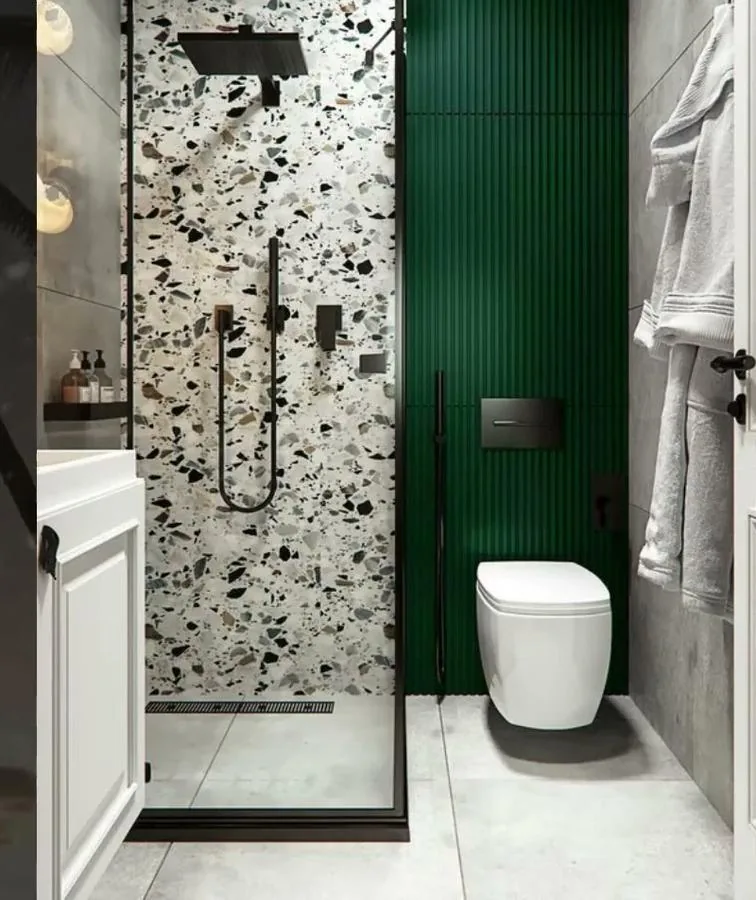
Pale sage is the gentlest way in. Pair it with a darker green on the vanity and a speckled earth-tone floor, and you have wood above and earth below, which is exactly the pairing the five element table points to.
Deep forest green works too, if the room gets enough light. On a single wall it reads like a stand of trees; on four walls in a windowless room it can feel heavy and cold.
Pink and Red Bathrooms: Fire in Small, Soft Doses
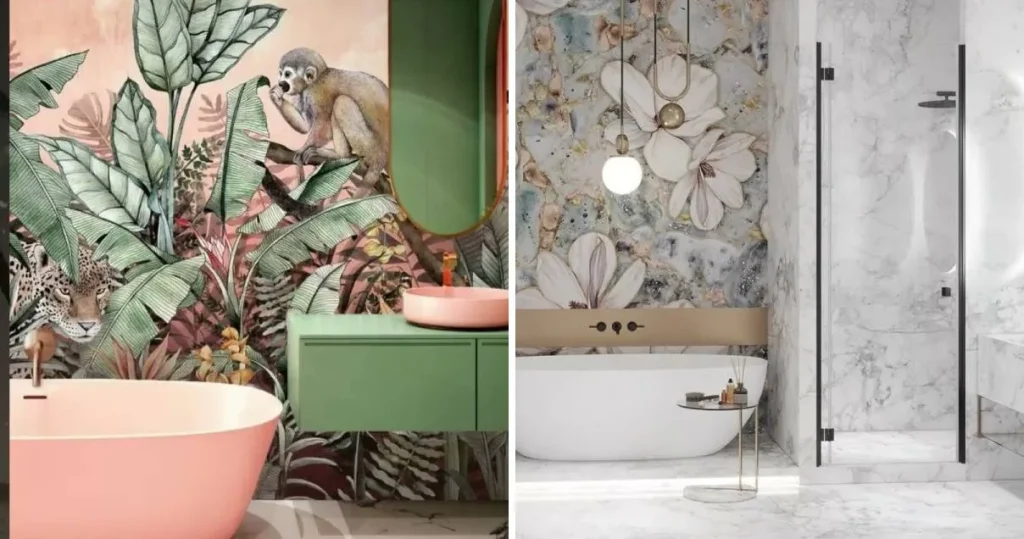
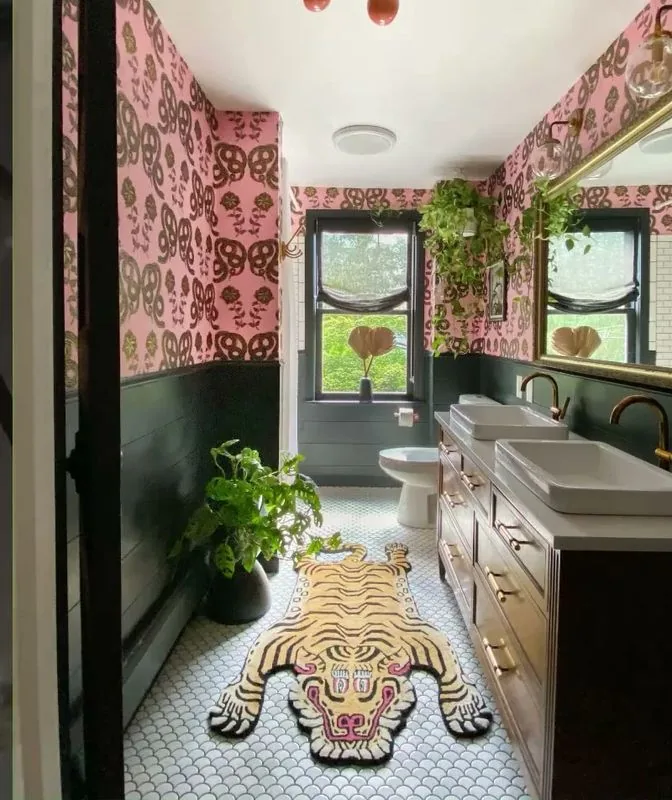
Red belongs to fire, and fire and water fight. That does not mean a bathroom can never be pink. Soft pink and blush are fire turned way down, close to the warm earth shades, and they sit fine on one wall or in an arch behind the mirror.
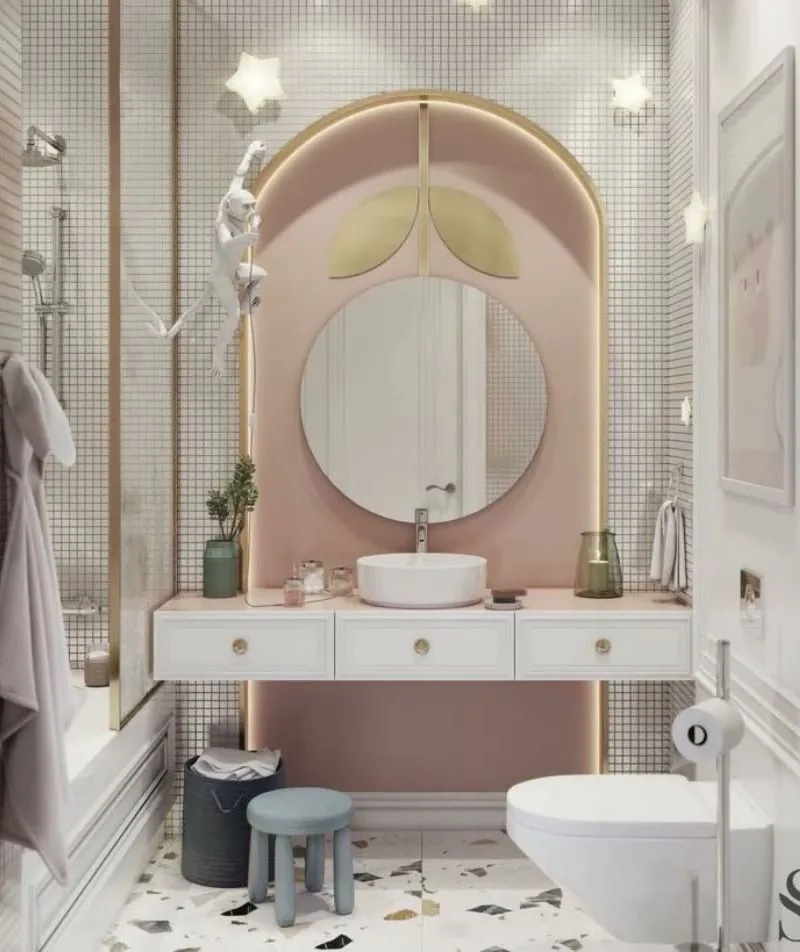
I write talismans in cinnabar red, so I know how loud a true red is on a page. In a small wet room it shouts. If you love red, put it in a framed print or a towel you can swap, not on every wall.
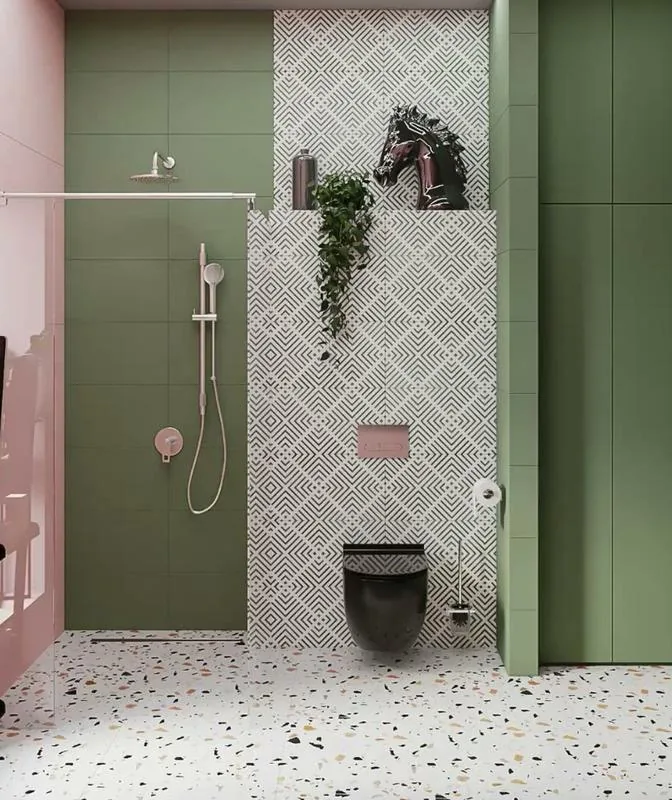
Pink paired with green is a good middle path. Wood feeds fire, so the green gives the pink a reason to be there, and the green also soaks up the water that would otherwise push against it.
The same pairing works in a shower. A green main wall with a pink side wall gives you color without letting fire take over.
Navy, Black and Charcoal Bathrooms: When Water Stacks Up
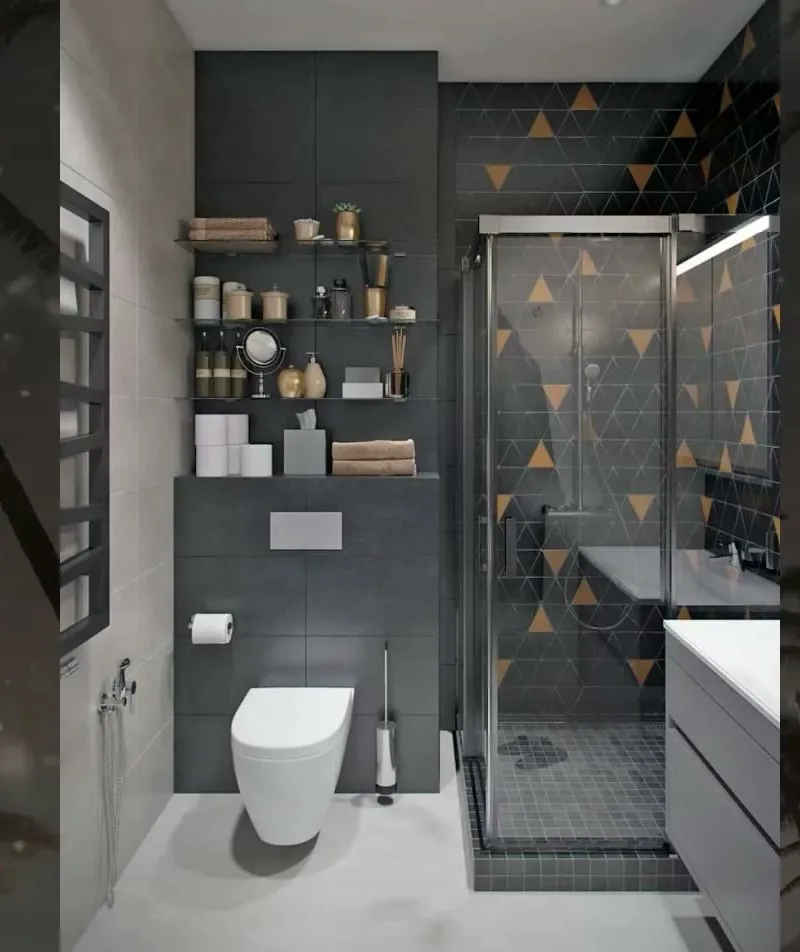
Navy and black are water colors, so a navy or black bathroom doubles what is already there. Feng shui would call that a room tipping toward cold and stillness. Charcoal gray sits under metal, and metal feeds water, so a fully dark gray room leans the same way.
If you already have a dark bathroom, you do not need to repaint. Add earth and warmth around it: a pale floor, warm wood, brass or copper, and plenty of light.
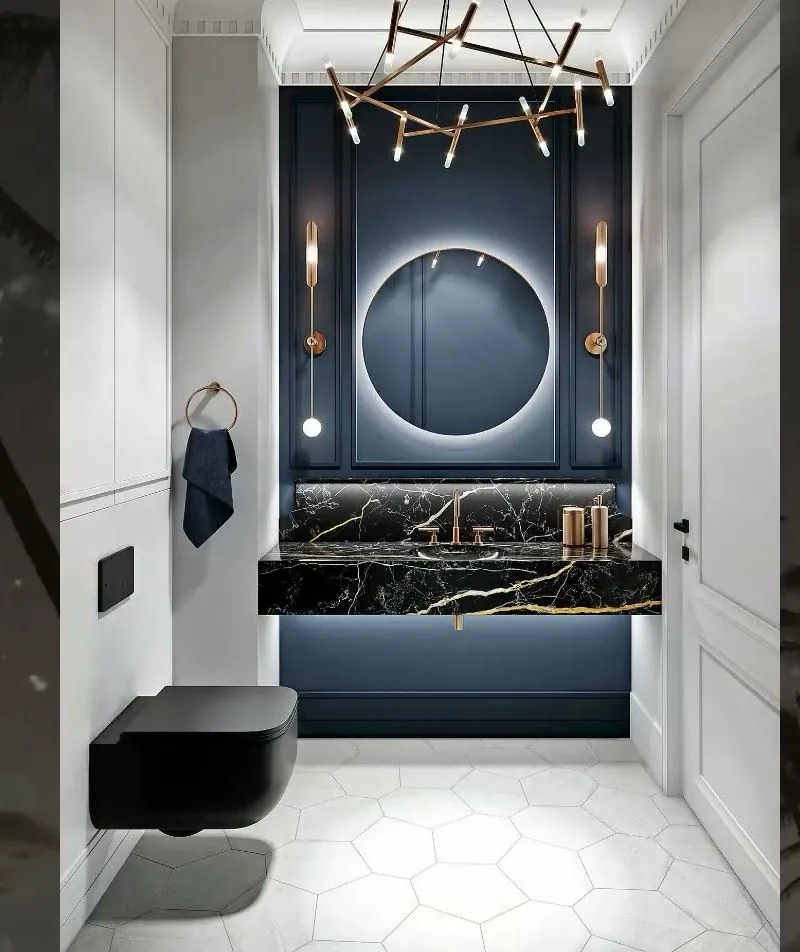
Charcoal gray is easier to live with when it has a warm metal against it. Copper and brass read as fire-touched metal, and they keep a gray room from going flat.
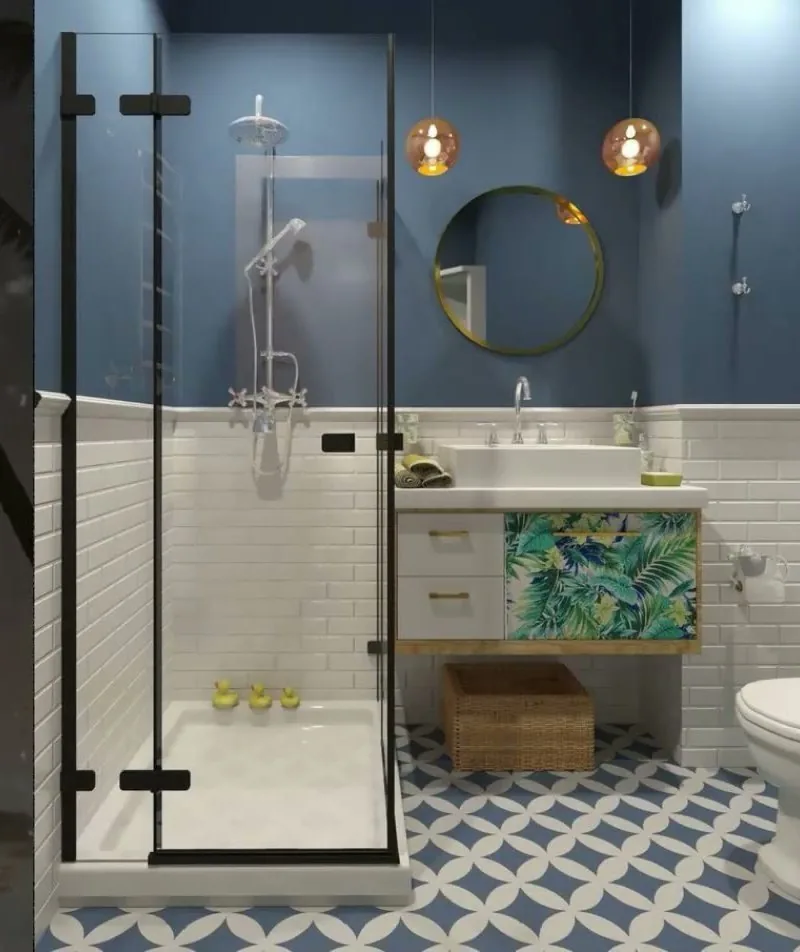
Blue is the gentlest of the water colors. Keep it to the upper wall and let white tile carry the bottom half, and the room reads fresh rather than cold.
Matching Bathroom Color to Where the Bathroom Sits
The direction of the bathroom adds a second layer. In the eight-direction bagua, each compass sector has its own element, and you can pick a color that supports both the room and the sector it sits in.
- East and southeast (wood): Green is the natural fit. Southeast is the wealth area, so a green bathroom here is the common way to keep water feeding wood instead of draining it.
- South (fire): Earth tones calm the clash between a water room and a fire sector. Sand and soft yellow work well.
- Southwest and northeast (earth): Beige, taupe and warm cream suit both the room and the sector.
- West and northwest (metal): White and light gray fit. Add a little earth so the room does not feel cold.
- North (water): This is the one place where a little blue or black is at home, but keep earth tones nearby so the water does not take over.
To find the sector, stand in the middle of your home with a compass and note which direction the bathroom door sits in. A floor plan works too.
Changing Bathroom Color Without Repainting
Paint is only one layer. In a rented bathroom, or one with tile you cannot change, you can shift the balance with things you can carry out the door:
- Towels and a bath mat in green or sand, which you can swap in a minute.
- A plant such as a pothos or fern on a shelf, which brings real wood into the room.
- Warm metal fittings like a brass soap dish or towel ring, which lift a dark room.
- One piece of art with warm colors, kept small if it is red.
- Brighter bulbs, since a dim bathroom reads colder than its paint.
In my own small bathroom on the mountain, a green towel and a pothos did more than I expected. I can’t say for sure it was the qi, but the room stopped feeling like the dampest corner of the house.
Feng Shui Bathroom Color Questions
What is the best feng shui color for a bathroom?
Earth tones and greens are the usual picks. Sand, beige and soft yellow hold the room’s water steady, and green turns that water into growth. White and light gray work as clean accents.
Is a black bathroom bad feng shui?
A black bathroom is not bad luck by itself, but traditional practice reads it as too much water. Warm it up with a light floor, wood, brass and good light.
Can a bathroom be pink or red in feng shui?
Soft pink is fine, especially with green next to it. Strong red is fire against water, so keep it to small things like a towel or a print.
What bathroom colors attract money in feng shui?
Feng shui links money to the wood element and the southeast. A green bathroom, or green accents in a southeast bathroom, is the common way to keep that area from draining.
Written by
Daozhang MaMaoshan Taoist, Jintan, Jiangsu
Daozhang Ma is a Maoshan Taoist who has practiced for 22 years and is skilled at writing talismans and painting Taoist pictures. He runs Zodiac & Tradition.
About Daozhang Ma