Fish in Aquarium Feng Shui: Where to Place a Fish Tank
By Daozhang MaMaoshan Taoist, Jintan, Jiangsu
In short
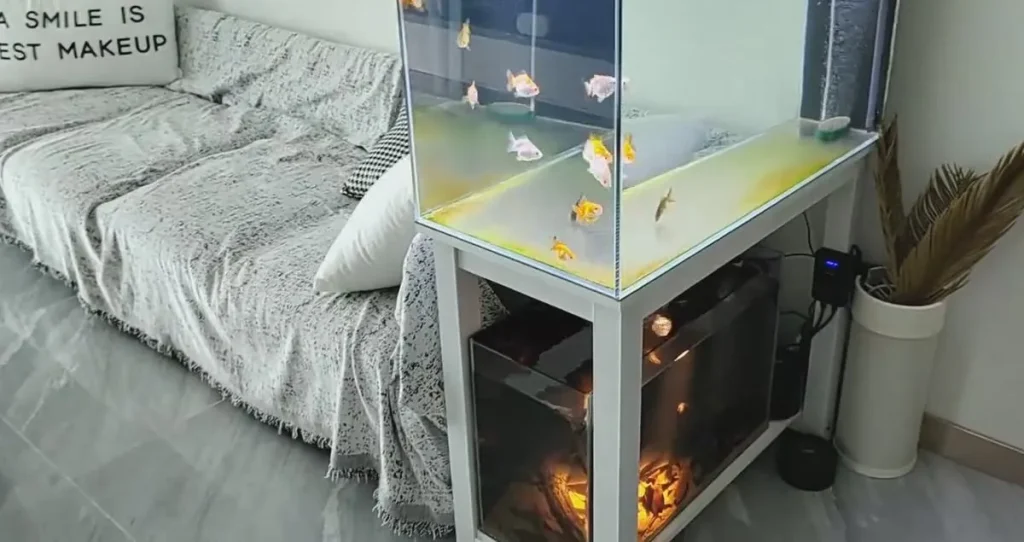
In Chinese folk feng shui, a fish tank stands for water, movement, and the flow of money, which is why an aquarium is one of the most common “wealth” cures in a home. The traditional saying behind it is that mountains govern people and water governs wealth. Two rules show up in almost every source: don’t put the tank behind your sofa, and don’t put it in the bedroom. Past those two, the schools disagree on where it should go. All of this is traditional belief, shared for interest and entertainment, not a promise of luck.
Why Feng Shui Links an Aquarium to Wealth
Feng shui treats still water and moving water very differently. Moving water carries qi, and in the folk reading, qi that flows into a home brings opportunity, customers, and income with it. A tank with a filter running and fish swimming is a small, living version of that moving water, so people keep one hoping their money will move the same way. If you want the wider picture of how water, mountains, and the five elements fit together, my feng shui basics guide lays out the framework this all hangs on.
The saying usually quoted here, 山主人丁水主财 (shān zhǔ réndīng, shuǐ zhǔ cái, “mountains govern people, water governs wealth”), is often said to come from the Sanyuan school of feng shui. I haven’t traced the original line myself, so take the attribution loosely. The idea itself is old and widely repeated: something solid behind you for support, something flowing in front of you for prosperity.
There is also a simpler, older reason fish mean money. The word for fish, 鱼 (yú), sounds like 余 (yú), “surplus.” The New Year wish 年年有余, “may you have more than enough every year,” rests on that pun, and it’s the same reason a whole fish goes on the Lunar New Year table.
Two Places Every School Says No
When I read through what different feng shui writers say about fish tanks, they argue about almost everything except these two spots.
Behind the sofa. The sofa is where the household sits and rests, and feng shui wants a solid wall behind it, a “backing mountain” (靠山, kàoshān) that stands for steady support at work and in life. Water behind your back means nothing solid holds you up, which in the folk reading points to shaky footing and helpers who drift away. A tank at the side of the sofa is fine. Only the spot directly behind it is the problem.
In the bedroom. A bedroom is for rest, and its energy is meant to be quiet and settled. A running tank is the opposite: moving water and moving fish count as “active qi.” Tanks also add humidity, which can make a small room feel damp and stuffy at night. Some writers add that a tank in a couple’s bedroom can stir up friction between partners.
If you only remember one thing from this page, make it these two. They are the closest thing fish tank feng shui has to a consensus.
Where to Put the Tank: Two Schools Disagree
Here the advice splits in two, and both sides have a logic.
| The wealth-corner view | The cure view | |
|---|---|---|
| Where the tank goes | A favorable spot, most often the “wealth corner” diagonally across from the front door | An unfavorable direction in the home |
| What the water does | Draws and gathers money energy | Absorbs and calms harmful energy (煞, shà) |
| Other spots named | Southeast (water feeds wood, said to help career and study) and north (the water direction) | Keep the tank out of the favorable directions |
The wealth-corner view is the one you’ll see most often. Stand in your front door and look to the far corner on the diagonal. That corner is treated as the home’s general wealth position. Some sources say the tank should sit against the wall there, stay put, and have the water flow toward the inside of the room rather than toward the door.
The cure view turns this around. Here the tank’s main job is to neutralize bad energy, so you place it in an unfavorable direction and let the lively water settle it, and you specifically keep it out of the good directions. Working out which directions count as good or bad for a given house is a separate calculation, usually done with a compass and the year the house was built.
Both views can’t be followed in the same spot at once, and I’m not going to pick a winner for you. If you already follow one school for the rest of your home, stay with that one. If you don’t, the wealth corner is the easier starting point, since you can find it without any calculation.
Spots Some Sources Warn Against
Beyond the two firm rules, some feng shui writers list more places to avoid. Read these as one school’s advice rather than settled tradition:
- Directly facing the front door, because the money energy is said to flow straight back out.
- Facing the kitchen stove, since water and fire clash.
- Under a household shrine or altar, which is supposed to stay clean and dry.
- Under an exposed ceiling beam, which is said to press down on your luck.
- Beside a toilet or in a dark, damp corner.
Some of these line up with plain good sense. A tank right inside the door gets bumped, and one in a dark, damp corner is harder to keep clean.
Is a Fish Tank Right for You?
The two schools answer this differently too.
One approach looks at your household and habits. On this view, homes that run hot, dry, and sun-baked benefit from a tank because the water balances the space. People who run a shop or depend on clients like the symbolism of flowing water. And anyone who enjoys watching fish swim finds a tank calming. The same writers warn off homes that already feel damp, households where arguments come easily, and anyone who knows they won’t keep up with the tank.
The other approach goes by your birth chart. In BaZi, someone whose chart has too much fire is said to suit a fish tank, since the water cools that excess. Someone with weak fire, or a chart that’s meant to avoid water, is told to skip it, because “big water puts out a small fire.”
My own view is closer to the first. The question that matters most is whether you will look after it.
Clean Water Matters More Than Placement
Every source I read agrees on one thing, even when it’s stated in different words: clear water and healthy fish are what make a tank lucky. Cloudy water, a fishy smell, and fish that keep dying all read as stagnation and bad luck, and one source puts it bluntly as “clean water, clean money.” A small, clear tank with a few lively fish is better feng shui than a big, murky one in the perfect corner.
So before you worry about direction, be honest about upkeep. Pick a tank size you can actually clean. Change the water and wipe the glass on a schedule. If a fish dies, take it out the same day. That covers the practical side.
Fish Count and Color
You’ll often see lucky numbers and colors attached to aquarium fish. This is one school’s list, so treat it lightly:
- Numbers: small odd or “lucky” counts such as 1, 6, 8, or 9. Eight is the favorite because 八 (bā) sounds close to “prosper.”
- Gold and white fish: linked to wealth.
- Black fish: said to guard the home and absorb bad luck.
- Red and brightly colored fish: linked to celebration and good cheer.
The count matters far less than keeping the fish healthy. If your tank can only hold three fish comfortably, keep three.
Written by
Daozhang MaMaoshan Taoist, Jintan, Jiangsu
Daozhang Ma is a Maoshan Taoist who has practiced for 22 years and is skilled at writing talismans and painting Taoist pictures. He runs Zodiac & Tradition.
About Daozhang Ma