Decluttering with Feng Shui: Where to Start, Room by Room
By Daozhang MaMaoshan Taoist, Jintan, Jiangsu
In short
Decluttering with feng shui starts at the front door and works inward. Clear the entry so the door opens all the way, then the hallways, then the living room, bedroom and kitchen, and leave corners and storage for last. In every room, broken things that can’t be mended go first. In feng shui terms, clutter is anything that stops qi, the breath said to move through a home, from coming in and getting around.
Most of that method is younger than it sounds. Feng shui as a way to clear clutter took off with Karen Kingston’s book Clear Your Clutter with Feng Shui, first published in London in 1998. The old Chinese house manuals ask for something related: keep the lucky parts of a house clean and repaired, and don’t let rubble pile up in the courtyard. One of them also warns against a house that’s too empty. Chinese New Year custom adds a fixed date, a sweep of the whole house before the year ends.
I’d rather tell you which rule comes from which book than sell all of it as ancient. The method works either way. None of it is a promise about money, health or luck.
What clutter means in feng shui
In feng shui, clutter means qi that’s blocked or stuck. Qi is meant to come in at the door, move through the rooms and settle where people live, and a pile of things in its way is read as stopping it. Karen Kingston’s own website puts the modern version in four words: “clutter is stuck energy.”
BTB practitioner Anjie Cho adds a second idea. When clutter builds up, she writes, “it starts to collect yin qi,” the still, dark side of qi, which she ties to death. Both readings come from modern Western feng shui, and they’re the ones most English guides repeat.
The Chinese house manuals don’t use a word for clutter, but they do ask for upkeep. The Huangdi Zhaijing (黄帝宅经), a house classic credited to the Yellow Emperor, says that when the right time comes round to a lucky quarter of the house, the family should repair it and keep it clean (令清潔闊厚).
A Ming collection, Gao Lian’s Zunsheng Bajian, quotes the classic with one extra line: the lucky ground in a house shouldn’t be left damaged or dirty. That line isn’t in the Siku Quanshu or Daoist Canon copies of the classic, or in the two other copies I checked, so I’d credit it to the Ming quotation rather than the book itself.
Where to start decluttering with feng shui: the front door, then the paths
Start with the front door, then clear the paths that lead away from it, and only then go room by room. The door comes first because Chinese house books treat doorways as the way qi gets in. The Qing scholar Sun Xingyan, in a preface to a house manual, wrote that doorways are called qi mouths (气口) because the qi of heaven enters through them.
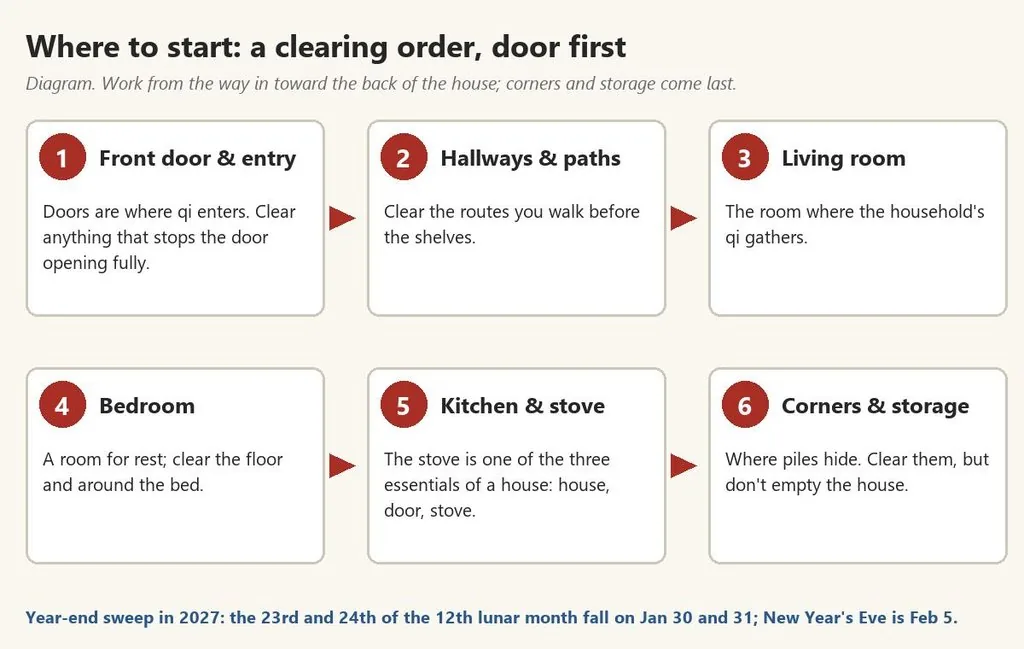
Western consultants give the same order. Laili Kafi Gonzalez, quoted in Homes & Gardens, suggests starting with entryways and “working your way inwards through the home.” At the door itself she’d clear anything that blocks the entrance or stops the door opening fully, and in most homes that means shoes, bags and boxes parked behind it.
Hallways are next. My introduction to feng shui boils this down to one habit: clear clutter from paths first, because the space you walk through matters more than what’s on the shelves.
- Front door and entry: the door opens all the way, nothing sits in front of it.
- Hallways and paths: you can walk from the door to every room without stepping around anything.
- Living room: the seats and the floor are clear.
- Bedroom: the floor and the space around the bed are clear.
- Kitchen: the stove and the counter beside it are clear.
- Corners and storage: the places where things wait.
That order is my own. The first two steps are where the Western advice and the Chinese door rule meet, and the rest runs from the rooms you use most to the ones you use least.
Feng shui decluttering room by room
Each room has a different job, so each one gets cleared for a different reason.
Living room decluttering
In the living room, clear the places where people sit and walk, and leave the room furnished. Guests are received here and qi is said to collect here, and Chinese home guides today list a living room with lots of things stored in it long term among the don’ts.
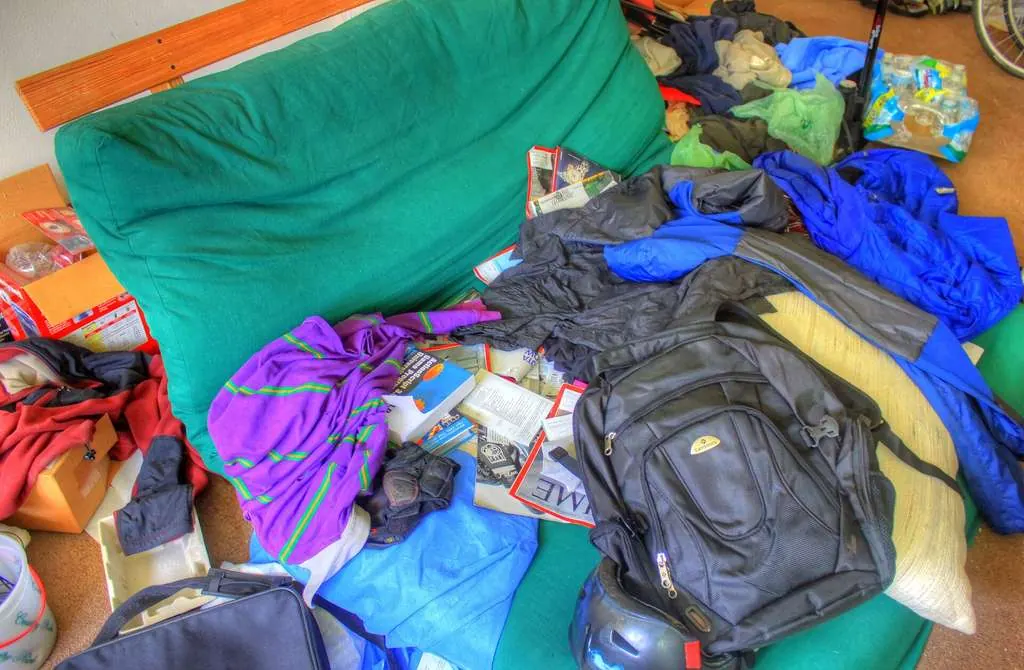
The seat is where clutter lands first: coats, bags and mail that arrive with you and never leave. I’ve written up a three-step version, one corner a week, broken things out and the floor by the door kept clear, as the living room rule in my list of basic feng shui rules, so I won’t repeat it here.
I’d stop short of stripping the room bare. A living room is there to hold people, and the old house classic worried more about a big, empty house than a full one, as the section on the five voids shows.
The bedroom, and what goes under the bed
In the bedroom, clear the floor and the space around the bed, and don’t let the room turn into storage. Chinese home guides today say clutter shouldn’t pile up in a bedroom and that it shouldn’t double as a study or a storeroom.
The rule about keeping nothing under the bed comes from Western consultants. Theresa Russell, quoted in Homes & Gardens, says “it is suggested to not keep items underneath your bed,” and she’d store things off the floor so energy can flow more easily around the room. I looked for the same rule in the Huangdi Zhaijing and in the Ming manual Yangzhai Shishu (阳宅十书) and couldn’t find it.
So if under the bed is your only storage, I’d keep it boxed and tidy rather than lose sleep over it. That’s practical advice, not a quoted rule.
The kitchen and the stove
In the kitchen, clear the stove and the counter next to it before anything else. Sun Xingyan’s preface to the house manual Yangzhai Sanyao (阳宅三要, “Three Essentials of the House”) lists its three essentials as the house, the door and the stove. A common saying in Chinese advice columns today is shorter: keep the kitchen and bathroom dry, and don’t let clutter pile up.
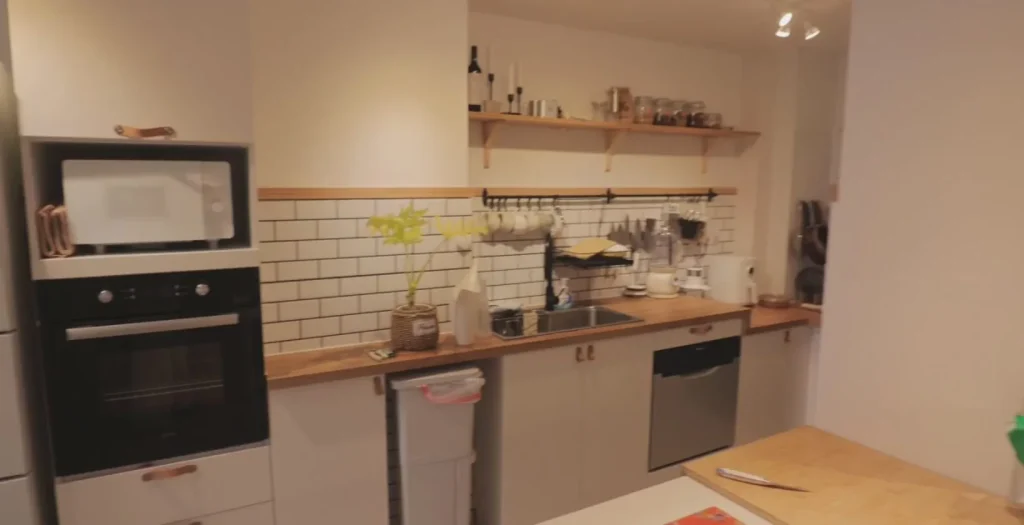
The stove is also the seat of the Kitchen God, so when the year ends families wipe it down before any other part of the house. I do that wipe-down myself on the Little New Year, and the rest of the kitchen comes after it.
What to throw out first when decluttering, and what to keep
Throw out the broken things first: anything chipped, cracked or broken that can’t be repaired. Gonzalez calls those “a good place to start when decluttering,” and the rule I follow for feng shui pieces says the same: a cracked charm or statue gets retired, not patched up and put back to work.
- Broken things that can’t be fixed. If you will mend it this week, mend it. If not, it goes.
- Things tied to bad memories. Gonzalez adds that items connecting you to bad experiences, people or times in your life can be donated, recycled or thrown out.
- Old charms and statues. These get a gentler exit, and I’ve written up how to retire old feng shui items, wrapped in red paper and taken out apart from the kitchen trash.
Keepsakes you love can stay. Homes & Gardens editor Millie Hurst suggests a safe spot where you can see and appreciate them, out of the way of what she calls energy flows.
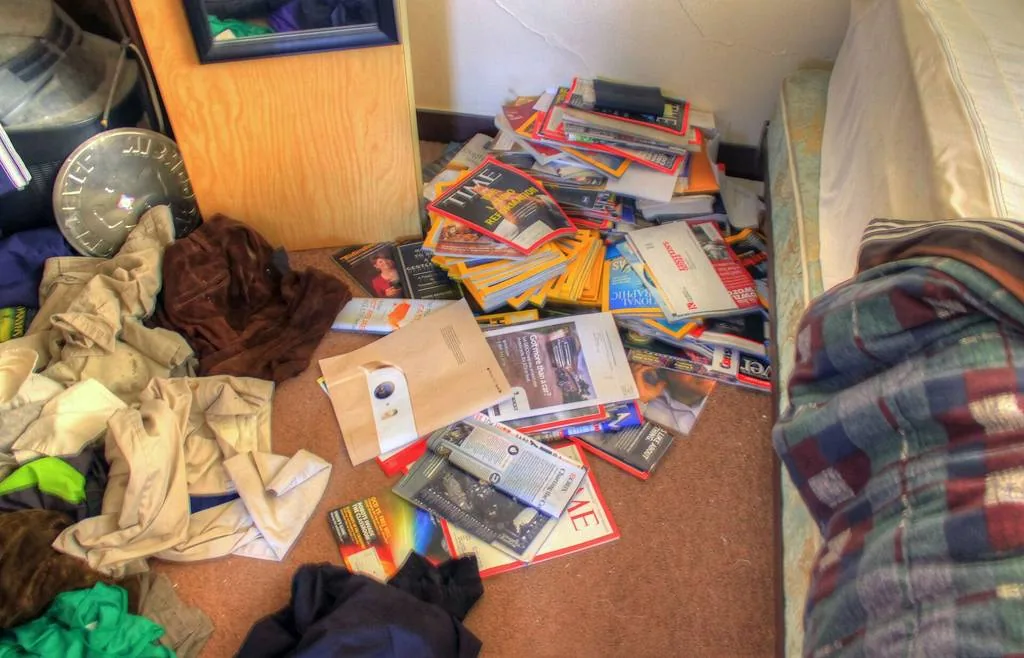
Corners and storage come last in my order because they’re where things go to wait. Magazines, mail and clothes “for later” collect there faster than anywhere else.
Do you need a bagua map to declutter?
No. The nine-square bagua map of life areas, with squares for wealth, relationships, health and so on, is the common modern version taught by Black Sect (BTB) feng shui, which lays the grid out starting from the front door. Classical feng shui sets directions with a compass and doesn’t split a house into life areas.
If you do use the map, the rule every version shares is plain: don’t pile things in the wealth area. Chinese home guides say the same about the wealth spot, down to keeping the trash can out of it. There’s more than one way to find that spot, and I’d clear the space before worrying about which method is right.
The room-by-room order does the real work. The map is an extra layer for people who already like it.
Which decluttering rules are Chinese and which are modern Western
Most of the room-by-room method is modern and Western, and a few pieces come from Chinese house manuals and customs. Kingston’s book, published in London by Piatkus, reached American shelves through Broadway Books in 1999.
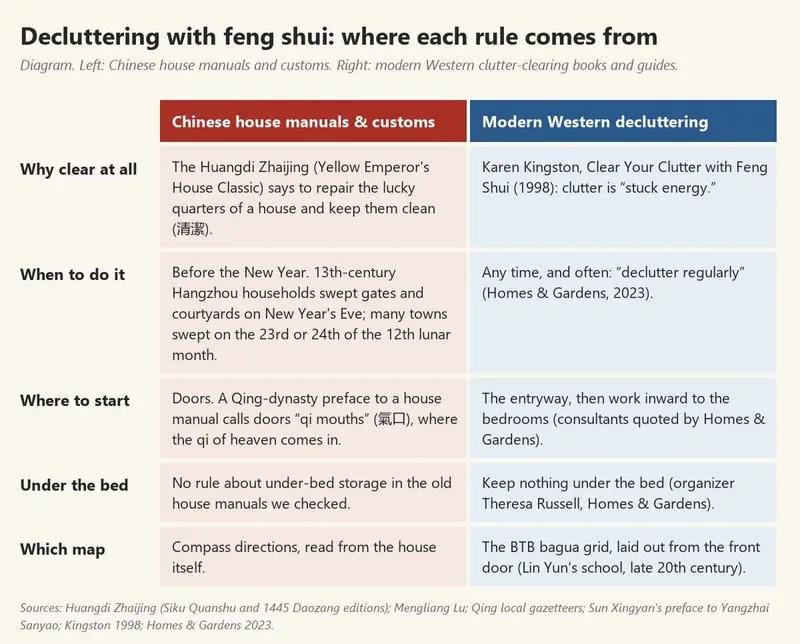
| Rule | Chinese house manuals and customs | Modern Western decluttering |
|---|---|---|
| Why clear at all | The Huangdi Zhaijing says to repair the lucky quarters of a house and keep them clean | Karen Kingston (1998): clutter is “stuck energy” |
| When to do it | Before New Year: Southern Song Hangzhou swept on New Year’s Eve, Qing towns on the 23rd or 24th of the twelfth month | Any time, and often: “declutter regularly” (Homes & Gardens) |
| Where to start | Doors: Sun Xingyan’s preface calls doorways “qi mouths” (气口), where the qi of heaven comes in | The entryway, then inward through the home (consultants quoted in Homes & Gardens) |
| Under the bed | No rule about under-bed storage in the Huangdi Zhaijing or Yangzhai Shishu | Keep nothing under the bed (organizer Theresa Russell) |
| Which map | Compass directions, read from the house itself | The BTB bagua grid, laid out from the front door |
Some Western practitioners say this themselves. Designer Jacky Chou told Homes & Gardens that decluttering itself is “not strictly ‘Feng Shui,'” though he calls it a vital step toward feng shui goals. Anjie Cho puts it more strongly: “When feng shui was developed in ancient China, there really wasn’t any clutter.”
I’d put that a little differently. The old books do talk about dirt and rubble. The Yangzhai Shishu says not to let rainwater stand or rubble pile up in the courtyard, and households in Southern Song Hangzhou swept their gates and yards every New Year’s Eve. What the books worried about just as much was the opposite problem.
Does feng shui want an empty house? The five voids say no
No. The Huangdi Zhaijing lists five voids (五虚) that make a household poor and five fulls (五实) that make it rich, and the first void is a big house with few people in it. The passage reads the same, word for word, in the Siku Quanshu copy and in the 1445 printing in the Daoist Canon (正统道藏).
| The five voids (make a household poor) | The five fulls (make a household rich) | ||
|---|---|---|---|
| 1 | A big house with few people (宅大人少) | 1 | A small house with many people (宅小人多) |
| 2 | A big gate on a small house (宅門大內小) | 2 | A big house with a small gate (宅大門小) |
| 3 | Walls and courtyard not whole (牆院不完) | 3 | Walls and courtyard whole (牆院完全) |
| 4 | Well and stove not where they should be (井竈不處) | 4 | A small house with plenty of livestock (宅小六畜多) |
| 5 | A large plot, few rooms, a wide courtyard (宅地多屋少庭院廣) | 5 | The drain runs off to the southeast (宅水溝東南流) |
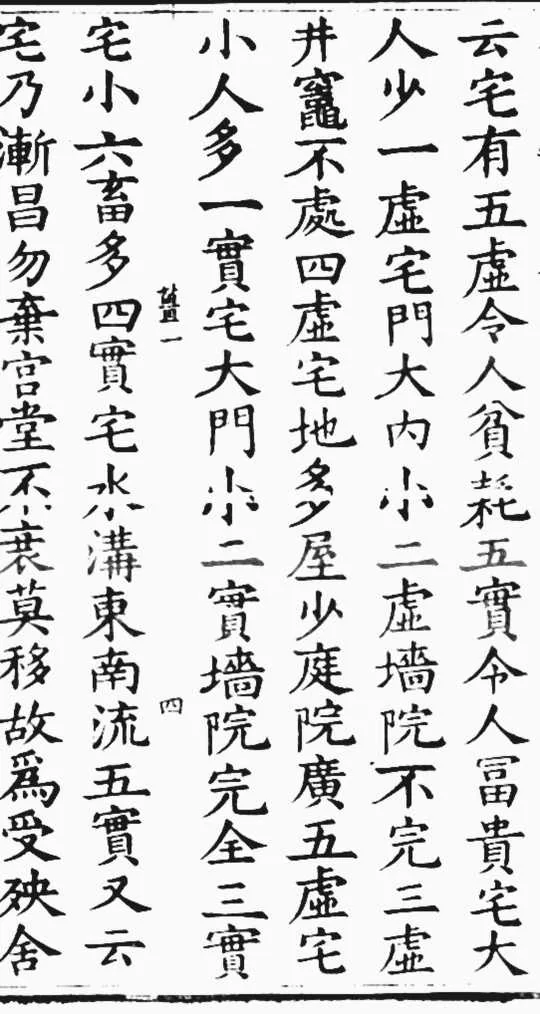
Read together, three of the five voids are about emptiness: the big house with few people, the big gate on a small house, and the large plot with few rooms. That’s my reading rather than the book’s wording, but the next lines lean the same way. Moving somewhere bigger doesn’t promise happiness, the classic says, and a small note in the text sums up the point as “a house shouldn’t be too large” (宅不宜廣).
The book is credited to the Yellow Emperor, and the Qing imperial catalog called that credit a later invention. Whoever wrote it, the idea is clear enough. Clearing clutter doesn’t mean emptying a house. The old aim is a home that’s lived in, with the dirt and the broken things gone, and that’s a view of a good house, not a promise about money.
The year-end sweep: China’s own day for clearing the house
The Chinese tradition does have a fixed time to clear out a house: the big sweep before New Year. In 2027 the usual days are Saturday, January 30, and Sunday, January 31, the 23rd and 24th of the last lunar month, and New Year’s Eve falls on Friday, February 5.
The custom has a long paper trail. Wu Zimu’s Mengliang Lu (梦粱录), an account of Southern Song Hangzhou, says that on New Year’s Eve households large and small swept their gates, cleared away the dust and dirt and cleaned their courtyards, then hung new door gods and made offerings to their ancestors.
Qing local gazetteers put the sweep about a week earlier, from north China to Taiwan. Changping swept on the 24th of the twelfth month, Wuqiao on the 23rd along with the offering to the Kitchen God, and Tamsui a day or two before the 24th.
A common rhyme keeps the order: on the 23rd, the Kitchen God, and on the 24th, sweep the house. Northern families call it sweeping the house (扫房 sao fang), and in the south it’s dusting (掸尘 dan chen).
The almanac lists it too. The Xieji Bianfang Shu (协纪辨方书), the Qing imperial manual for choosing days, puts sweeping the house (扫舍宇) among the jobs suited to a removal day (除日), taking the name literally as clearing out the old to make way for the new. Each winter, with the almanac open at the twelfth month, that’s the line I look for before I pick my own sweeping day, though I wouldn’t hold anyone else to it.
Before New Year I clear the altar too. The incense burner gets emptied and wiped, and the old ash and the burnt-down incense stubs go out wrapped, apart from the kitchen trash.
Then the broom rests. Sweeping on New Year’s Day is said to push the new year’s luck back out the door, and that’s why the broom rests on New Year’s Day in many families until the second, third or fifth day.
How to keep a home clutter-free after the first big clear-out
To keep a home clear, clear a little and often, and let the year-end sweep be the one big date on the calendar. Homes & Gardens ends its list with the same advice: declutter regularly, and clean as you go. Modern Chinese advice on arranging a home puts a whole-house clean as step one, before any arranging at all.
If you keep only one habit, make it the door. Nothing stays on the floor between the front door and the rooms you live in, and whatever lands there gets put away the same day.
As far as I can tell, a clear house doesn’t change luck, and I don’t claim it does. It does make a house easier to walk through, and both the old rules and the new ones start in the same place, at the door. More on Chinese homes and the calendar that runs them is collected at Zodiac & Tradition.
Written by
Daozhang MaMaoshan Taoist, Jintan, Jiangsu
Daozhang Ma is a Maoshan Taoist who has practiced for 22 years and is skilled at writing talismans and painting Taoist pictures. He runs Zodiac & Tradition.
About Daozhang Ma