Feng Shui Rules: 9 Basic Principles for Your Home
By Daozhang MaMaoshan Taoist, Jintan, Jiangsu
In short
The basic feng shui rules come down to one idea: a home should gather energy (qi) gently and hold it, not let it rush straight through or press down on the people inside. In practice that means a few concrete guidelines. Don’t sit or sleep under an exposed beam. Don’t let the front door line up straight with a back door or balcony. Keep a solid wall behind your sofa. Clear the clutter, let in daylight, favor square rooms, and keep doors and desks from facing a bathroom. These are traditional teachings, not guarantees, and I treat them that way.
I have lived on Maoshan as a Taoist for more than twenty years. Most of what follows is what you would hear in any Chinese household that cares about these things, plus my own notes on which rules matter and which ones people overthink.
The One Principle Behind Every Feng Shui Rule
Before the list, one distinction makes the rest of it make sense. A home is meant to hide and keep, while a shop is meant to show and let flow. The Chinese phrase for a house is 宜藏不宜漏, “better to hold in than to leak out.” A storefront works the other way, because it lives on strangers walking in and out.
An office sits between the two. It runs on order and uniform layout, since everyone in it works toward one goal. So when you read a feng shui rule, ask which kind of space it was written for. A rule about drawing in passing traffic belongs to a shop, and it would feel wrong in a bedroom. If you want the bigger picture of where these ideas come from, I cover the history and the core vocabulary on my overview of feng shui.
1. Don’t Sit or Sleep Under an Exposed Beam
This is the rule I would put first, and it’s the one you hear from nearly every school. A heavy beam running across the ceiling is called 横梁压顶, “a beam pressing on the head.” If your sofa, dining table, desk or bed sits right under it, tradition says you will feel weighed down: poor sleep, a foggy head, and work that never quite gets the credit it deserves.
The office version of this rule is wider than most people expect. Anything that bears down on a seat from above counts: a beam, a pendant lamp hanging straight over you, a spotlight, an air vent, even a fire extinguisher mounted on the wall above a desk.
What you can do:
- Move the seat or bed so it sits beside the beam, not under it. This is the cleanest fix.
- If the beam can’t be avoided, box it in with a dropped ceiling so the line disappears.
- Keep ceilings from feeling low. One office guideline suggests at least 8.2 feet (2.5 m), and a level, finished ceiling with the pipes hidden.
2. Don’t Line the Front Door Up With a Back Door or Balcony
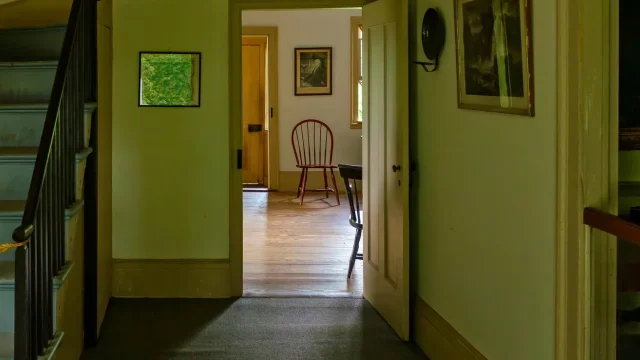
Your front door is the mouth of the house, where qi comes in. A balcony door or back door is where it goes out. When the two sit in one straight line with nothing between them, some traditions call it 穿堂煞, “the draft that runs through the hall.” The idea is that whatever good fortune walks in walks right back out, and money comes in but never stays.
Some ways to break the line:
- Place a screen, a tall plant, a bookshelf or a console table partway along the path.
- Hang a curtain at the balcony door and keep it drawn when you aren’t using it.
- Angle furniture so the eye, and the walk, has to turn once before reaching the far door.
You don’t need to wall anything off. The point is that the path should bend, the way a stream slows down when it meets a stone.
3. Keep a Solid Wall Behind the Sofa
In a living room, the sofa is the seat of the household. Feng shui wants it backed by a solid wall, which is called having a 靠山, a “mountain to lean on.” That backing stands for steady footing in life and work, and for people who will support you.
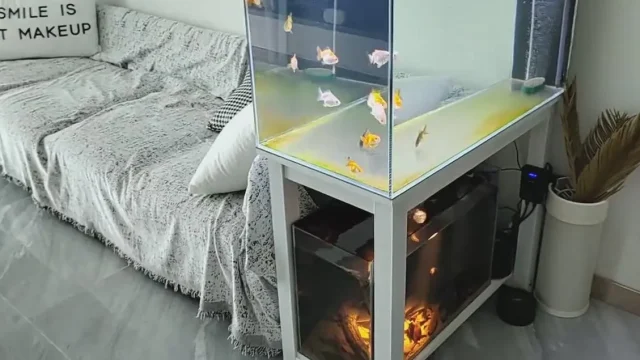
A sofa floating in the middle of a room with an open walkway behind it is the classic example of breaking this rule. So is a sofa with a window or a fish tank behind it. If your layout forces the sofa away from the wall, a low cabinet or console table pushed against its back gives it something firm to lean on.
I follow the same habit in my own room. The table where I write talismans and paint sits against a plain wall, never under the window, and I would not work any other way. Part of that is feng shui. Part of it is simply that ink and cinnabar don’t like a draft at your back.
4. Clear the Clutter, Especially in the Living Room
The living room is where a home receives guests and where qi gathers. Old clothes piled on a chair, boxes in the corner, broken ornaments kept “just in case” all block that flow and leave the room feeling stale and heavy. Tradition ties a cluttered main room to short tempers and family friction. You don’t need a belief system to notice that a crowded room makes people irritable.
A practical way to keep this rule:
- Pick one corner of the living room each week and clear it fully.
- Throw out or repair anything broken. Cracked mirrors and chipped vases are the ones people forget.
- Keep the floor near the front door completely clear, so the way in is open.
5. Let In Daylight and Keep the Main Room Bright
A lived-in house is a 阳宅, a “yang dwelling,” and it needs plenty of yang energy: light, warmth, air. A living room that stays dim all day, with small windows, heavy blockage outside, or curtains that never open, is seen as letting yin build up. People in such rooms are said to feel low and hesitant.
Open the curtains in the morning. Use warm lamps in the evening instead of leaving the room dark. If a window faces a wall or a tree, a mirror placed to bounce light deeper into the room can help, as long as it doesn’t face the front door.
6. Favor Square or Rectangular Rooms
Square and rectangular spaces are the ideal in feng shui, for homes and offices alike. A regular shape keeps qi stable, and in practical terms it’s simply easier to furnish and move around in. L-shaped rooms, rooms with a missing corner, and odd shapes with scattered points are harder. A missing corner is traditionally linked to weakness in whatever area that direction governs.
If you already live in an irregular space, you don’t have to move. Use furniture, rugs and lighting to divide the room into smaller rectangles, each with one clear purpose.
The office version adds one note about pillars. A column in the middle of an open office, or in the most visible spot, makes the whole room feel pressed. Don’t put a desk right beside it. Columns tucked into corners matter much less and can be softened with a plant or a hanging piece.
7. Keep Doors and Desks From Facing a Bathroom
The front door of a home or office should not face a toilet, a trash chute or any other unclean spot. In an office this is as much about first impressions as about qi: a client who walks in and sees a bathroom door straight ahead doesn’t get a good feeling about the business. Bathrooms carry so much weight in these rules that I wrote a separate guide to the best feng shui bathroom colors.
If you can’t change the layout:
- Keep the bathroom door closed at all times.
- Keep that area spotless.
- Add a screen, a curtain or a plant to soften the direct line.
8. Place Water With Care: The Fish Tank Rule
There’s an old saying: 山主人丁,水主财, “mountains govern people, water governs wealth.” That’s why so many Chinese homes keep a fish tank. Water is linked to money, but it’s also restless, so where you put it matters.
Two placements to avoid:
- Behind the sofa. Moving water takes away the solid “mountain to lean on” from rule 3. Beside the sofa is fine.
- In the bedroom. A tank adds humidity that can disturb sleep, and moving water and swimming fish bring active energy into a room that should be still. Couples especially are told to keep tanks out of their bedrooms.
Some schools go further and use a tank to settle an unlucky direction of the house, or say only certain people should keep fish based on their birth chart. Those are specialist judgments. For a normal home, the two placements above are the part worth following.
9. Don’t Overthink Lucky and Unlucky Numbers
This last one is a rule about rules. Plenty of people choose an apartment or an office floor by avoiding 4, 14 or 24, because 4 sounds like “death” in Chinese. Some feng shui teachers dismiss this outright as fooling yourself, and I lean the same way. A bright, square, uncluttered space on the fourth floor beats a dark, cramped one on the eighth every time.
When I check the almanac to pick a day, I’m looking at the whole picture, not one number. Treat floor numbers the same way. If a number truly bothers you, by all means skip it, but don’t let it outweigh light, layout and a solid wall behind your seat.
Examples of Feng Shui Rules in a Real Home
Here is how the nine rules play out in one typical apartment layout.
| Spot in the home | Common problem | Feng shui fix |
|---|---|---|
| Entry | Front door looks straight through to the balcony | Bookshelf or screen partway along the path |
| Living room | Sofa sits under a ceiling beam, open walkway behind it | Shift the sofa off the beam and back it onto a wall |
| Living room corner | Boxes and unused chairs | Clear it out, add a lamp or a plant |
| Dining area | Pendant light hangs straight over one chair | Center it over the table, not a seat |
| Bedroom | Fish tank on the dresser | Move the tank to the living room, beside the sofa |
| Home office | Desk faces the bathroom door | Turn the desk, keep the bathroom door shut |
None of these fixes costs much. Most of them are just moving a piece of furniture a few feet.
What Feng Shui Rules Can and Can’t Do
Feng shui is a traditional way of reading space, and these principles are worth trying because most of them also make a room calmer and easier to live in. They won’t guarantee wealth, health or a better marriage, and I’d be wary of anyone who promises that a single beam or door will ruin your life. Start with the beam and the front door, fix what’s easy, and see how the room feels after a week.
Written by
Daozhang MaMaoshan Taoist, Jintan, Jiangsu
Daozhang Ma is a Maoshan Taoist who has practiced for 22 years and is skilled at writing talismans and painting Taoist pictures. He runs Zodiac & Tradition.
About Daozhang Ma