Lunar New Year Desserts: Classic Sweets, Candy and Meanings
By Daozhang MaMaoshan Taoist, Jintan, Jiangsu
In short
Ask what is sweet on a Chinese New Year table and five names come up again and again: nian gao (sticky rice cake), tangyuan (rice balls in syrup), fa gao (steamed prosperity cake), jian dui (fried sesame balls) and eight treasure rice. Next to them sits a tray of candy, dried fruit and seeds for visitors.
Every one of these Lunar New Year desserts carries a wish, usually through a pun in its Chinese name. Nian gao sounds like “a higher year,” tangyuan sounds like “reunion,” and the fa in fa gao means “to prosper.” The shape and color do the rest: round for a family that stays together, gold for money, a split top for a cake that is laughing.
So the dessert is never only dessert. Choosing one is a small way of saying what you hope the coming year brings, which is why each name below comes with the word that makes it lucky.
Traditional Lunar New Year desserts and the lucky word in each name
| Dessert | Chinese | What it is | The lucky part | When it’s eaten |
|---|---|---|---|---|
| Nian gao | 年糕 | Sticky cake of glutinous rice flour, often with brown sugar | Sounds like 年高, “higher year” | From the Kitchen God’s day through the New Year visits |
| Tangyuan | 汤圆 | Glutinous rice balls in hot syrup or soup, often filled | Sounds close to 团圆, “reunion” | The Lantern Festival above all; New Year in some regions |
| Fa gao | 发糕 | Steamed cupcake-like cake that splits on top | 发 means “prosper” and “rise” | Chinese New Year |
| Jian dui | 煎堆 | Fried glutinous rice balls rolled in sesame | They swell in the oil, and they’re gold | Chinese New Year |
| Eight treasure rice | 八宝饭 | Sweet sticky rice set with eight fruits, nuts and seeds | Eight is a lucky number | New Year celebrations |
Eight treasure rice needs the least explaining. The sticky rice is studded with eight kinds of fruit, nuts and seeds and brushed with sugar syrup before serving, so it looks rich while tasting only lightly sweet. The other four have more behind them.
Nian gao, the Lunar New Year cake: a “higher” year
Nian gao is the cake people mean when they search for a Lunar New Year cake. Its name, 年糕, sounds just like 年高, “year high,” so eating it wishes for a year that rises above the last one: a promotion, better earnings, children growing taller. That wish makes it a favorite New Year gift, and the traditional cake is round with the character 福, fortune, on top.
What lands on the plate depends on the region. In Guangdong the cake is sweetened with Chinese brown sugar, which turns it dark yellow, and it is steamed, sliced and often dipped in egg and pan-fried until the outside crisps while the inside stays soft.
In the north it is sweet as well and often made with jujubes and yellow millet. In the Yangtze delta, where I live in Jiangsu, nian gao is white and mild, made from rice mixed with glutinous rice, and it goes into stir-fries and soups more often than into dessert.
Another reason for the cake has little to do with eating. Nian gao was offered to the Kitchen God, so that its stickiness would glue his mouth shut before he could speak badly of the family to the Jade Emperor. To me that is the detail worth keeping: before it was a gift to friends, the sweet sticky cake was a small bribe to a god.
Tangyuan: sweet rice balls for reunion
Tangyuan are balls of glutinous rice dough, anywhere from marble size to ping-pong ball size, served in a hot syrup or soup. The name is a near homophone of 团圆, tuanyuan, “reunion,” and the round balls in a shared bowl stand for a family that is together and complete.
Tangyuan belong first to the Lantern Festival on the 15th day of the first month, the first full moon of the year, when people eat them round like the moon. In some regions tangyuan are also part of New Year itself and of the winter solstice, and today they are eaten all year.
Most tangyuan are filled. Black sesame, peanut and red bean are the classic sweet fillings, and they are what you’ll usually find in frozen bags in Asian supermarkets, which is how many families outside China buy them.
Fa gao and jian dui: New Year sweets that rise and swell
Fa gao and jian dui carry the same wish, growth, and both show it while they cook. Fa gao is a steamed cake about the size of a cupcake, made from rice flour, a leavening and sugar. The word 发 means both “to rise” and “to prosper,” so the name reads at once as “rising cake” and “prosperity cake,” which is why it shows up at New Year.
The test of a good fa gao is its top. Steamed hard over high heat, it splits into a crown, usually four sections and sometimes three. The Hakka call that split xiao, a smile, and say the wider it opens, the bigger the fortune coming.
For New Year the cakes are often dyed bright colors, most commonly white and pink, and palm sugar turns them brown. A cake that refuses to split is a small disappointment on the day, so it pays to keep the steam strong.
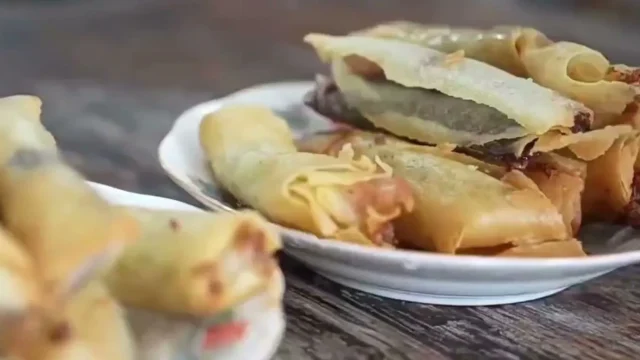
Jian dui are balls of glutinous rice dough filled with red bean or lotus seed paste, rolled in white sesame seeds and deep-fried. They come out golden and crisp on the outside and soft and chewy inside.
The New Year meaning comes from what happens in the pan. The balls puff up and rise as they fry, so a plate of them is a wish for wealth that keeps growing, and their gold color makes the same point. Some call them the dessert of fullness for the same reason.
Sesame balls are best eaten the day they are fried. That is why cylinder-shaped sesame sticks, fried until crisp all the way through, keep better and are sold packed in supermarkets for the holiday, while fresh sesame balls are mostly a bakery item.
When each Lunar New Year dessert is eaten, from Kitchen God Day to the Lantern Festival
Those five desserts don’t all arrive on the same night. The sweet season starts a week before New Year. On day 23 of the last lunar month, or day 24 across much of the south, the Kitchen God is sent off with a gift of sticky malt candy, meant to sweeten whatever he says about the household. In some places nian gao goes on his offering table too.
New Year’s Eve dinner is where the most sweet dishes meet. Eight treasure rice and fa gao fit there, and in many Chinese homes the meal also ends with a few lightly sweet steamed dishes given lucky names, which I cover further down.
From New Year’s Day, families visit one another, and that is when the candy tray comes out and nian gao changes hands as a gift. The season closes on the 15th day, the Lantern Festival, with tangyuan.
If you only make one Lunar New Year dessert, my advice is to match it to the day you are celebrating. Nian gao covers the start of the season and the visits, while tangyuan belongs to the end. A bowl of tangyuan on New Year’s Eve is fine too, since some regions eat them then.
Chinese New Year candy and snacks: what goes in the tray of togetherness
The candy for those New Year visits goes into one container. In Cantonese it is the chuen hup (全盒), the “tray of togetherness”: a red box divided into compartments of candy, dried fruit, nuts and seeds. The custom goes back to the Ming dynasty (1368–1644).
When guests arrive you offer them the tray along with your New Year wishes, and the snack each guest picks is read as the blessing they want for the year.
| Snack | Lucky meaning |
|---|---|
| Candy, wrapped sweets | A sweet life, money |
| Red dates, zao (枣) | Zao sounds like 早, “early”: a head start |
| Peanuts | “Longevity nuts”: long life and vitality |
| Dried longans, guiyuan (桂圆) | Sounds like 贵圆, “precious” and “round”: reunion |
| Melon or sunflower seeds | 子 means both “seed” and “child”: many children |
| Candied lotus root | Strong family ties |
| Candied winter melon | Growth and health |
| Candied coconut | Friendship and unity |
| Pistachios | Called the “happy nut” in Chinese |
| Kumquats or mandarins on top | Gold and good luck |
Candy in gold boxes shaped like yuanbao, the old boat-shaped gold ingots, wealth gods or lucky cats also gets bought as New Year gifts. Plain wrapped sweets work just as well; the point of the tray is that every compartment holds a wish. The oranges on top have a whole story of their own, which the Chinese New Year oranges page explains.
During those visits people eat with their hands and talk, and seeds are what keep a long afternoon going. Many families fill a whole section with them, since cracking melon seeds is the snack that goes with chatting and watching television. If you’re putting a tray together for the first time, I’d fill it with whatever you can find of the list above and not worry about matching every compartment.
Home-style New Year’s Eve sweet dishes with lucky names
The candy tray is mostly bought. The sweet dishes that finish a New Year’s Eve dinner in many Chinese homes are cooked at home, and they work the same way as nian gao: each is named for a wish. They’re simple, mostly steamed, built from pumpkin, sweet potato, Chinese yam and red dates, and they suit a home kitchen better than a sesame ball that needs a pot of oil.
Golden Jade Fills the Hall: steamed pumpkin with red dates
Jin yu man tang (金玉满堂), “gold and jade fill the hall,” is a classic New Year wish for a house full of wealth. Orange pumpkin plays the gold, and the dish usually comes out as a glossy dome with a red date on top.
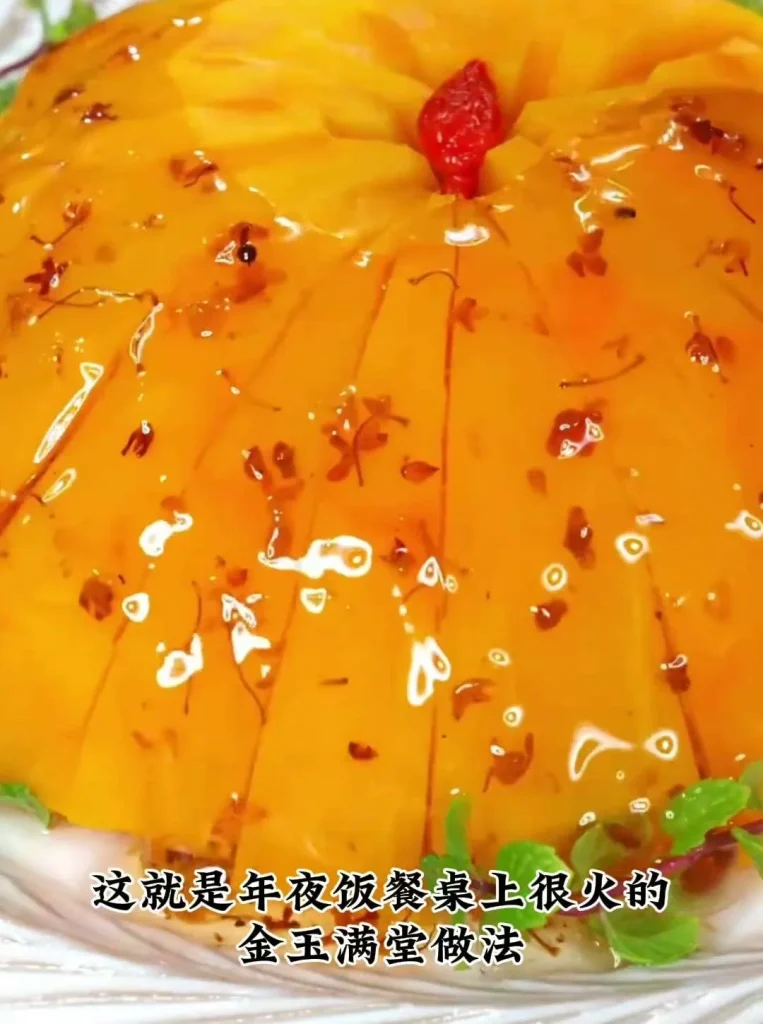
To make it, cut a wedge of pumpkin into triangles, arrange them point-down in a heatproof bowl and set honeyed red dates in the middle. Once the water boils, steam over high heat for 15 minutes. Turn the bowl out onto a plate so the pumpkin forms a dome.
Pour osmanthus honey over the top and serve it warm. The syrup sets off the orange, and it gives a pumpkin that is only lightly sweet the extra sweetness a New Year dish wants.
Step by Step Higher: yam sticks stacked like a ladder
Bu bu gao sheng (步步高升), “rising step by step,” is the wish for steady promotion, the same hope as nian gao. Here the steps are literal: sticks of Chinese yam laid out so they climb like the rungs of a ladder.
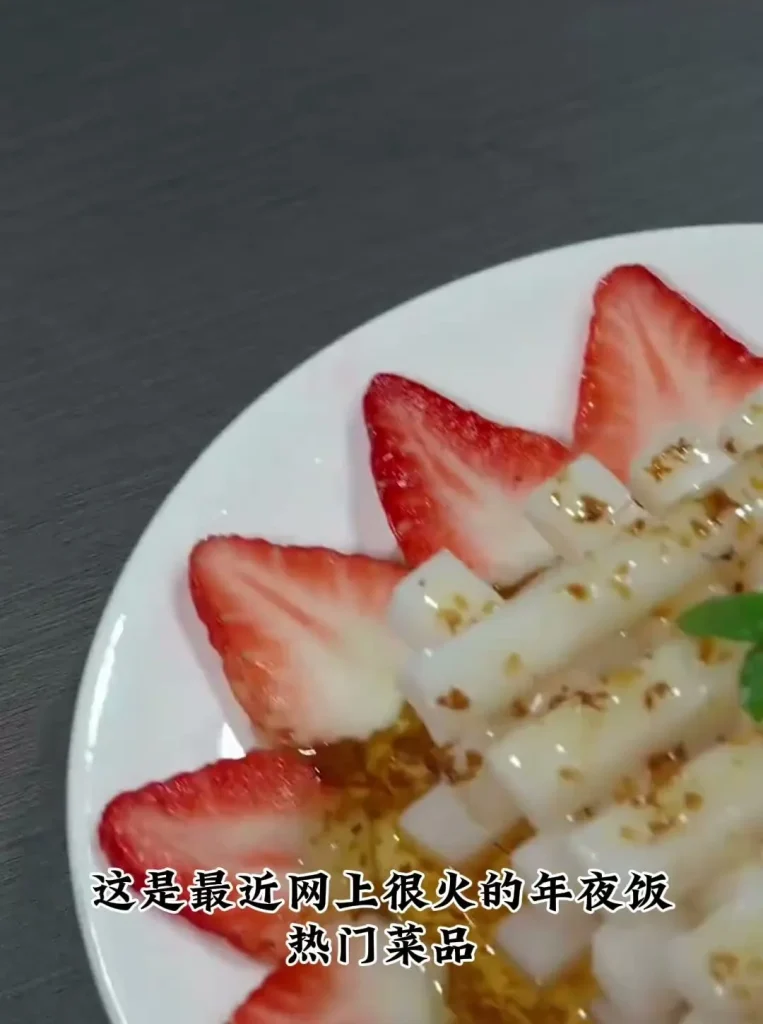
Peel the yam, cut it into short lengths and then into even sticks. Soak them for 5 minutes in water with a spoonful of white vinegar, then drop them into boiling water and cook just until done. Lift them out and drain.
Thinly slice a few strawberries. Lay the yam sticks out in rising steps, set the strawberries around them and drizzle with osmanthus honey. The white yam and red fruit make it one of the prettiest plates on the table.
Good Fortune on Top and Wealth Rolling In: two rolled New Year sweet balls
Two of these dishes are balls rolled by hand, and each gets its luck from a different detail. Hong yun dang tou (鸿运当头) means “good fortune right overhead,” and the red date pressed into the top of each ball is that fortune. Red dates are lucky in their own right, because zao sounds like “early.”
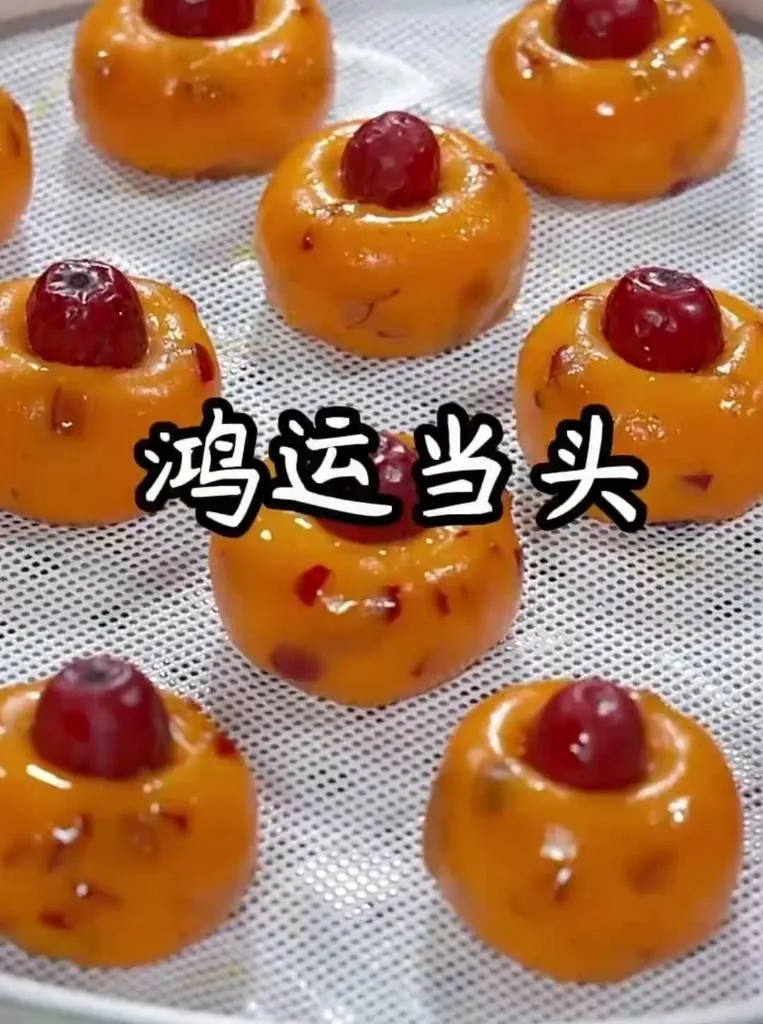
Steam sweet potatoes until soft and mash them. Add a bowl of glutinous rice flour, some chopped red dates and a handful of raisins, then pour in milk a little at a time and stir it into shaggy crumbs. Knead the crumbs into a smooth, slightly firm dough.
Roll the dough into balls, press a small dimple into the middle of each and set half a red date in it. Put them on a steamer and steam for 8 minutes. Keep the dough on the firm side so the balls hold their shape.
Cai yuan gun gun (财源滚滚) means “wealth rolling in,” and a heap of round balls is the rolling. The purple and white come from purple sweet potato and Chinese yam.
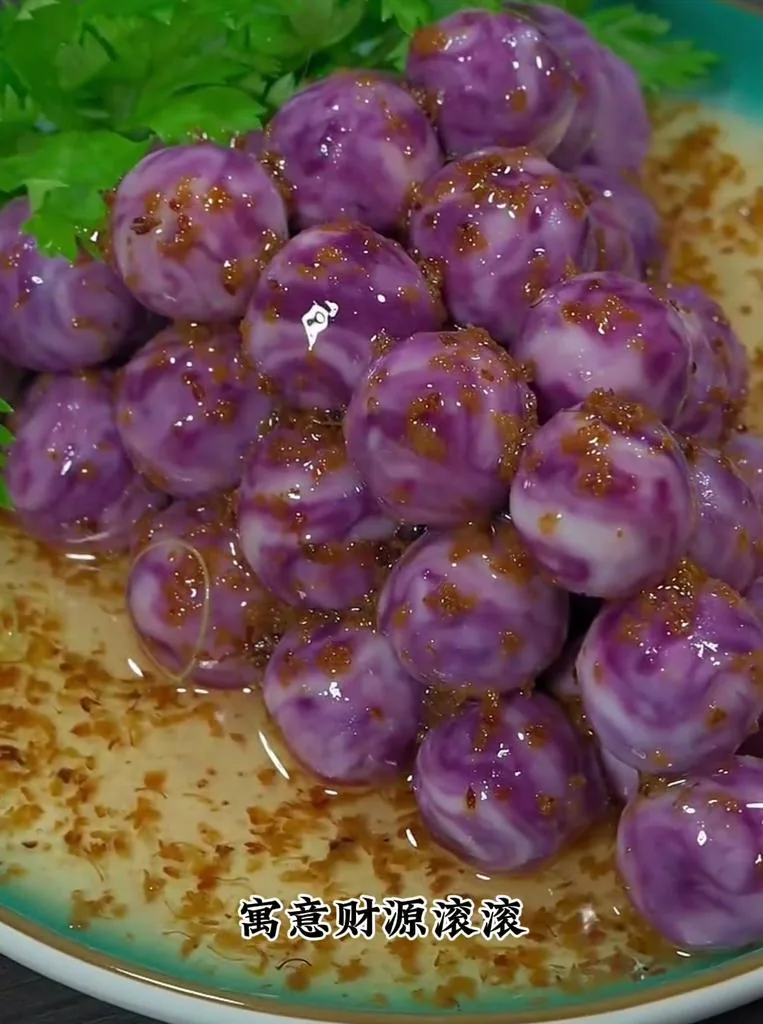
Cut the yam into short lengths and the purple sweet potato into thick slices. When the water boils, steam both over high heat for 15 minutes. Mash them with a fork, then roll the mash into small balls.
Pile the balls on a plate and drizzle with osmanthus syrup. Rolling them is easy enough for children to help with, which keeps them busy while the rest of dinner cooks.
More easy steamed Lunar New Year desserts with fruit and yam
Those four have names. The next four don’t, but they follow the same steam-and-syrup method, and they’re the answer when you want something sweet, simple and not baked.
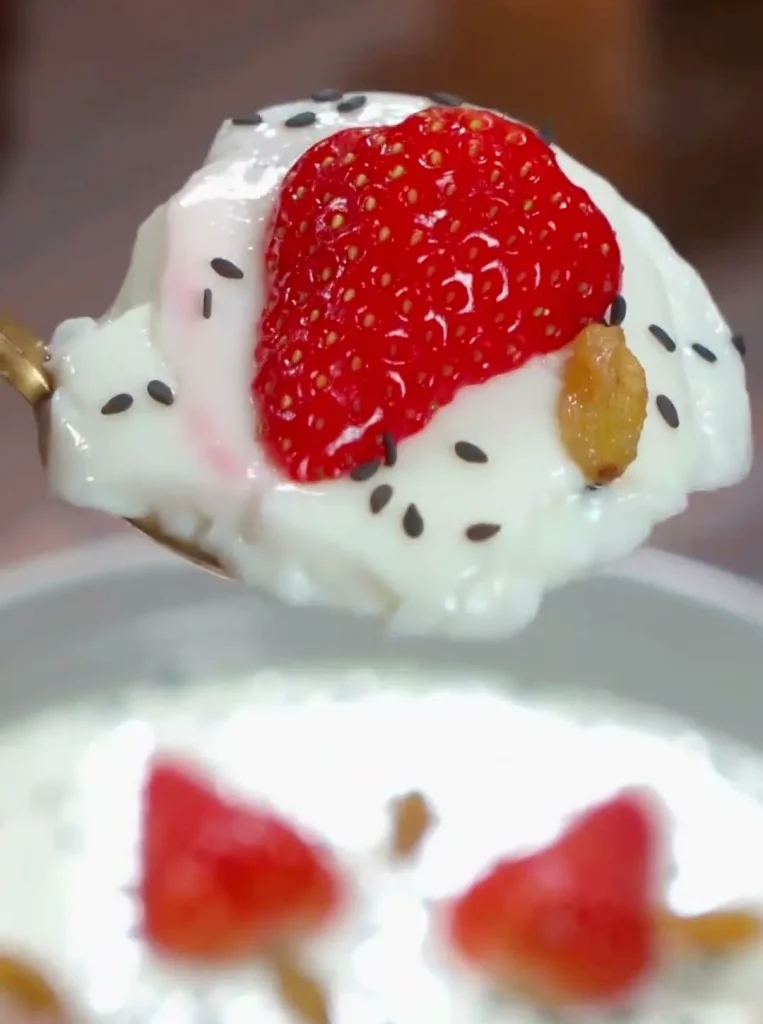
Steamed milk pudding. Crack three eggs, separate out the yolks and beat only the whites with chopsticks. Pour the whites into the milk, add white sugar and stir well. Once the water boils, steam the bowl for 15 minutes. Meanwhile toss raisins with a spoonful of flour and rinse them, which lifts the grit out of their wrinkles. Top the set pudding with fruit, the raisins and black sesame.
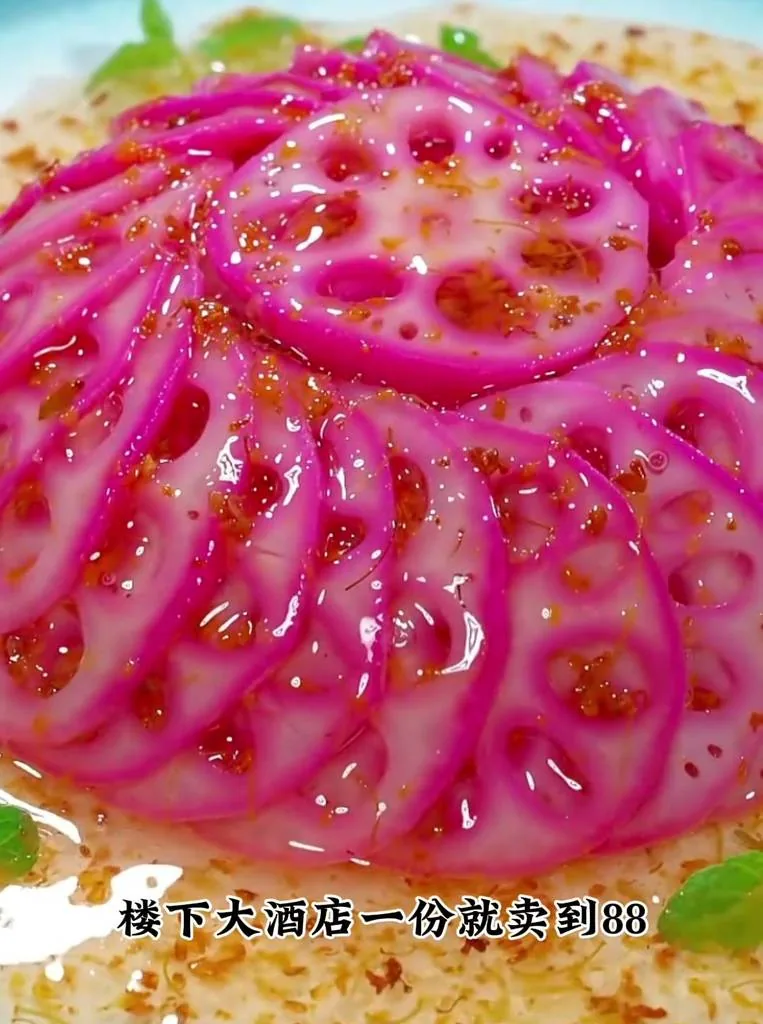
Pink lotus root flower. Peel a lotus root, trim the ends and boil it for 10 minutes with a spoonful of white vinegar. Drain it, then soak it for an hour in cooled boiled water colored with dragon fruit juice, which turns it pink. Slice it thinly, fan the slices into a flower and finish with osmanthus honey.
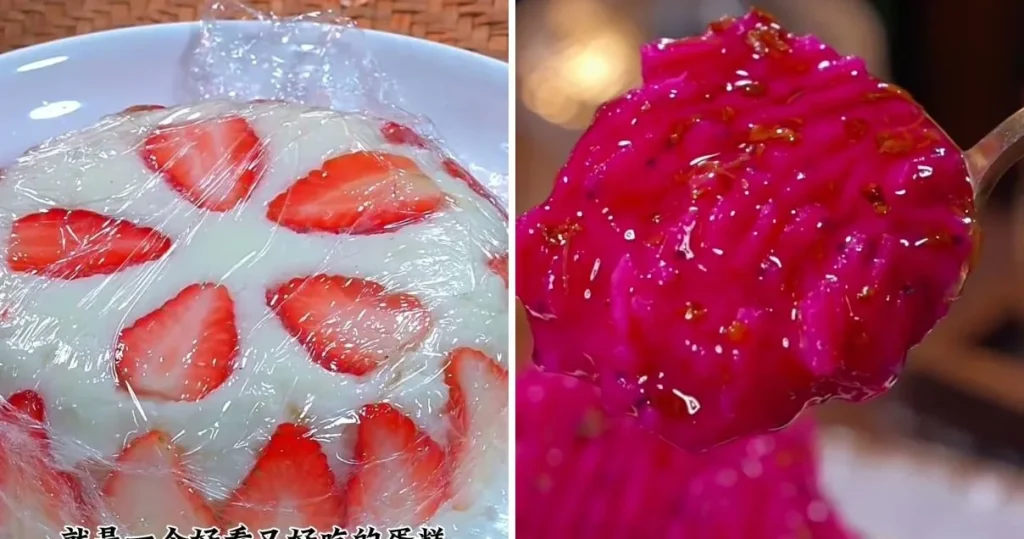
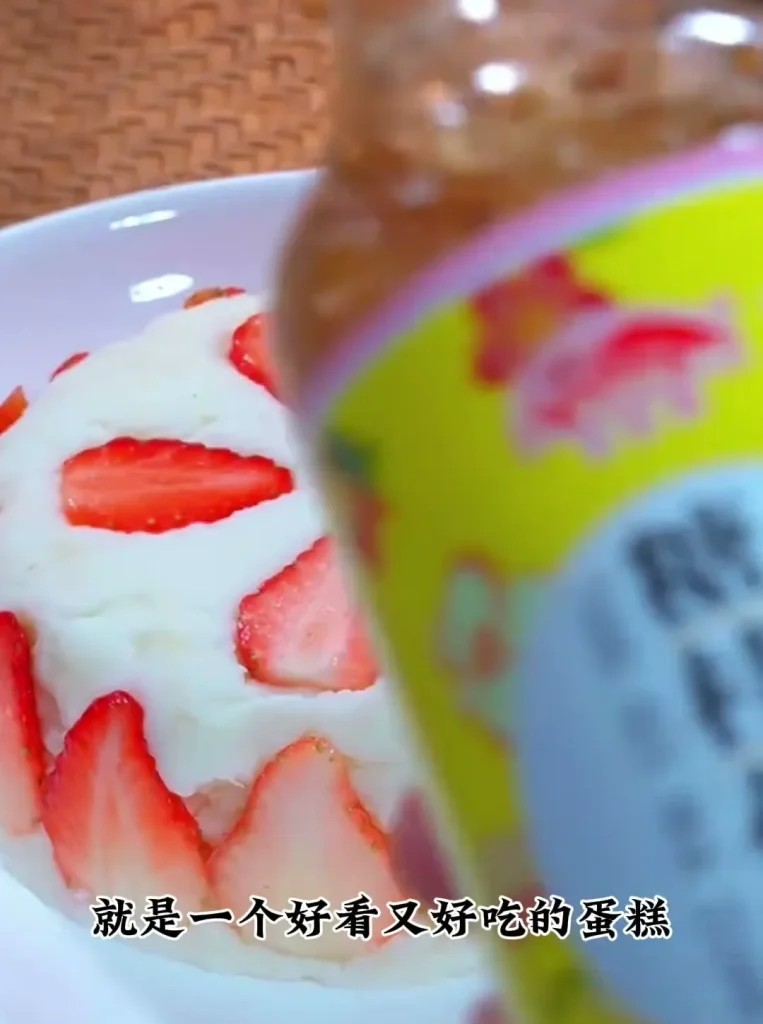
Strawberry yam cake. Peel the yam, cut it into pieces and steam over high heat for 15 minutes, then mash it with a spoonful of milk. Line a bowl with thin strawberry slices, press the yam in firmly and turn it out onto a plate. Osmanthus honey goes on last.
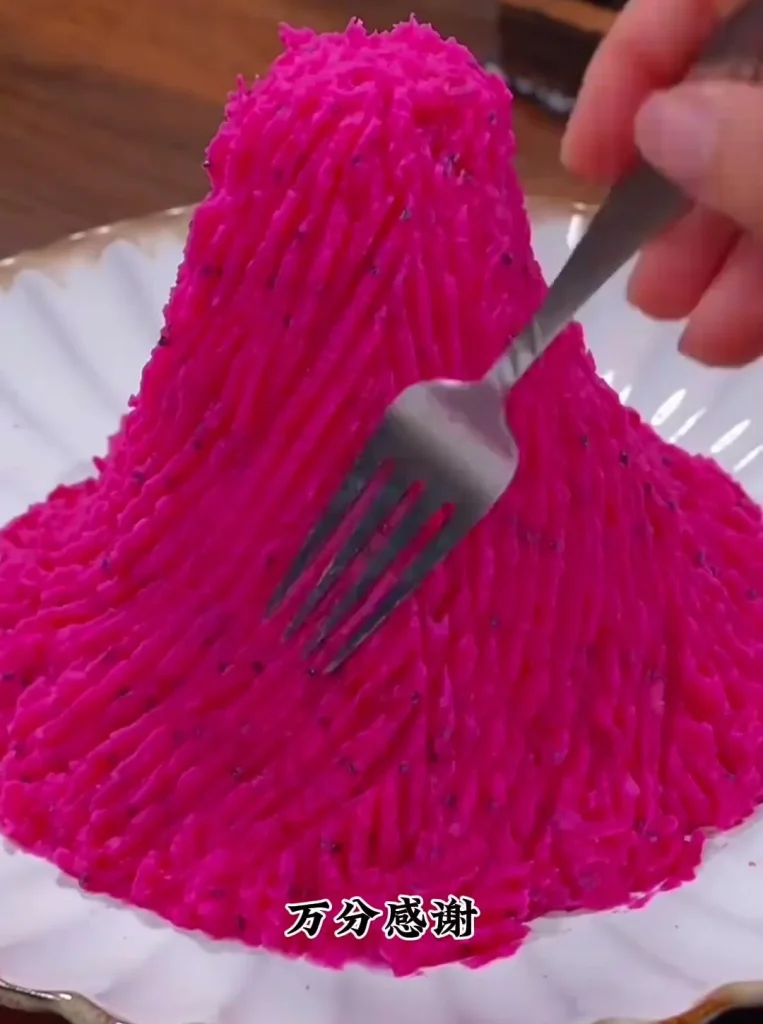
Dragon fruit yam mountain. Steam peeled pieces of yam over high heat for 15 minutes, until a chopstick slides in easily. Cut a red dragon fruit into small pieces, add it to the hot yam and squeeze the two together until the mash turns pink. Pile it into a mountain, mark it with a fork and pour osmanthus honey over it.
Planning a Lunar New Year dessert spread: what to make ahead and what to buy
With that many choices, the spread is easier to plan by deciding what to make and what to buy. Nian gao keeps well, so it can be steamed or bought days ahead and sliced and pan-fried at the last minute. Tangyuan are easiest bought frozen. Fa gao and the steamed dishes are best made on the day, since they’re at their best warm.
For a first New Year at home, I’d pick one traditional dessert, one dish with a lucky name and a filled candy tray. That covers a wish for a higher year, a plate for the dinner table and something to hand visitors.
For kids, the steamed balls and the yam mountain are the easy wins: no oil, no oven, and plenty of rolling and squeezing for small hands. Whatever you choose, say the name out loud when it goes on the table. At Chinese New Year, the name is half of what makes a dessert lucky.
Written by
Daozhang MaMaoshan Taoist, Jintan, Jiangsu
Daozhang Ma is a Maoshan Taoist who has practiced for 22 years and is skilled at writing talismans and painting Taoist pictures. He runs Zodiac & Tradition.
About Daozhang Ma