Chinese New Year Gift Etiquette: What to Bring and Avoid
By Daozhang MaMaoshan Taoist, Jintan, Jiangsu
In short
Anyone who visits a Chinese home during the New Year holiday brings a gift, and the etiquette around that gift is simpler than most guests expect. Bring something to eat or drink, packed in a gift box and ideally in a matching pair, hand it over with both hands while you say a New Year wish, and don’t expect the host to open it while you’re there. The host will usually answer with something in return, often a red envelope.
What you bring matters less than turning up with something in your hands, and the other rules, from even numbers to the gifts whose names sound like bad news, grow out of that one idea.
Bring a gift when you visit at New Year
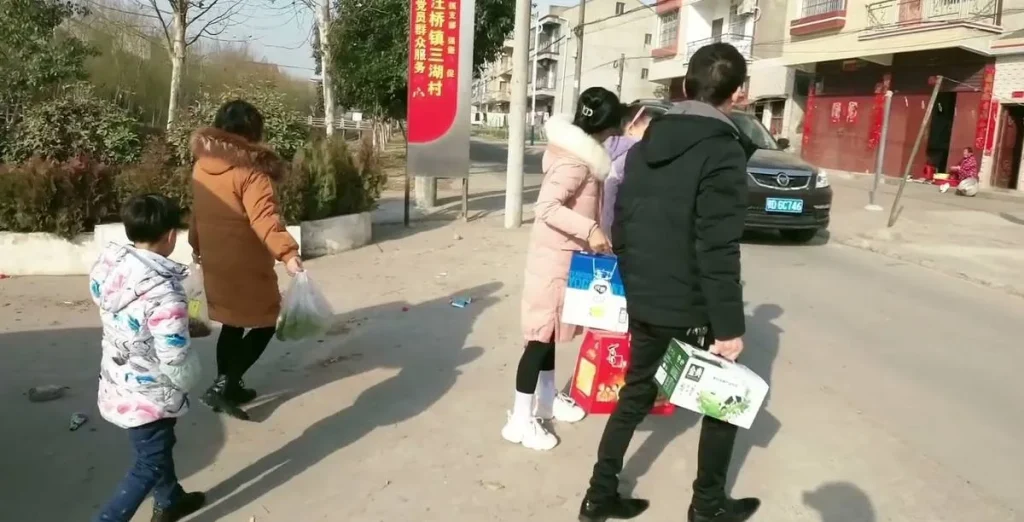
The gift belongs to bainian (拜年), the round of New Year calls that starts on the first morning and carries on through the following days. Younger people visit older relatives, married couples visit both sets of parents, and friends drop in on each other. In the countryside people say plainly that a gift is the one thing you can’t leave out when you call on relatives.

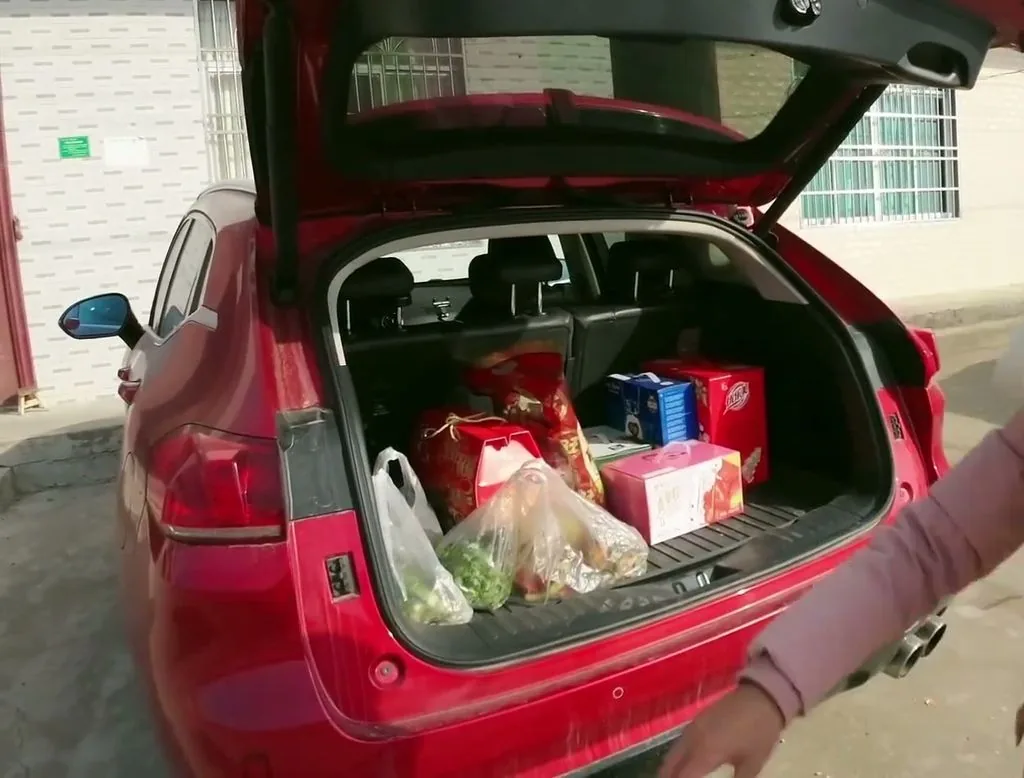
The amount is what guests worry about, and it counts for the least. A saying you still hear from older relatives is that how much you carry doesn’t matter, because what you’re really bringing is the relationship. A family with several houses to call on usually buys for all of them at once and loads the whole lot into the car before setting off.
The visit itself is often short. Many New Year calls today come down to setting the gifts down, trading a few polite greetings and moving on to the next house, especially in the crowded first days. I’d say a short call where the gift actually changes hands counts as a proper visit, and a long one with empty hands is the one people talk about afterward. The first-morning calls, kowtows included, get their own write-up under Chinese New Year’s Day customs, and the full Lunar New Year calendar and traditions puts the visiting days in order.
What Chinese New Year gifts look like: boxed food, drink and fruit
Most New Year gifts are things the household will eat or drink over the holiday. Boxed milk, fruit and nut drinks, herbal tea, candy, cookies, tea leaves and liquor are the usual choices in mainland China, sold in printed gift boxes with a carrying handle so they can be handed over just as they are. Fresh fruit is the other standby, and mandarins top the list, and the mandarins carried to a New Year visit have their own small set of rules.
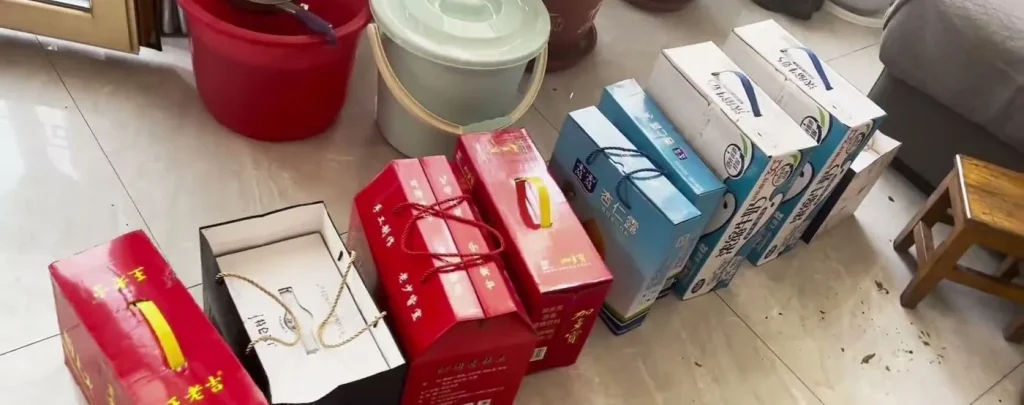
Nobody expects a New Year gift to be original. After the first few days a host’s floor can be lined with the same kinds of boxes, and it isn’t unusual for a few of them to go back out the door, unopened, on the family’s own visits. What guests do pay attention to is that the box looks new and festive. Red and gold packaging is the safe choice, and a plain carton from the back of a cupboard is not.
Why Chinese New Year gifts come in pairs
Even numbers are the safer choice for a New Year gift, and two of the same thing is the easiest even number to manage. The idea behind it is the saying hao shi cheng shuang (好事成双), “good things come in pairs,” which is why a visitor brings two cases of milk rather than one, or two bags of fruit. Gifts in even numbers matter most when a married daughter brings her husband home to her parents, since that is the one call of the holiday where people think hardest about what they carry in.
The one even number to skip is four, si (四), which sounds close to si (死), death. Two, six and eight are all fine. Eight gets picked on purpose for boxes of cakes or bags of oranges, since its name, ba (八), is a near rhyme for fa (发), the word for growing rich.
How to hand over a Chinese New Year gift: both hands and a wish
The handover is where the etiquette shows most. Offer the box with both hands, and let the greeting come out at the same moment the gift changes hands. Guonian hao (过年好), “happy New Year,” works for anyone, and xin nian kuai le (新年快乐) means the same and is just as common. Handing a gift over with one hand looks careless in a way most guests don’t intend, and older relatives notice.
Hosts often protest that you shouldn’t have, and some push the gift back once or twice before taking it. That back-and-forth is politeness, not refusal. Insist warmly, set the gift down somewhere out of the way, beside the door or on a side table, and move on to the greetings. Taking a gift too eagerly, or putting up no protest at all, can feel a little odd to older hosts.
Why hosts don’t open Chinese New Year gifts in front of you
A Chinese host usually puts the gift aside unopened, which surprises guests who are used to unwrapping on the spot. Opening it in front of the giver can look as if the host cares more about the present than the visit, and it puts both sides in an awkward position if the gift turns out to be small. Red envelopes follow the same rule: children are taught to thank the giver and open the envelope later. If you’re the host, do the same and thank the guest for coming rather than for the thing.
Return gifts at Chinese New Year: red envelopes and a share to take home
A New Year visit runs in both directions, and a gift rarely goes unanswered. In Hong Kong and Guangdong the usual answer is a red envelope, lai see (利是): when friends or relatives arrive bearing a gift, the host accepts it and gives lai see back. In many families the return is a red envelope for the visitors’ children, or a share of the host’s own food, and the oranges that came in a pair often leave in a pair as well. How much goes into those envelopes, and who gives to whom, is in my guide to giving red envelopes.
The other half of the exchange is the return visit. A family that called on you during the holiday expects you to call on them before it ends, with a gift of your own, and over the years the gifts between two households even out. Keeping that balance matters more than the price of any one box.
Which Chinese New Year visits call for the best gifts
Not every visit carries the same weight. The one that gets the most careful gifts is a married daughter’s trip home to her parents, which traditionally falls on the second day of the New Year, after the first day has been spent with her husband’s family. She brings her husband and children, and the couple arrives with gifts in even numbers. In some regions it’s the son-in-law’s own call on his wife’s parents, on the second or third day, that sets the standard.
After that, I’d put grandparents and the oldest relatives first, then uncles and aunts, then friends and neighbors. A gift for an elder can be simple, but it should never look like an afterthought, and for someone entering their own zodiac year, a red zodiac gift for a benmingnian is a separate custom that sits alongside the New Year visit.
Chinese New Year gifts to avoid: clocks, umbrellas and pears
Some gifts are avoided because of what their names sound like, and the three that come up most are clocks, umbrellas and pears. “Giving a clock,” song zhong (送钟), sounds the same as song zhong (送终), attending someone at the end of their life, which makes a clock the worst choice for an older relative. Umbrella, san (伞), sounds like san (散), to scatter or break up, and pear, li (梨), sounds like li (离), to part, so both are commonly said to be bad gifts for a couple.
A few families get around the clock rule by having the receiver pay a token coin, so the clock is bought rather than given, but at New Year it’s easier to pick something else. Knives, scissors and white or black wrapping are on the same list for similar reasons, and the longer set of New Year don’ts is in Chinese New Year superstitions and what not to do.
Where the Chinese New Year gift custom comes from
Trading gifts at the turn of the year is old. In the Northern Song dynasty the poet Su Shi wrote a poem called Kuisui (馈岁), “gifts for the year’s end,” and in its preface he describes the custom in his home region of Sichuan: at the end of the year people sent one another gifts, invited each other to eat and drink, and then stayed up through New Year’s Eve. The live chickens and ducks people once carried to relatives have mostly turned into printed gift boxes, but the visit and the gift still go together.
The whole etiquette fits in three habits: go, bring something in a pair, and give it with both hands. A host will forgive the wrong brand of milk far sooner than an empty-handed visit, and the rest of the holiday’s customs are collected at Zodiac and Tradition.
Written by
Daozhang MaMaoshan Taoist, Jintan, Jiangsu
Daozhang Ma is a Maoshan Taoist who has practiced for 22 years and is skilled at writing talismans and painting Taoist pictures. He runs Zodiac & Tradition.
About Daozhang Ma