Chinese New Year’s Day: Dates, First-Day Customs and Food
By Daozhang MaMaoshan Taoist, Jintan, Jiangsu
In short
The first day of the first lunar month, zhengyue chuyi (正月初一), is Chinese New Year’s Day, and in 2027 it falls on Saturday, February 6, opening the Year of the Goat. It’s the day the new year actually begins. Firecrackers go off right after midnight, families get up early to greet their elders, breakfast is dumplings in the north and sweet tangyuan in much of the south, and many people visit a temple or the family shrine before noon.
The night before belongs to the reunion dinner; the first day belongs to visiting. In a northern village that can mean kneeling at door after door before the sun is fully up, and in a Cantonese home it can mean a day without meat.
New Year’s Day in Chinese: chuyi, Chunjie and yuandan
Chinese has a few words for the first day of the lunar year, and the one people say most at home is da nian chuyi (大年初一), “the big first day of the year.” Calendars and formal writing use zhengyue chuyi, the first day of the first month. The whole holiday, which runs to the Lantern Festival two weeks later, is the Spring Festival, Chunjie (春节).
How many days is Chinese New Year? By custom it lasts fifteen days, from New Year’s Day to the Lantern Festival on the 15th day, or sixteen if you count New Year’s Eve; counted from the Little New Year, it runs a little over three weeks. The public holiday is shorter. Under the State Council’s 2024 revision of the holiday rules, in force since 2025, mainland China gives four statutory days, the Eve and the first three days of the new year, and moves weekend workdays around them to lengthen the break: eight days in 2025 and nine in 2026 and 2027. The 2026 break even began on February 15, the day before the Eve. In 2027 it runs from February 5, the Eve, to February 13.
The word that trips English speakers up is yuandan (元旦). For centuries it meant the lunar New Year’s Day. When China moved its official calendar to the Western one after the last dynasty fell, the old name went to January 1, and the lunar festival was renamed Chunjie. So if you ask a Chinese speaker for “New Year’s Day in Chinese,” you may get yuandan, which today means January 1, not the festival.
On the day itself the greetings you’ll hear are xinnian kuaile (新年快乐), “happy new year,” and gongxi facai (恭喜发财), “wishing you wealth.” In northern villages people also say guonian hao (过年好), roughly “good New Year to you,” at every door. The Lunar New Year guide puts the first day in its place in the fortnight, between the Little New Year a week or so earlier and the Lantern Festival on the 15th.
When is Lunar New Year celebrated? Chinese New Year’s Day dates
Chinese New Year’s Day moves on the Western calendar because the Chinese calendar follows the moon. In most years it is the second new moon after the December solstice, which keeps it inside a window from January 21 to February 20. The table answers the other common question, what lunar new year it is, by giving the animal that starts on each date.
| Year | Chinese New Year’s Day | Zodiac animal that begins |
|---|---|---|
| 2026 | Tuesday, February 17, 2026 | Horse (Fire Horse) |
| 2027 | Saturday, February 6, 2027 | Goat (Fire Goat) |
| 2028 | Wednesday, January 26, 2028 | Monkey |
| 2029 | Tuesday, February 13, 2029 | Rooster |
| 2030 | Sunday, February 3, 2030 | Dog |
The new year starts at midnight Beijing time, which is still late morning on the Eve in New York. Families in the United States keep the day by their own calendar and their own clock. The holiday is celebrated the same way whether February 6 falls on a weekday or a weekend; in mainland China the official break is usually stretched to eight or nine days by moving weekend workdays.
Opening-door firecrackers start Chinese New Year’s Day
In much of China the first day starts with noise at the stroke of midnight. Many families wait until the clock passes twelve before lighting anything, so that the first string of the year belongs to the new year and not the old. This string is called kaimen pao (开门炮), the “opening-door firecrackers,” and it is hung from the door frame and set off at the doorway.
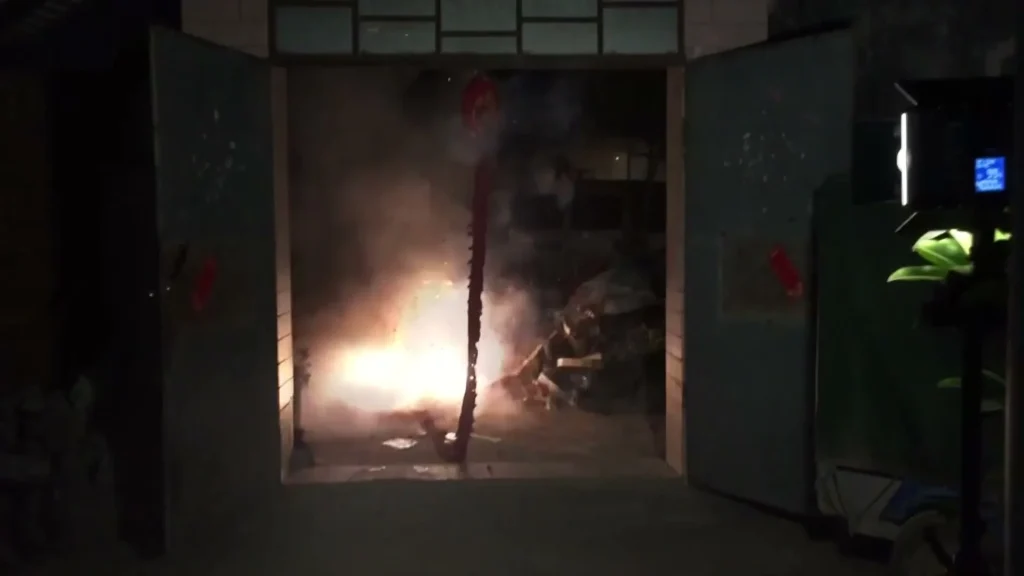
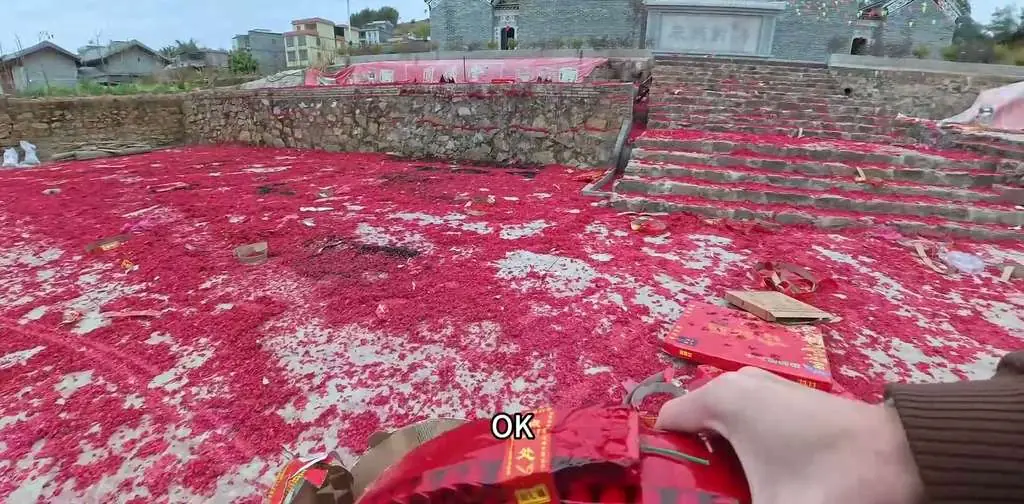
Where firecrackers are still allowed, the bangs carry on until dawn, and by morning the open ground in front of houses and village halls is red with spent paper. Many families leave the red paper lying for the whole day, and some for longer. The Chinese New Year superstitions guide explains why the broom waits and on which day it comes back out.
Bainian: paying New Year calls on the first morning
The main business of Chinese New Year’s Day is bainian (拜年), paying New Year calls. Younger people go to the homes of their elders, wish them a good year and receive good wishes back. In cities this often means a visit to grandparents and a few phone calls. In the countryside it can mean every house in the clan before breakfast is over.
Kowtowing to ancestors and elders in a northern village
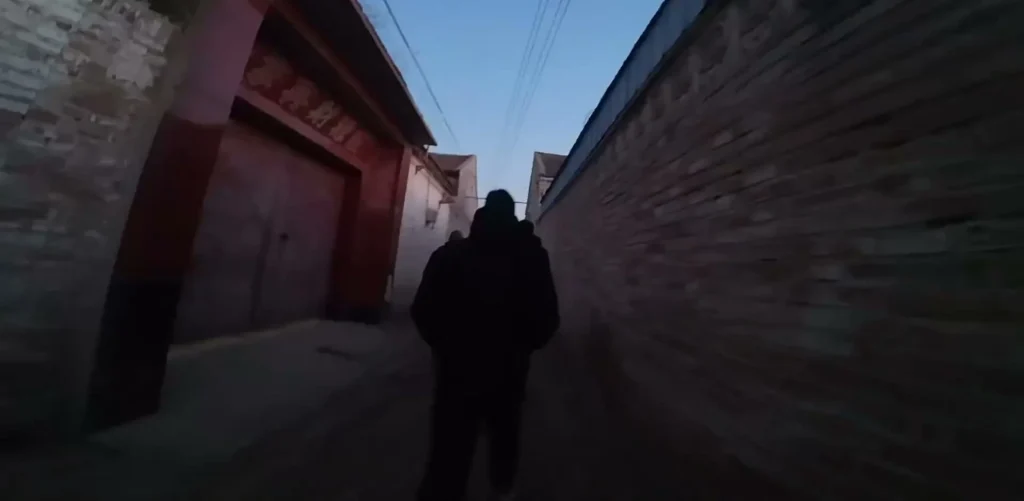
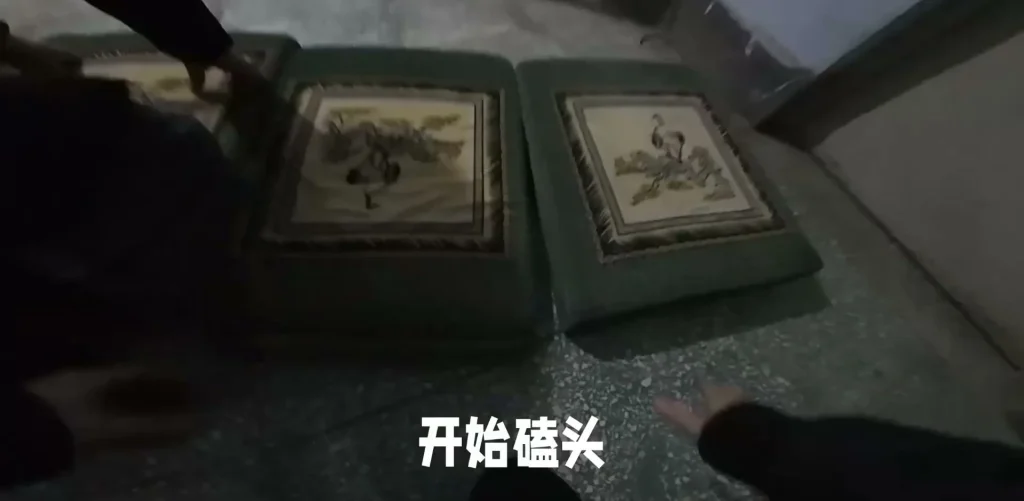
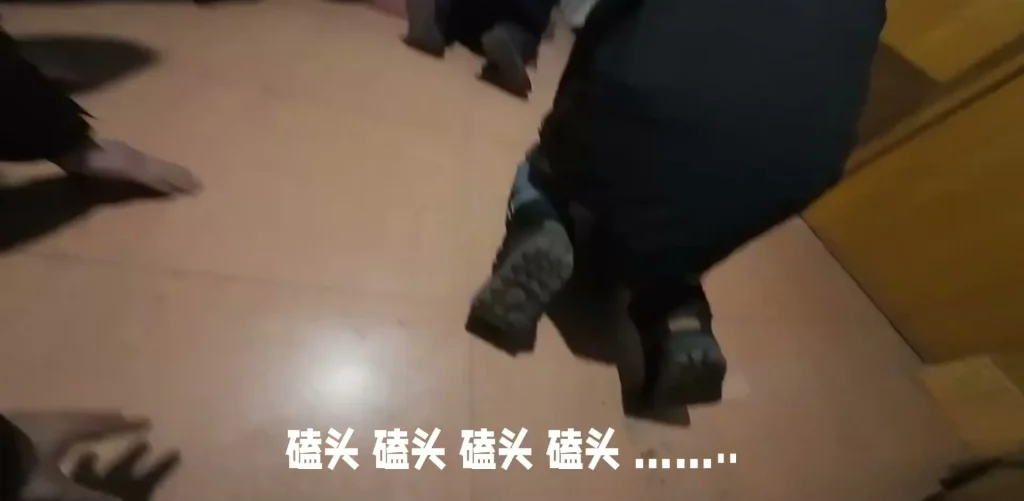
In parts of rural Hebei the calls start in the dark. Before anyone leaves the house, the family kneels and kowtows to the ancestors at home, a bow to the forehead in front of the ancestral tablet or portrait. Cushions are laid on the floor for it, because the same knees will be kneeling again at every door that morning.
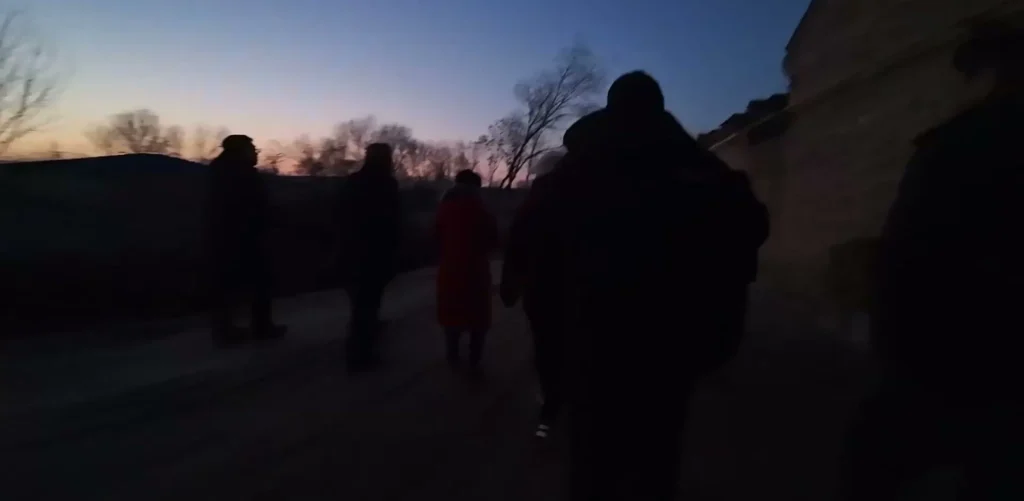
Then the family sets off in a group, still in winter coats, while the sky is only just turning orange. They walk from one relative’s house to the next along the village lanes, and nobody expects to be home before full daylight.
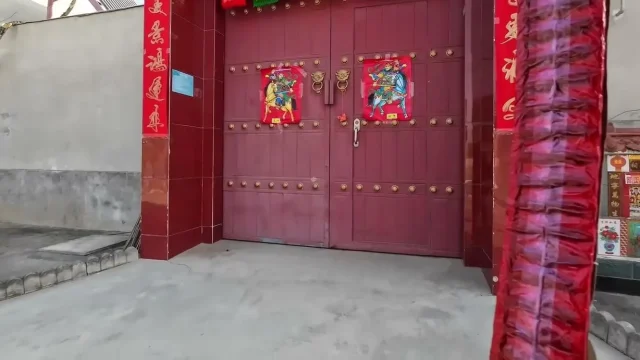
The red couplets pasted up on the Eve are still bright on every gate, which is how you tell which houses are keeping the New Year. A family in mourning often skips the red couplets that year, and in many places its members stay home rather than go out on calls.
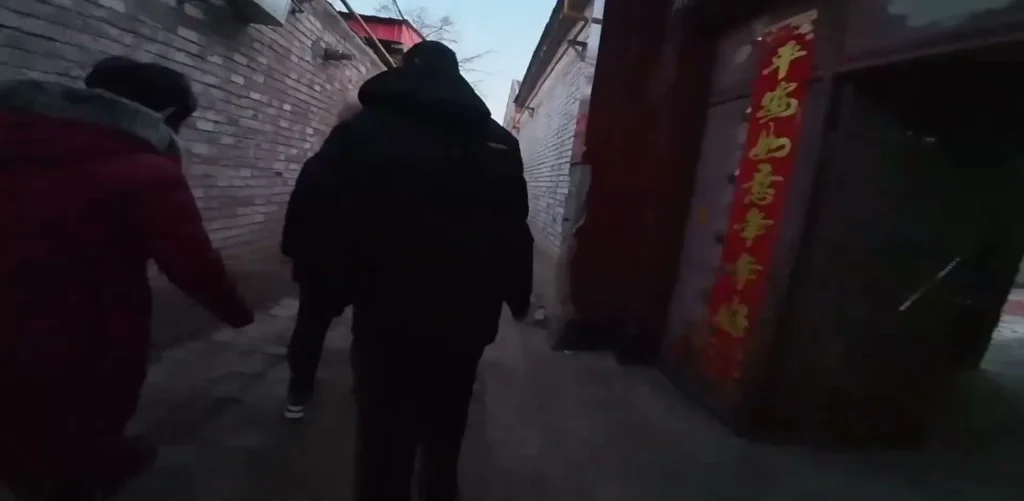
Inside each house the visitors say guonian hao and kneel to the oldest people present. The kowtow is quick, often done by several people at once, and the elders usually wave them up before they’re finished. It isn’t a solemn ritual so much as a greeting with the whole body, and the visitors are soon back out in the lane.
Red envelopes on New Year’s morning
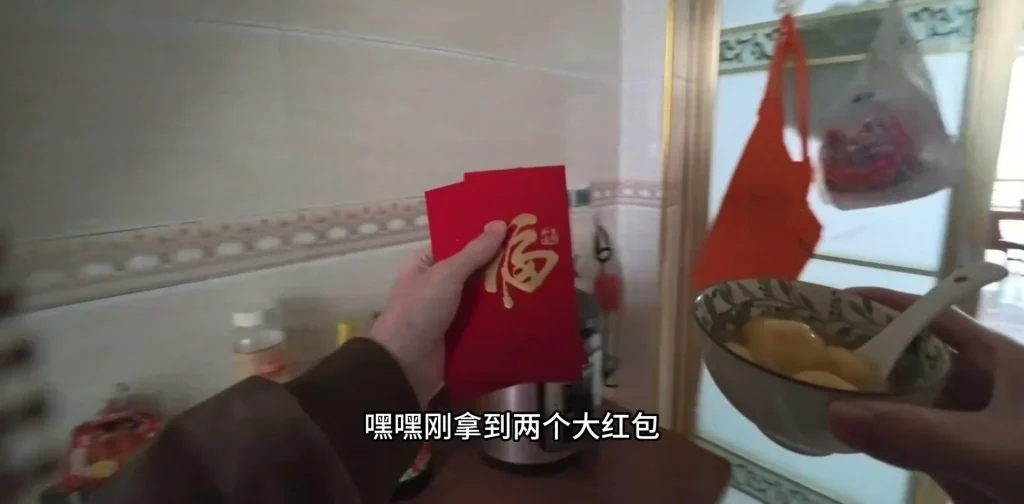
Children who kowtow or bow to an older relative are usually handed a red envelope, hongbao (红包), with money inside. Some families give them on the Eve and some on the first morning, and in many homes it’s both. Envelopes are given and received with both hands, and children aren’t supposed to open them in front of the giver. Who gives how much is covered in the red envelope etiquette guide.
Chinese New Year’s Day food: dumplings, tangyuan and a meatless meal
Breakfast on the first day depends on where you are. In northern China it is dumplings, jiaozi, usually wrapped the night before so nobody uses a knife in the morning. Their crescent shape is said to look like old silver ingots, which turns a plate of them into a plate of money. The fillings and folds are covered in dumplings for Chinese New Year.
In much of southern China the first breakfast is tangyuan (汤圆), glutinous rice balls in hot syrup or soup. The round shape and the name, which sounds like tuanyuan (团圆), “reunion,” make them a wish that the family stays together. Fillings run from black sesame and peanut to newer flavors; one Guangdong family’s bowl on this morning was durian.
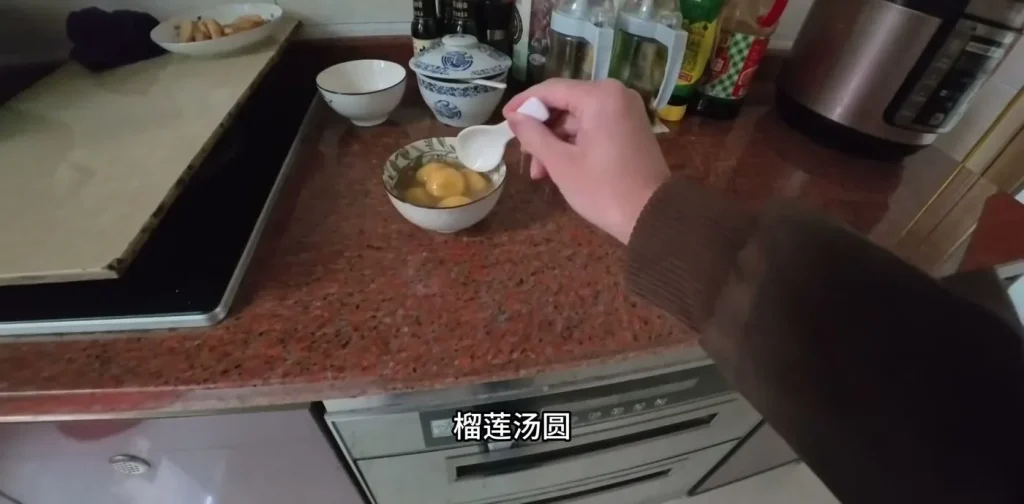
The red envelopes often turn up at the same table, handed over by parents and grandparents before the bowls are empty.
Many Cantonese families keep the first day meatless. In these homes only vegetable dishes are served on New Year’s Day and nothing is killed in the kitchen, a habit that comes from Buddhist practice. The usual dish is jai (斋), also called Buddha’s delight, a braise of dried mushrooms, bean curd, glass noodles and vegetables. Meat comes back to the table on the second day.
Temple and shrine visits on the first day of the lunar new year
The morning calls are for the living; many families also set aside part of the first day for gods and ancestors. In the southern countryside it’s common to drive back to the home village after breakfast and worship at the clan hall or village shrine. Tea and wine are poured out, incense is lit and paper offerings are burned, all of it in the old order.
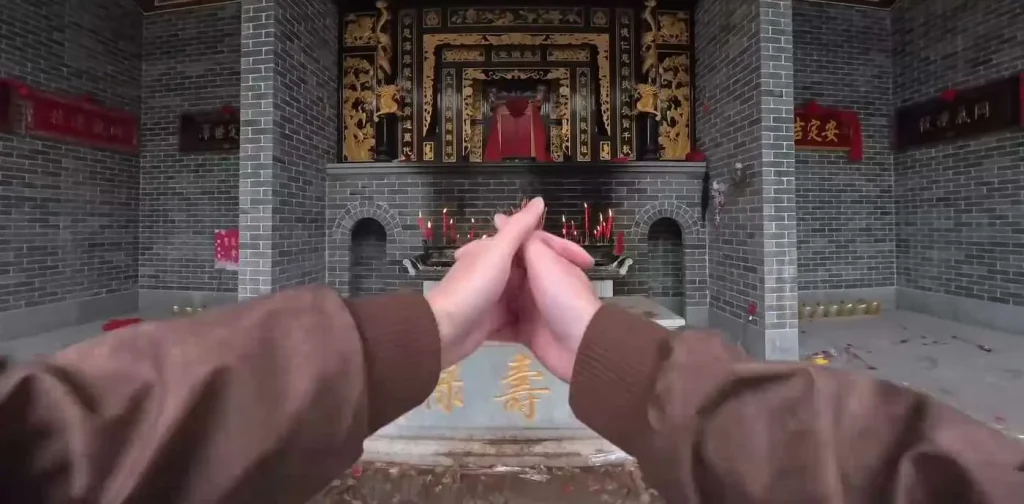
City temples, Taoist and Buddhist alike, are crowded from midnight on. Many people try to light the first stick of incense of the year, touxiang (头香), in the belief that the first offering carries the most luck, so the queues start well before midnight on the Eve. From where I stand, the hour matters much less than the intention. A stick of incense lit calmly at nine in the morning is not worth less than one fought for at midnight.
New clothes, temple fairs and the rest of Chinese New Year’s Day
Most people put on new clothes on the first morning, from the underwear out, and red is the favorite color, especially for children and anyone in their zodiac year. The idea is simple: you meet the new year looking new. Older relatives notice, and a child in new shoes is the photo every family takes that morning.
The afternoon is looser. In many towns temple fairs, miaohui (庙会), open on the first day, with food stalls, toys, opera and lion dances in the grounds of a temple or park. Families who stayed in the village play cards or mahjong, snack on melon seeds and candy, and receive the neighbors who are still making their rounds.
Few households do any serious housework on the first day, and most avoid anything that sounds like loss or ending. On the second day it’s the married daughters’ turn to visit their parents, and the calls go on for most of the first week. The night before all of this, Chinese New Year’s Eve, is when the reunion dinner and the staying-up happen.
Lunar New Year’s Day outside China: Seollal, Tet and the United States
Lunar New Year’s Day is not only Chinese. Koreans keep it as Seollal (설날) and Vietnamese as Tet, usually on the same date, with their own foods and customs. That’s why many Americans say “Lunar New Year”: it covers every community that starts the year on this new moon, while “Chinese New Year” names one of them. In 2027 South Korea’s Seollal comes a day later, on Sunday, February 7, because the new moon falls just after midnight in Seoul but just before it in Beijing.
In the United States the first day is often a working day, so community celebrations, parades and lion dances tend to move to the nearest weekend. New York City’s public schools close for Lunar New Year. At home, many Chinese American families keep a short version of the day: dumplings or tangyuan for breakfast, a call to grandparents, and red envelopes for the children.
My advice to a guest spending the first day with a Chinese family comes down to three things. Say xinnian kuaile to the oldest person first, accept anything offered with both hands, and don’t worry about the kowtow, because nobody expects it from a visitor and a small bow does the job. If this is your first Chinese New Year, the Zodiac and Tradition home page starts you on the twelve animals and the rest of the festival year.
Written by
Daozhang MaMaoshan Taoist, Jintan, Jiangsu
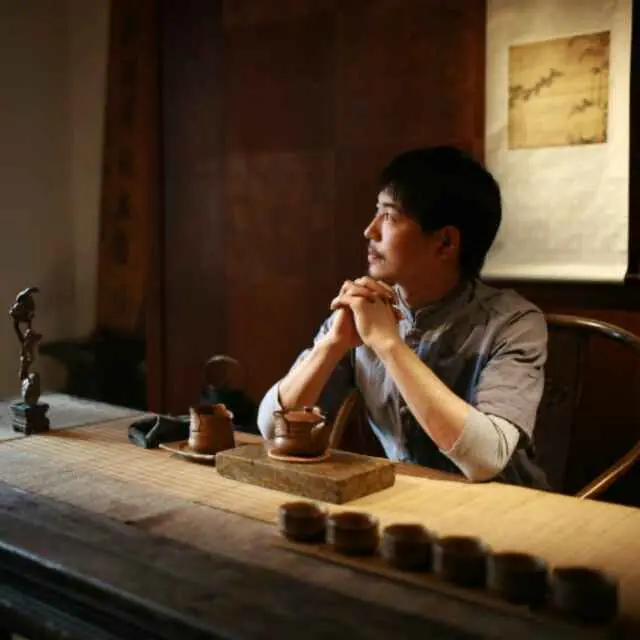
Daozhang Ma is a Maoshan Taoist who has practiced for 22 years and is skilled at writing talismans and painting Taoist pictures. He runs Zodiac & Tradition.
About Daozhang Ma