Lion Dance in Chinese Weddings and Business Openings
By Daozhang MaMaoshan Taoist, Jintan, Jiangsu
In short
Shop owners and couples book a lion for the same reason: a first day is when they most want luck at the door. At a Chinese business opening, the lion has its eyes dotted, bows to the shop, takes the greens and blesses the place for trade. At a Chinese wedding, it walks with the couple’s car or works the reception, and the blessing lands on the marriage. Troupes that publish a running time for weddings list about 15 to 20 minutes.
I’ve stood in those opening crowds with a brush in one hand and a lion’s fur under the other, and the part nobody explains is the words. So I’ll go through why people hire a lion, what happens at a shop door, the drum and pole, what guests do, how weddings differ, and what a host needs to get ready.
Why shops and couples hire a lion for a first day
A lion is hired for a beginning because its oldest job was clearing the road. In a Buddha statue’s parade in Northern Wei Luoyang, a lion walked in front to drive off evil spirits, and the full lion dance story runs from there to today’s two-person costume. A new shop is a road nobody has walked yet, and so is a marriage.
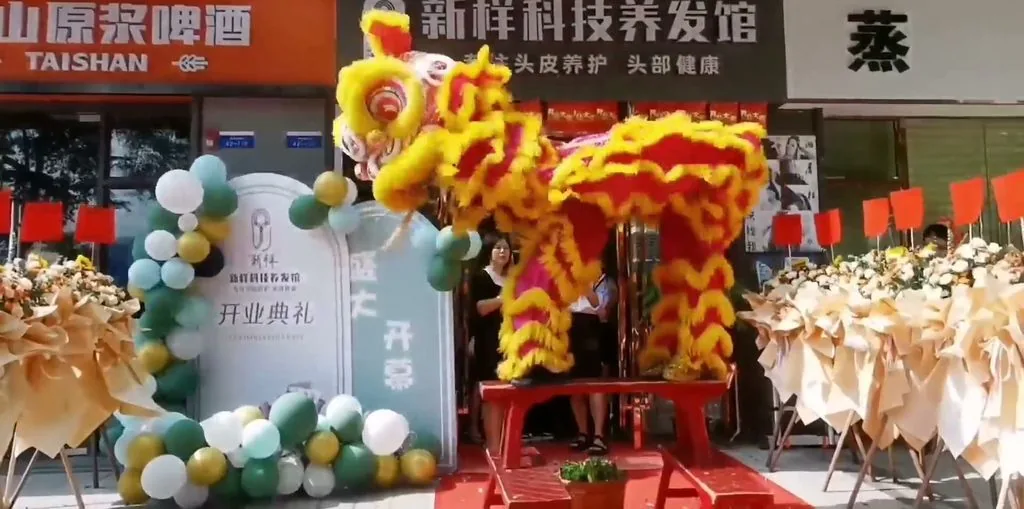
The second reason is plain noise and attention. A drum on the pavement tells the whole street that a door has opened, and people who’d never have looked at a new hair salon stop and film it. I don’t think any owner is embarrassed about that. A blessing that also pulls in customers on day one is good value.
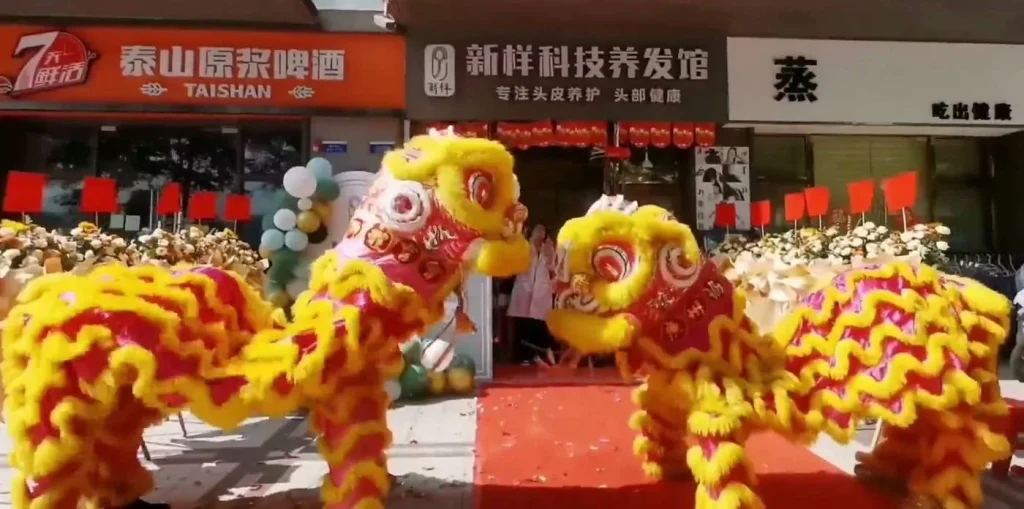
What happens at a business opening, from offerings to the greens
Once the crowd is there, a shop opening follows a rough order, though every troupe has its own habits. The version below is the one I’ve watched most often in full: table first, then greens, ribbon, eyes, and only after that the dancing.
Offerings and greens go up before the drum gets serious
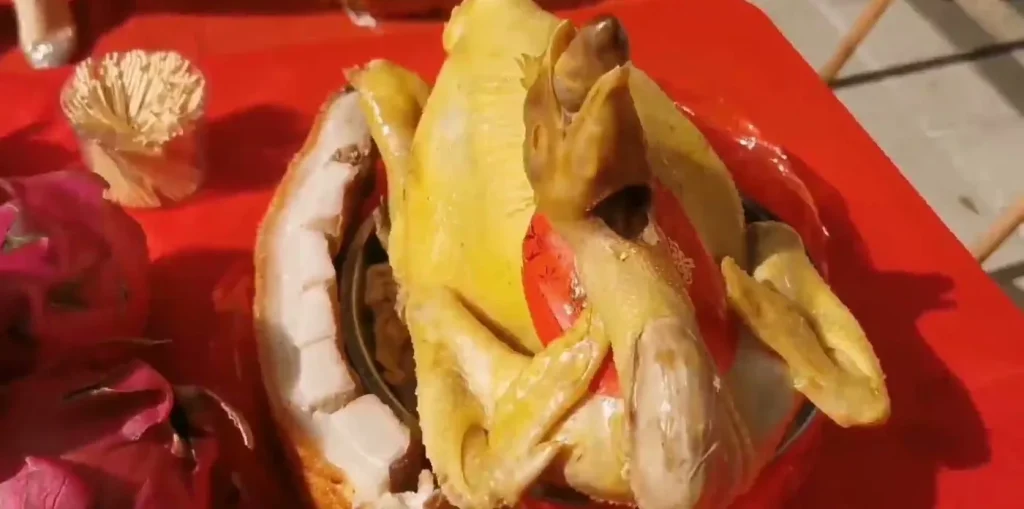
The table comes first. A whole boiled chicken, a slab of pork and fruit go out on red cloth, the same kind of plate I’d set in front of a temple altar, and the cooked meat is left whole. Dragon fruit turned up on the last one I saw, mostly because it’s red and big.
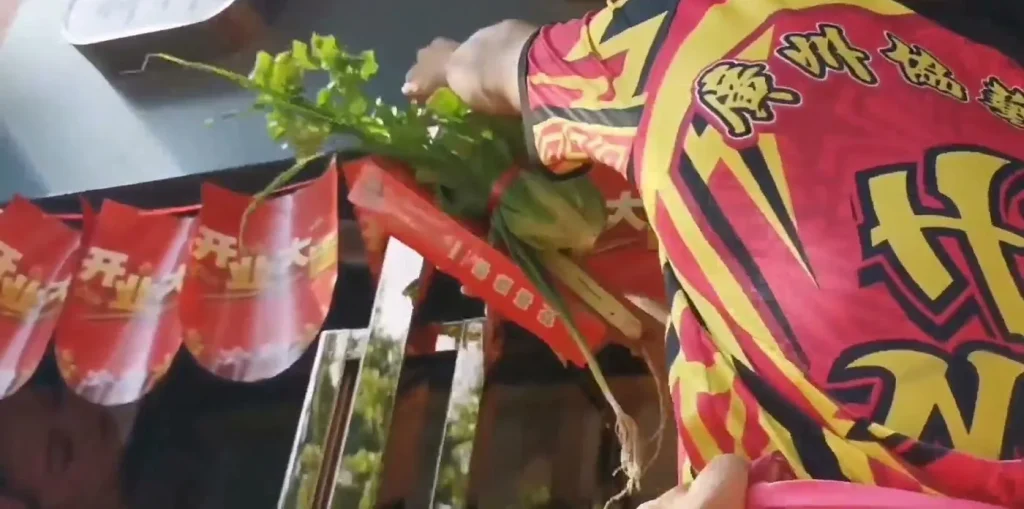
Next, someone from the troupe ties bunches of greens at the door, sometimes in more than one spot. The word for picking greens, cai, sounds like the word for fortune, so the bunch is the lion’s food and the shop’s money in one object. A red envelope for the troupe is usually tied in with the leaves.
The four dots that wake a shop-opening lion
Dotting the eyes turns a costume into xing shi (醒狮), an awakened lion. At a shop opening you may be handed a brush along with everyone else, and a caller gives one line per dot. The wording changes from troupe to troupe, but these are the four lines I’ve heard:
- Left eye: 左点金, “dot the left for gold.”
- Right eye: 右点银, “dot the right for silver.”
- Forehead: 三点天庭福星高照, “third, the forehead, and a lucky star shines down.” Tianting (天庭) is the old word for the upper forehead.
- Tongue: 四点狮脷大吉又大利, “fourth, the lion’s tongue, for great luck and great profit.”
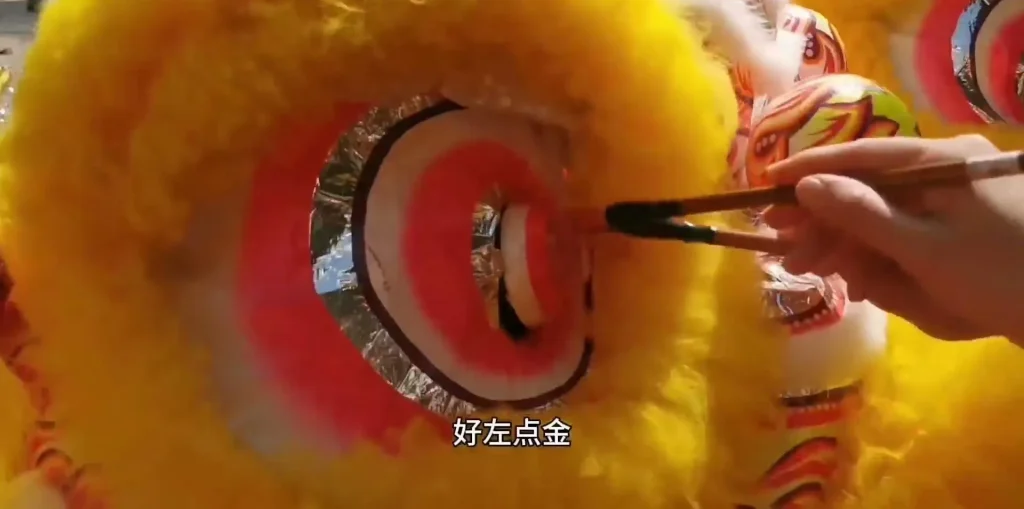
That last line hides the best joke in the ceremony. Cantonese speakers avoid the usual word for tongue because it sounds like losing money, so they say lei (脷) instead, which sounds like profit. A shop owner’s brush is literally touching the lion’s profit.
I take this step more seriously than most of the crowd does. A new statue on my altar table only counts as consecrated after kaiguang (开光), and that rite starts at the eyes, so a brush near a lion’s eye never looks like decoration to me. The first time someone handed me a brush at an opening, I slowed down and the caller had to wait.
Taking the greens at the shop door
With its eyes open, the lion goes to work on cai qing (采青), “plucking the greens.” It bows to the door and often to the cash register or the shrine inside, creeps up on the bunch, backs off, then takes it. It chews the leaves and spits them back toward the shop and the crowd, because that shower is the blessing being handed over.
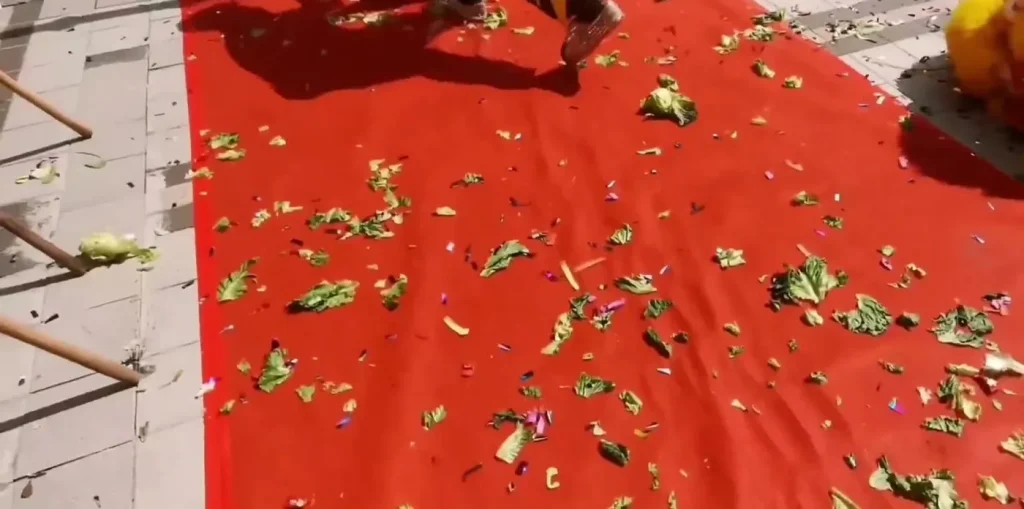
Don’t rush to clean up. I’ve seen owners leave the torn leaves on the carpet until the last guest goes, and I’d do the same, since it’s the only part of the show you get to keep for a while.
How the drum, pole and scroll finish a shop opening
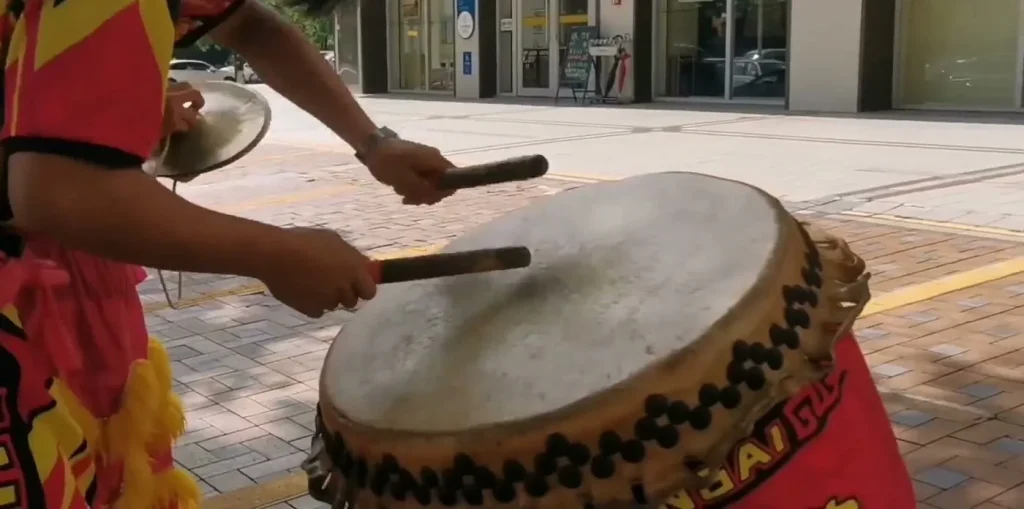
The greens are the blessing, and the rest is the spectacle that gets paid for. All of it hangs on the drum. One drummer leads, a cymbal player keeps time alongside, and the lion’s moves follow the beat rather than the other way around, which is why the drum gets called the heartbeat of the lion. When the drum goes quiet, watch the lion’s head, because that’s when it’s sniffing.
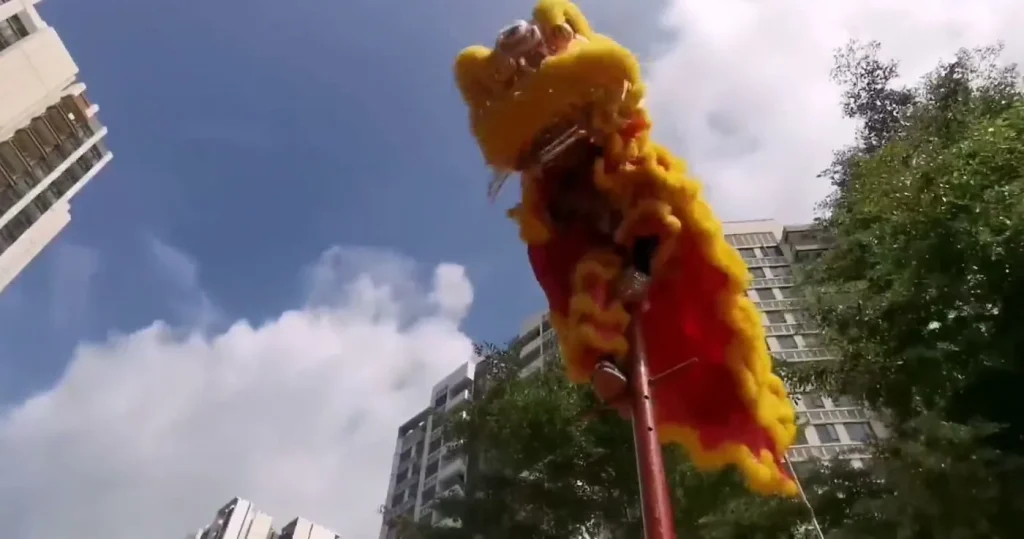
Bigger openings add a pole. Troupes stand a red pole on a flat base out on the pavement, and the lion rears up beside it before it climbs. From where I stood, the top was well above the shop’s ground floor, which is why this routine needs a wide pavement and a clear sky.
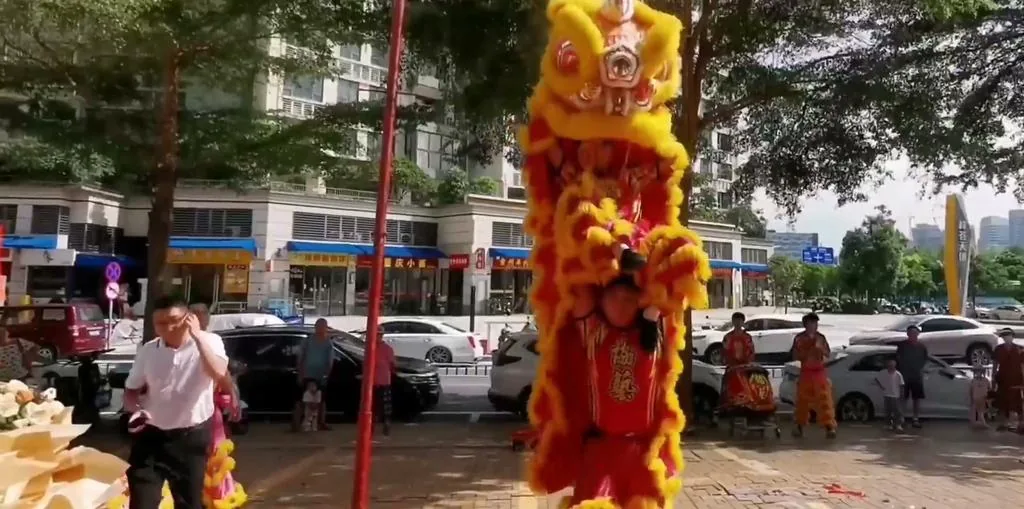
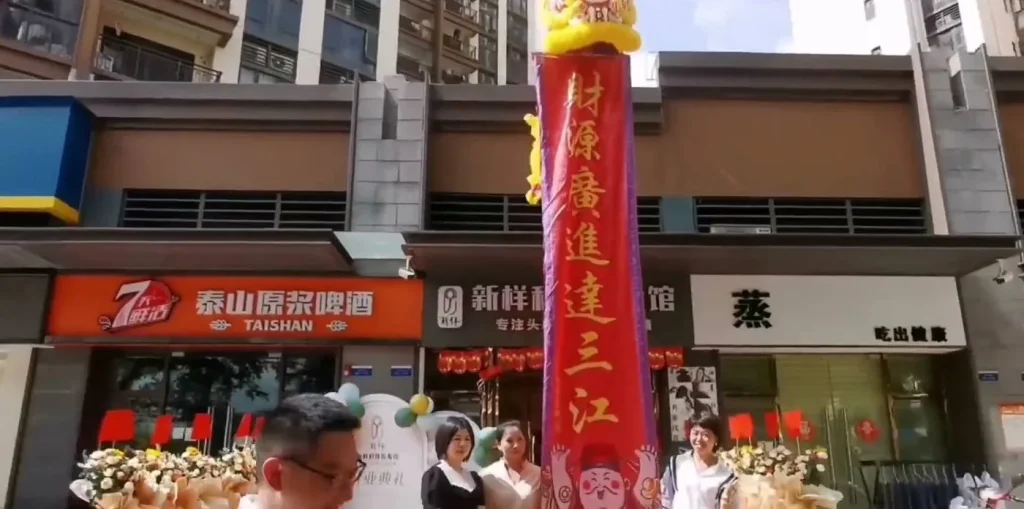
At the top, the lion lets a long red scroll drop. The line on it is half of a famous shop couplet, 生意兴隆通四海,财源广进达三江: business reaches the four seas, and wealth rolls in from three rivers. Any couplet wants a partner, so I always look for the other half on the door.
Why opening guests all want to touch the lion
When the scroll is down, the lions usually go inside, and guests get their turn. This is the part I enjoy without any reservation. Touching the lion passes its luck on to you, and the caller will tell you exactly where to put your hand. I’ve heard two lines over and over:
- 从头摸到尾,一年顺到尾: rub it from head to tail and the year runs smooth to its end.
- 摸摸狮子的屁股,生意越来越兴: pat the lion on the backside and business keeps growing.
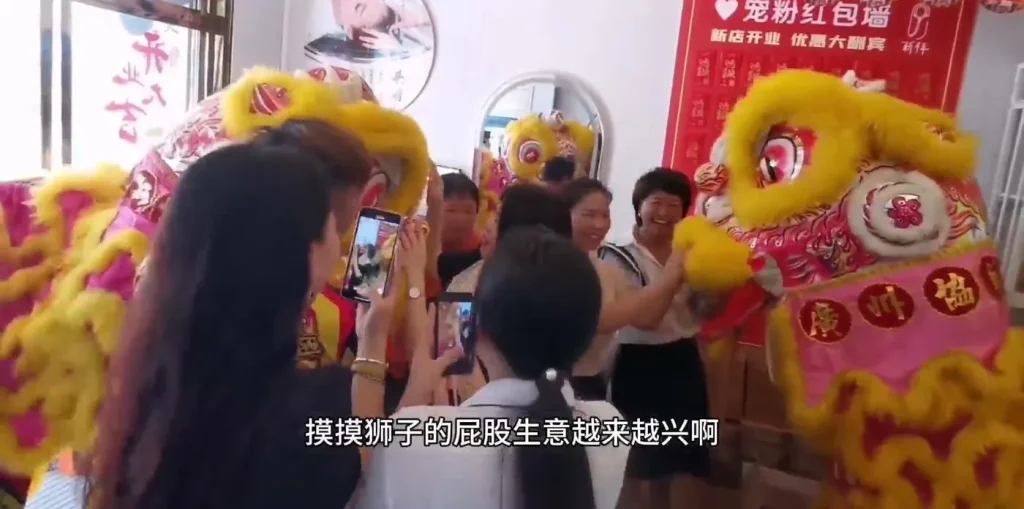
I’ve patted a few lion backsides in my time, and I can report that no Taoist training prepares you for how silly it feels. Wait to be invited, though. Many troupes treat a lion head as sacred, so at any other moment you should ask first.
How lion dance works at Chinese weddings
A wedding changes the job more than the costume. There’s no door to bless for trade and no cash register to bow to, so the lion stays with the couple and the message becomes a long, happy marriage. It’s one thread in the wider set of Chinese wedding traditions, and you’ll meet it in two very different settings.
On the road: lions walking the wedding car
In parts of rural China, the lions come out for yingqin (迎亲), the trip to fetch the bride. They walk in front of a car covered in flowers while the drum follows, and red, blue, green and yellow lions can all turn up in one procession. I’ve been stuck on a village road behind one of these, and nobody honked. A lion in front of your car is a good excuse to be late.
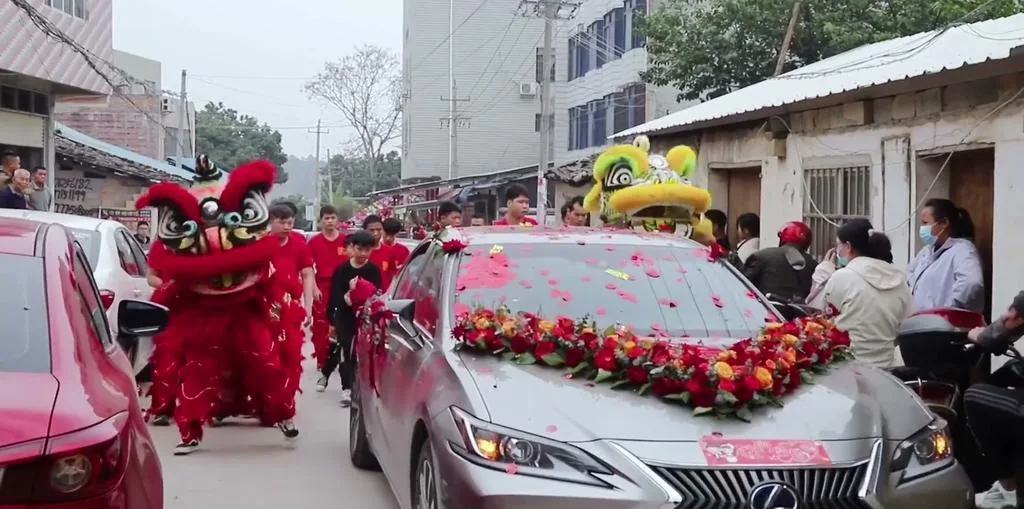
The lions treat the car the way they treat a shop door. They press in, sniff at the flowers and bow to it, and that’s the blessing delivered to whoever’s riding inside.
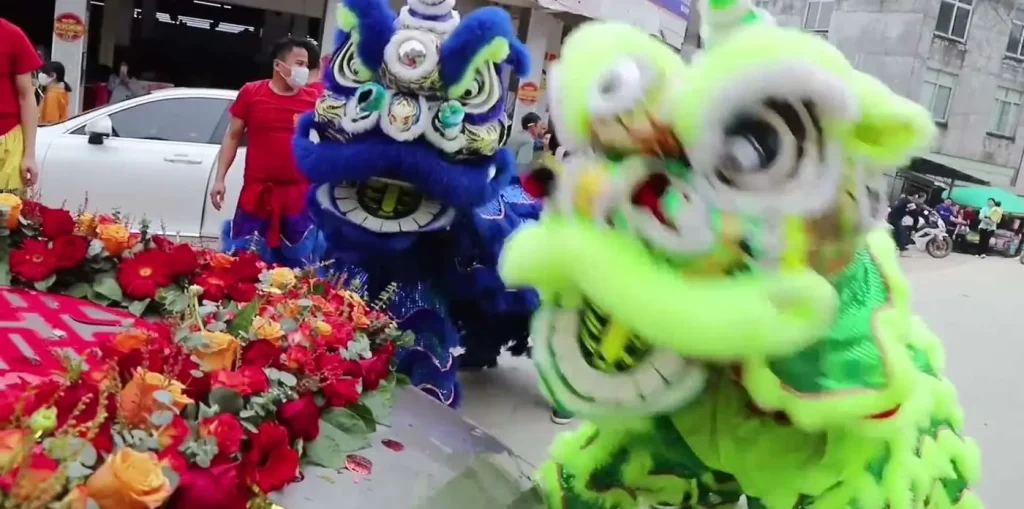
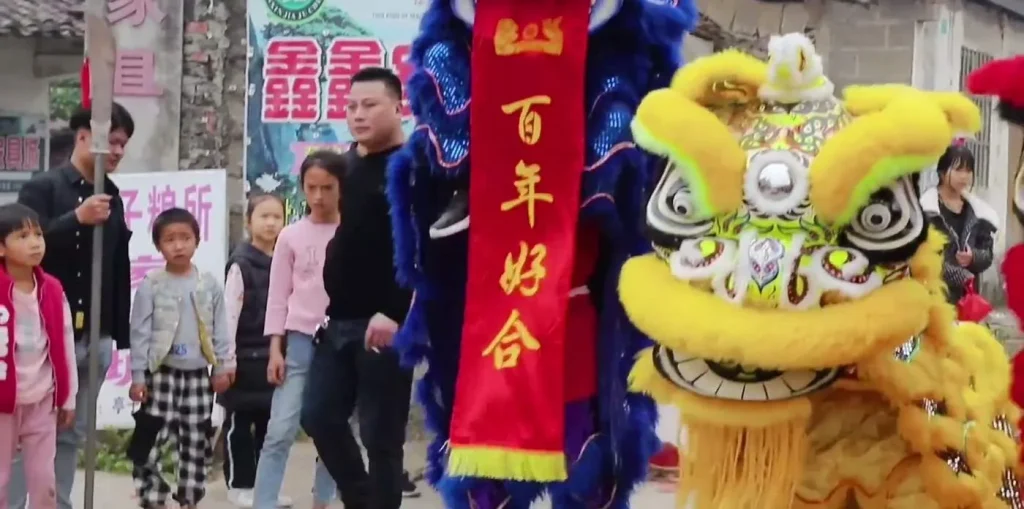
Instead of wealth from three rivers, the wedding lion carries a line for the marriage. A common one is bainian haohe (百年好合), the wish that the couple stay in harmony for a hundred years.
At the reception: dotting, entrance and red envelopes
Outside China, the lion usually works the reception instead. A Las Vegas troupe says weddings are where it performs most often, so this isn’t a rare request. Troupes publish their own formats, and they differ:
- Length: a UK troupe lists about 15 minutes as standard, and the Las Vegas troupe offers a short introduction of the couple or a full 17 to 20 minutes.
- Eye dotting: the UK troupe has the couple dot the eyes together before the show.
- Grand entrance: the lions can lead the couple or the guests into the room.
- Red envelopes: guests hold them out and the lion eats them from their hands. The Las Vegas troupe suggests about $5 each, or $2 on a tight budget, as a donation to the troupe.
- Parents: the lions can bow to both sets of parents if you tell the troupe beforehand.
I’d take the eye dotting every time. It’s the one moment when the couple does something together in front of everyone that isn’t posing, and a lion that the two of you woke up is a better story than a lion that just arrived. One couple’s review of that Las Vegas troupe puts the lions last, right before the dance floor opened, and I think that’s the right slot, since it wakes up anyone who’s sunk into the dessert.
What a host should prepare, and whether to make it a surprise
Most of what goes wrong at these events comes from a host who booked the lion and then forgot about it. If you’re hiring one, sort these out first:
- The date: Chinese families often pick the day from the almanac, and I’m asked about shop openings more than weddings. The troupe’s calendar fills fastest around Lunar New Year.
- Greens and envelope: ask whether the troupe brings the lettuce. Many expect the host to hang it, with a red envelope tied on.
- The path: walk the route with the troupe. Show them the door, the cash register or head table, and where the drum will stand.
- Noise: tell the venue and the neighbors. A live drum, cymbals and a gong are very loud indoors.
- Lion color: skip white. In the southern tradition a white lion belongs to a funeral.
Prices vary too much by city and troupe for me to quote one, so get the fee and the envelope amount in writing.
As for surprising the groom or the bride, it’s a popular idea and I’d only half recommend it. Keep the lion secret from the couple if you like, but never from the venue or the grandparents. A drum at full volume in a banquet hall is a shock to elderly guests, and someone should warn them.
Can a non-Chinese couple or shop have a lion dance?
Yes. A lion dance is a blessing and a performance, so nobody checks your family tree before the drum starts. The respectful version is simple: learn what the eye dotting means, hang real greens and pay the envelope properly.
If someone in the family asks for a dragon instead, the lion and dragon comparison will help. A lion is the better fit for a door or a dance floor, and a dragon needs a street.
None of this guarantees a full till or a long marriage, and I wouldn’t let anyone tell you otherwise. It’s a tradition that says out loud what everyone at the door already hopes for.
Written by
Daozhang MaMaoshan Taoist, Jintan, Jiangsu
Daozhang Ma is a Maoshan Taoist who has practiced for 22 years and is skilled at writing talismans and painting Taoist pictures. He runs Zodiac & Tradition.
About Daozhang Ma